
Lessons
Forex Account Balance: Hidden Fees Affecting Trades
Your Forex Account Balance: More Than Just Wins & Losses
Imagine closing a successful trade, seeing that satisfying green profit, only to find your total account balance is slightly less than expected. Or perhaps a little more, leaving you puzzled. This common discrepancy can be a major source of frustration and confusion, especially for new traders, often leading to miscalculations of true profitability. Today, on Forex Gurukul, we're going to demystify exactly what influences your total trading account balance beyond just your profits and losses from closed trades. We'll uncover those hidden currents that can slowly erode your capital or, sometimes, even provide a small boost, all while your trades are still open.
Understanding these dynamics is absolutely critical for accurately tracking your performance, making informed trading decisions, and ultimately, safeguarding your capital. Your trading account balance isn't merely about how much money you deposit and how much you gain or lose when you close a trade. It's a dynamic sum, constantly influenced by several factors.
There are three primary factors that dictate the movement of your forex account balance:
- Profit or Loss from Closing Trades: This is the most obvious and frequently discussed factor. When you close a position, the resulting profit or loss is immediately reflected in your balance. We'll delve deeper into realized profit and loss in future discussions.
- Deposits and Withdrawals: Any funds you add to or remove from your account directly impact your balance. This is straightforward and typically within your direct control.
- Swap Fees (or Rollover Interest): This is where things get interesting and are often overlooked by beginners. Swap fees are charges, or sometimes credits, related to holding positions open overnight. This crucial piece often explains that mysterious discrepancy in your account, making a winning trade feel a little less profitable, or a losing trade a little more expensive. We'll be focusing heavily on this often-misunderstood component today.
Let's break down these swap fees and ensure they don't catch you off guard.
Understanding Swap Fees: The Overnight Interest Adjustment
So, what exactly are swap fees? In simple terms, a swap fee is an interest adjustment that is either paid to you or charged from you for holding a trading position open past the daily market rollover time. Think of it like a small interest payment, or charge, on your borrowed capital for carrying that trade into the next trading day.
When you trade forex, you're essentially borrowing one currency to buy another. For instance, if you buy EUR/USD, you are effectively borrowing USD to buy EUR. Since each currency has its own interest rate set by its respective central bank (e.g., the European Central Bank for the Euro, and the Federal Reserve for the US Dollar), holding an open position overnight means you either pay or receive the net interest difference between the two currencies in your pair.
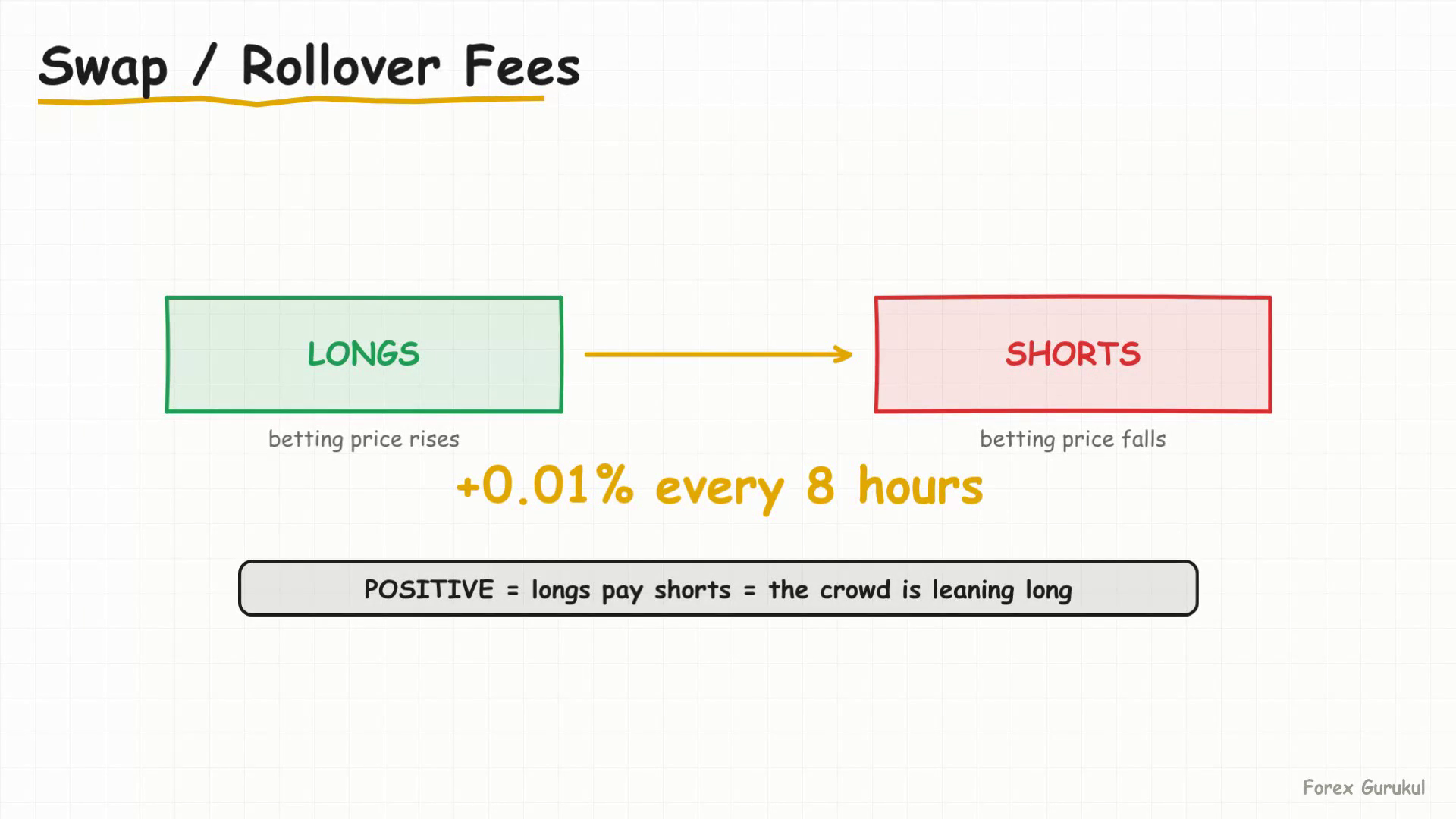
This adjustment occurs during what we call the 'rollover procedure'.
The Rollover Procedure Explained
The forex market operates twenty-four hours a day, five days a week, but even it has an official end to its 'trading day' for administrative purposes. This transition point is known as the 'rollover procedure'. Typically, this happens around 5 PM New York time (EST), or 00:00 GMT for many brokers. It's crucial to note that this isn't when the market physically closes; rather, it's the arbitrary moment when your broker processes all overnight positions.
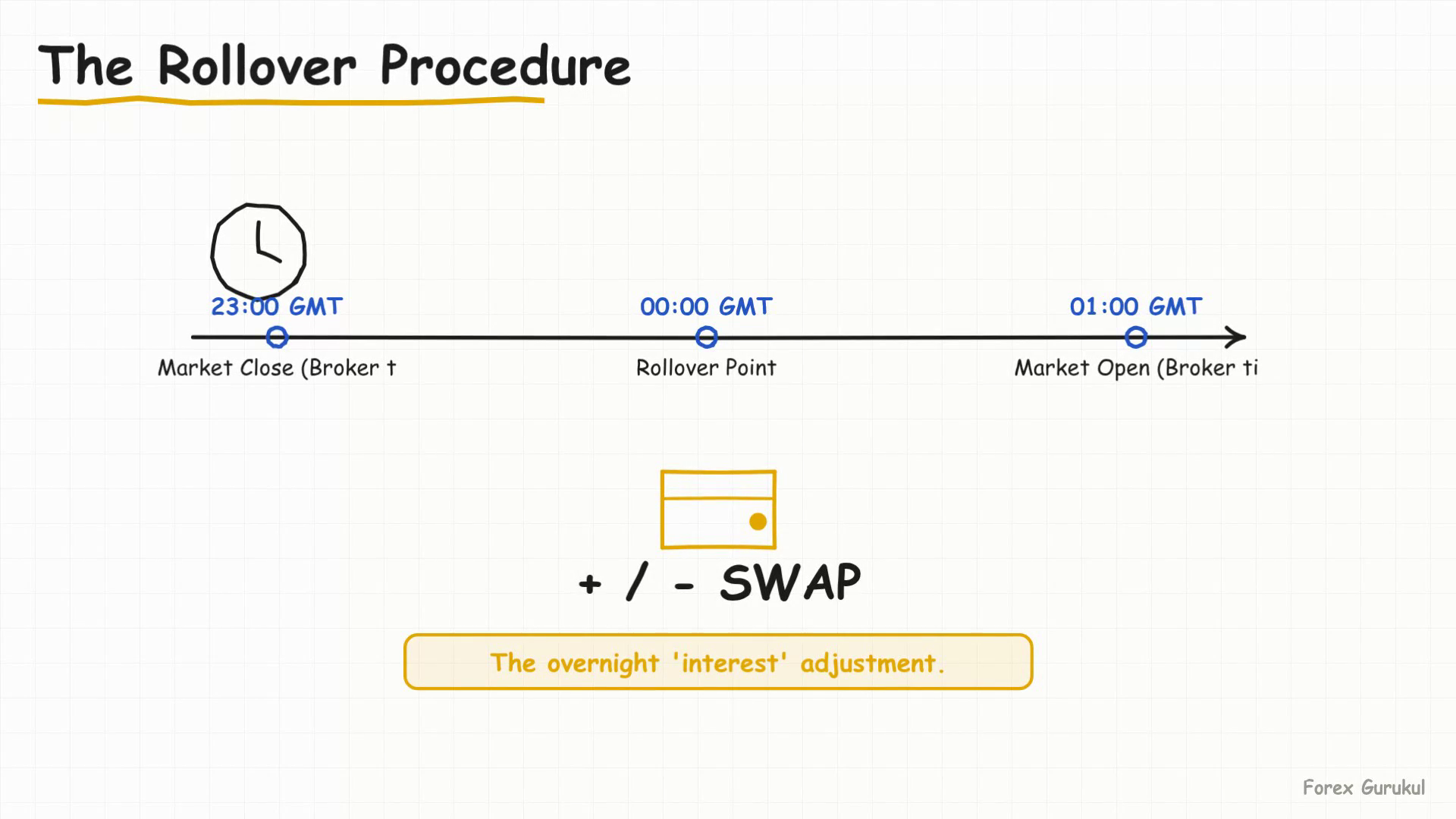
Effectively, for accounting purposes, your broker often automatically closes your existing position and immediately re-opens a new, identical position for the next trading day. This isn't something you'll typically see happening on your trading chart; it's an internal process handled by your broker. At this rollover point, your account is either debited or credited with the swap fee. It's the mechanism that ensures the interest rate differential between the two currencies in your pair is accounted for in your open trade.
How Swap Fees Directly Impact Your Account Balance
The impact of swap fees on your balance is direct and immediate. Let's consider a scenario:
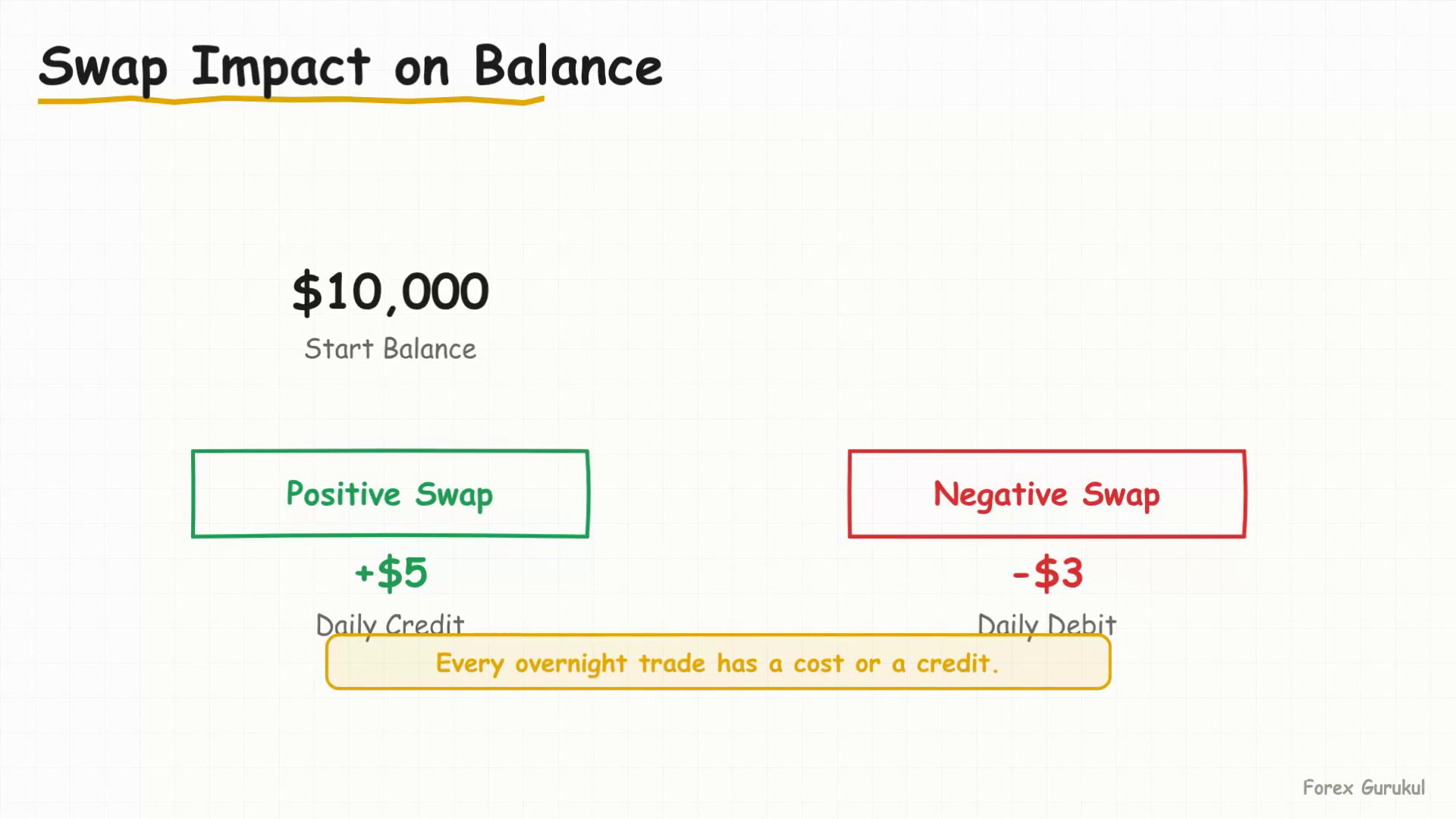
Imagine you start with a $10,000 trading account balance.
- Positive Swap: If you are in a positive swap position, meaning the interest rate on the currency you bought is higher than the one you sold, your broker will credit your account. For example, if you earned $5 in positive swap for holding a particular pair overnight, your account balance will increase by $5 after rollover, even if the market price of your trade hasn't moved a single pip.
- Negative Swap: Conversely, if your position incurs a negative swap, where the interest rate on the currency you bought is lower than the one you sold (or higher for the one you sold if you are shorting), your balance will be debited. If you paid $3 in negative swap, your account balance decreases by $3 overnight.
This is why understanding swap fees is crucial, especially for longer-term swing or position traders who hold trades for multiple days or weeks. Those small daily fees can really add up, either eating into your profits or, in rare advantageous scenarios, slightly boosting them. For day traders who close all positions before rollover, swap fees are generally not a concern.
Locating Swap Fees in MetaTrader: Don't Get Surprised!
Now, where do you find this critical information? Knowing your potential swap before you even enter a trade is vital for proper trade management and profitability assessment. For most retail forex traders, MetaTrader 4 (MT4) and MetaTrader 5 (MT5) are common platforms. Let's look at how to find swap rates there.
Before Opening a Trade (Market Watch)
On MetaTrader, you can find swap rates in the 'Market Watch' window. Follow these steps:
- Open your 'Market Watch' window (Ctrl+M on MT4/MT5).
- Right-click on the currency pair you're interested in, for example, EUR/USD.
- Select 'Specification' or 'Properties' from the context menu.
A window will pop up showing you various details for that instrument, including 'Swap long' and 'Swap short'. These values indicate the fees for holding a buy (long) or a sell (short) position overnight. These numbers are usually expressed in points or in the base currency of your account, or sometimes per lot. For example, a 'Swap long' of -1.5 might mean you pay 1.5 points of swap for a long position.
For Open Positions (Terminal Window)
Once you have an open position, you can see the accumulated swap on that specific trade directly in your 'Terminal' window (Ctrl+T on MT4/MT5), under the 'Trade' tab. There will be a dedicated column showing the 'Swap' value for each open trade, updating daily after rollover.
| Swap Type | Location in MT4/MT5 | Purpose |
|---|---|---|
| Swap Long/Short | Market Watch -> Specification/Properties | Shows anticipated swap cost/credit before opening a trade |
| Accumulated Swap | Terminal -> Trade Tab (for open positions) | Displays actual accrued swap on your live trades |
Always check these numbers before taking a trade you intend to hold overnight. It's a quick check that can prevent unpleasant surprises and help you factor in all potential costs into your trading plan.
Beyond Swap: The Bigger Picture of Your Trading Performance
While today we've focused intensely on the immediate impact of swap fees on your balance, it's crucial to differentiate them from your actual trade performance. Swap fees are a cost of doing business (or sometimes a small benefit), separate from the profit or loss generated by price movements.
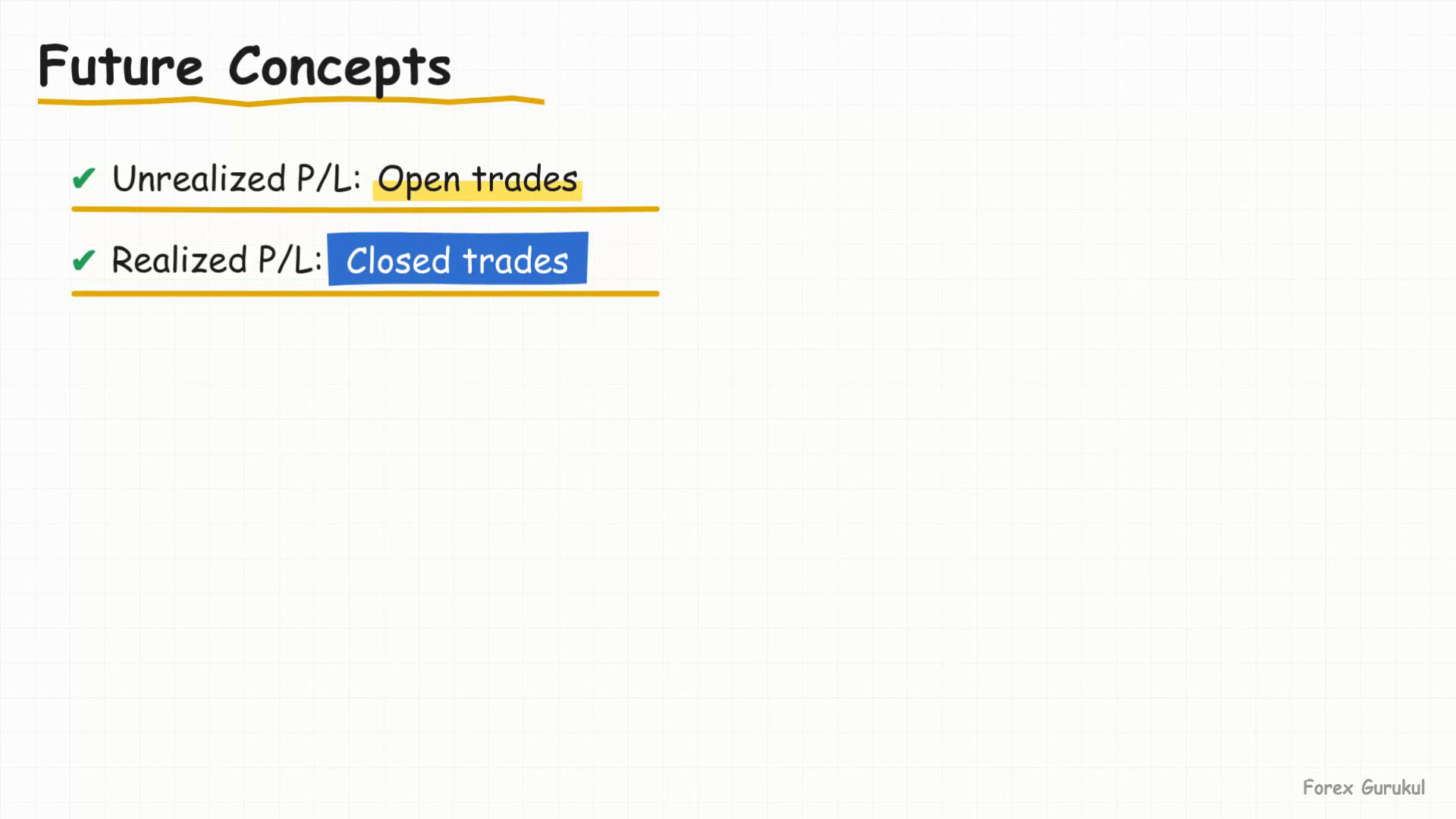
In upcoming Forex Gurukul sessions, we'll dive into related but distinct concepts that also influence your overall trading picture:
- Unrealized Profit and Loss (Floating P/L): This refers to the profit or loss on your open, currently active trades. It's 'unrealized' because it's not yet locked in; the market price can still move against you. This directly affects your 'equity', but not your 'balance' until the trade is closed.
- Realized Profit and Loss: This is the actual profit or loss locked in once you've closed a trade. Once realized, it directly impacts your account balance.
These concepts are distinct from swap, but all contribute to your overall account equity and net worth as a trader. Understanding the difference between balance, equity, unrealized P/L, realized P/L, and swap fees is key to truly evaluating your trading performance and managing your risk effectively. Stay tuned for these essential discussions!
Key takeaways
- Your forex account balance is affected by closed trades, deposits/withdrawals, and crucial swap fees.
- Swap fees are interest adjustments for holding trades overnight, occurring at daily rollover.
- Positive swaps credit your account, negative swaps debit it, directly impacting your balance.
- Always check 'Swap long' and 'Swap short' in MetaTrader's 'Market Watch Specification' before trading.
- For open trades, monitor accumulated swap in the 'Terminal' window to avoid surprises.
Frequently asked questions
What are forex swap fees?
Forex swap fees are interest adjustments paid or charged for holding a trading position open past the daily market rollover time. They reflect the interest rate difference between the two currencies in a pair.
How do swap fees affect my forex account balance?
Swap fees directly affect your balance. A positive swap will credit your account, increasing your balance, while a negative swap will debit your account, decreasing your balance, even if the market price hasn't moved.
Where can I find swap rates in MetaTrader?
Before opening a trade, right-click on a currency pair in 'Market Watch', select 'Specification' to see 'Swap long' and 'Swap short'. For open trades, the accumulated swap is displayed in the 'Swap' column of the 'Trade' tab in your 'Terminal' window.
What is the 'rollover procedure' in forex?
The rollover procedure is the daily administrative process (typically around 5 PM New York time/00:00 GMT) when brokers process overnight positions and apply swap fees. It's when your account is debited or credited for holding trades into the next trading day.
Are swap fees a concern for day traders?
Generally, no. Day traders typically close all their positions before the daily rollover time, meaning they do not incur or receive swap fees.