
Lessons
Forex Market History: Why Retail Traders Can Trade At All
Forex Market History: Why Retail Traders Can Trade At All
August of two thousand eight. Danny is staring at a EUR/USD chart, and in about forty minutes his account is down eighty percent. He never once asked why he was even allowed to place that trade in the first place. Because forty years earlier, nobody like him could have placed it at all.
That is where this real story starts, and it explains everything about the platform you are trading on right now. Danny's blow-up happened on a currency pair, but the story of why that pair even trades on a screen starts way earlier — in 1971.
1971: The Fixed Rate Breaks
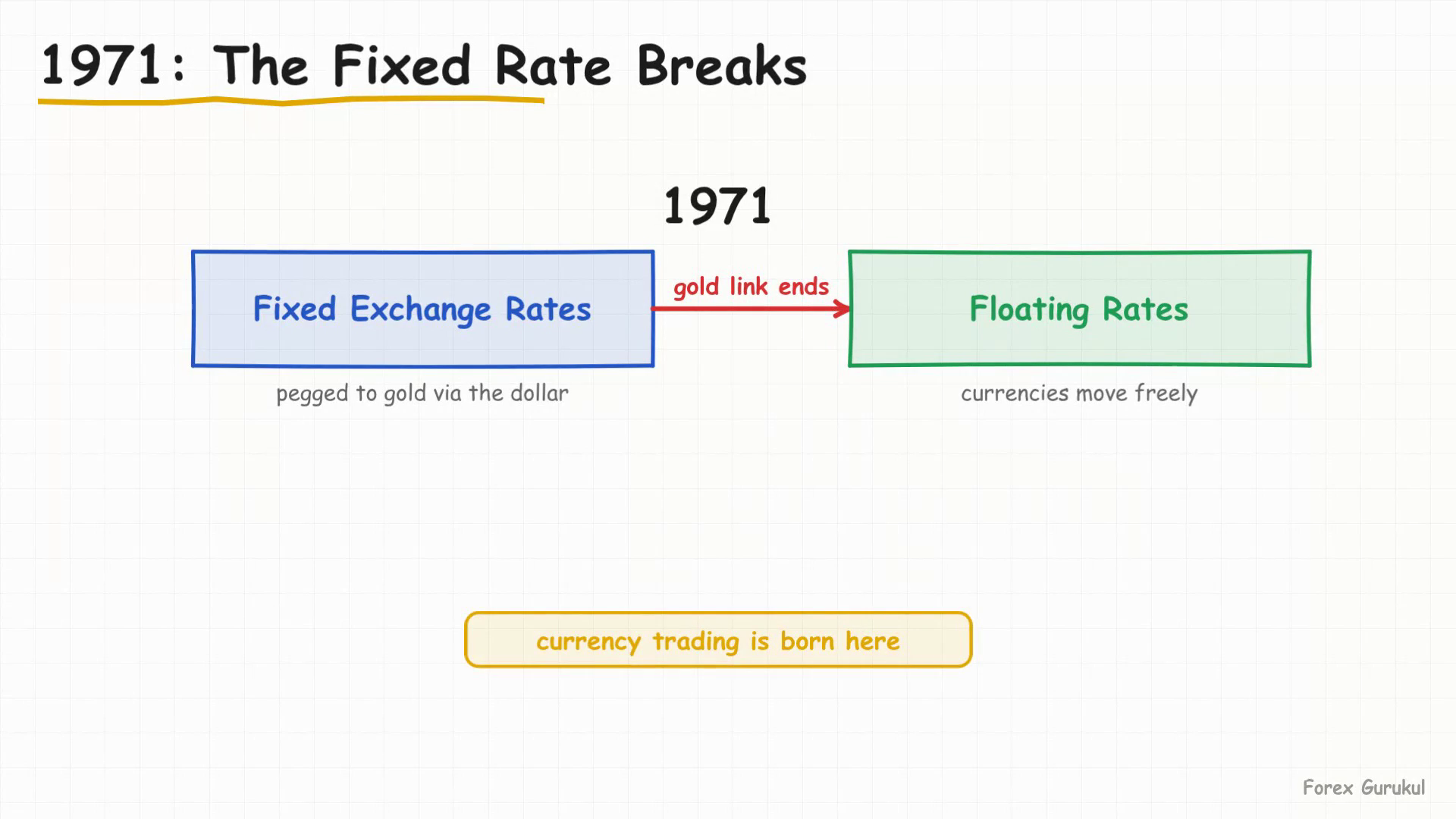
Up until 1971, currencies were pinned to fixed rates, tied back to gold through the US dollar, under a system called Bretton Woods. Under that arrangement, exchange rates barely moved — there was nothing to speculate on because there was no meaningful price movement to capture.
Then President Nixon ends the gold link. The fixed system collapses, and currencies are set loose to float against each other based on supply and demand. That one decision is the actual birth certificate of currency speculation — the moment a price could move enough, day to day, for someone to try to profit from the move itself.
This is well documented in the economic history of the era: the collapse of Bretton Woods is widely cited as the structural event that created modern floating-rate currency markets, the same market structure that underpins every forex quote you see today.
But for the next twenty years, almost nobody could actually use that new floating market. The door had opened — just not for retail traders.
The Banks-Only Club
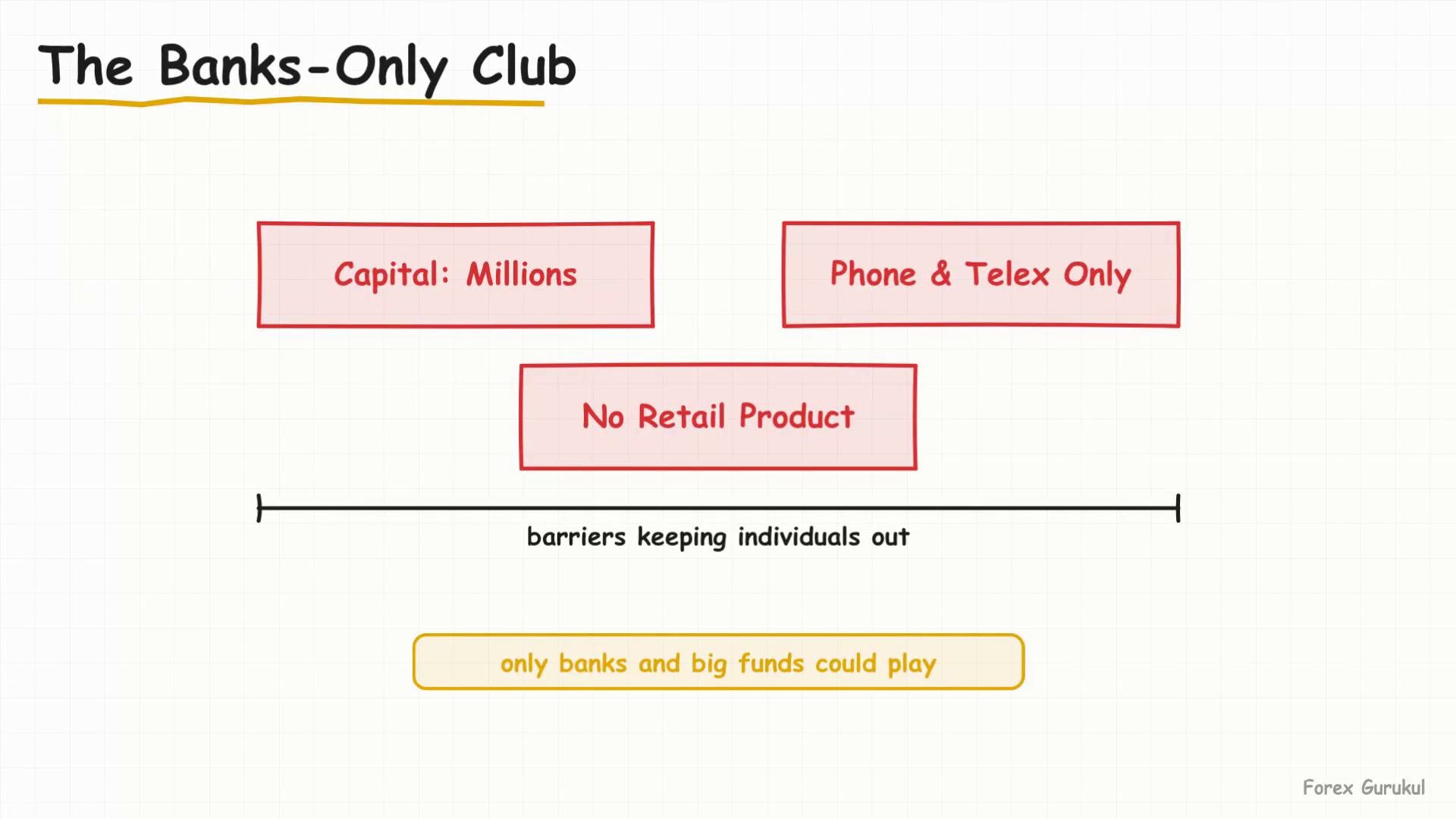
Pause for a second and guess: in the 1980s, what's the smallest amount a bank would even discuss a currency trade for? Most people guess a few thousand dollars. It was closer to a million. That's barrier one — capital.
- Barrier one — Capital: Interbank desks quoted in millions, not hundreds or thousands.
- Barrier two — Infrastructure: No charts, no software. Trades went by phone or telex, a typed message machine, with a banker deciding if you were even worth the call.
- Barrier three — No retail product: Unless you were a bank, a hedge fund, or a multinational moving real goods across borders, this market simply did not exist for you.
| Barrier | 1980s Reality | What It Meant For Individuals |
|---|---|---|
| Minimum trade size | ~$1,000,000+ | Locked out unless institutional |
| Execution method | Phone / telex only | No self-directed access |
| Available products | Interbank spot & forwards | Zero retail-friendly instruments |
That's the club Danny would have been locked out of, decades before he ever opened an account. This closed, interbank-only structure of the FX market is consistent with how central bank and academic accounts describe the pre-1990s currency market — a wholesale market for institutions, not individuals.
Trading With Hundreds, Not Millions
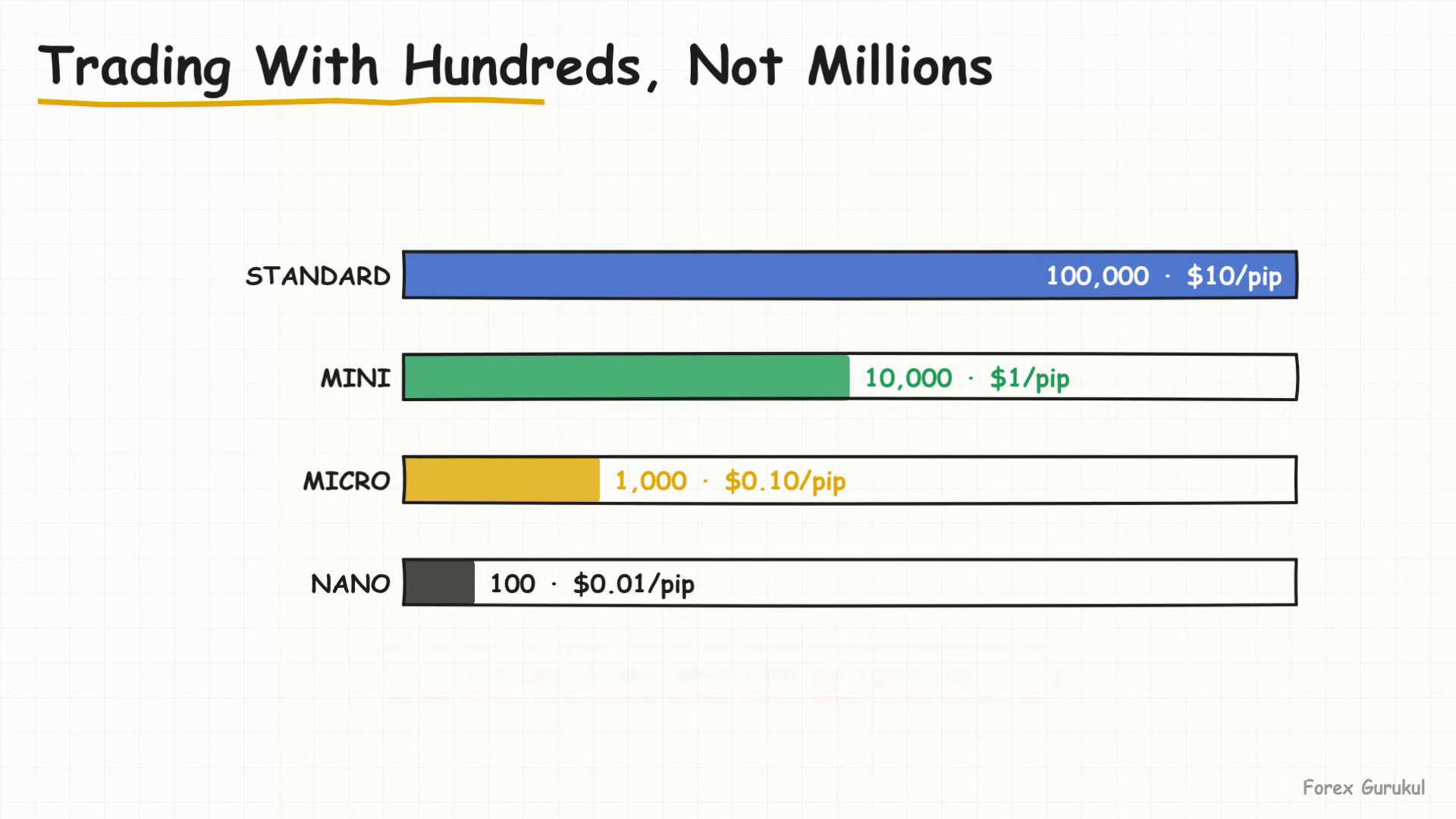
So what actually broke the banks-only club open? The internet. Through the 1990s, as home internet spread, banks and new brokerage firms realized they could build software that let a screen do what a banker on a phone used to do: quote a price, take an order, show a chart.
But quoting a price to the public was only half the fix. Interbank trades were still sized in millions. So retail brokers invented smaller contract sizes — what the industry calls lot sizes — micro and mini lots that let someone trade with a few hundred dollars instead of a few million.
That single change is why Danny, or you, could fund an account and place a trade within a weekend. The scale of what that shift eventually produced is staggering: the global FX market now sees average daily turnover of roughly $9.6 trillion, according to the Bank for International Settlements' 2025 Triennial Survey — up nearly 28% from $7.5 trillion per day in 2022.
| Year | Global FX Daily Turnover | Change |
|---|---|---|
| 2019 | ~$6.6 trillion | Baseline pre-pandemic |
| 2022 | $7.5 trillion | +14% vs 2019 |
| 2025 | $9.6 trillion | +28% vs 2022 |
None of that retail-facing volume existed before micro lots and internet-based dealing desks made small-account participation technically possible. Retail traders today are a meaningful slice of a market that, for its first twenty years as a floating system, had no room for them at all.
Why This History Actually Matters To You
Danny's account didn't blow up because the market was rigged against him. It blew up because he was trading in a space that, only two decades earlier, would have required a corporate treasury desk and a seven-figure line of credit — and he treated it like a casual bet.
Every retail platform you use today — the charts, the instant execution, the ability to open a position with $200 — is the end result of a specific chain of events: a currency system going floating in 1971, two decades of institutional-only access, then the internet and micro-lot innovation collapsing the entry barrier in the 1990s and 2000s.
- The floating-rate system (post-1971) is why currency prices move enough to trade at all.
- The interbank-only decades (1970s–1990s) are why forex has always been a professional-grade, high-liquidity market — not a toy.
- Micro/mini lots and online brokers are the only reason a retail account with a few hundred dollars can participate.
Knowing this doesn't change your win rate on the next trade. But it should change your respect for the instrument. You are trading in the same liquidity pool as central banks and multinational corporations, using tools that only became available to individuals within the last twenty-five to thirty years.
Remember
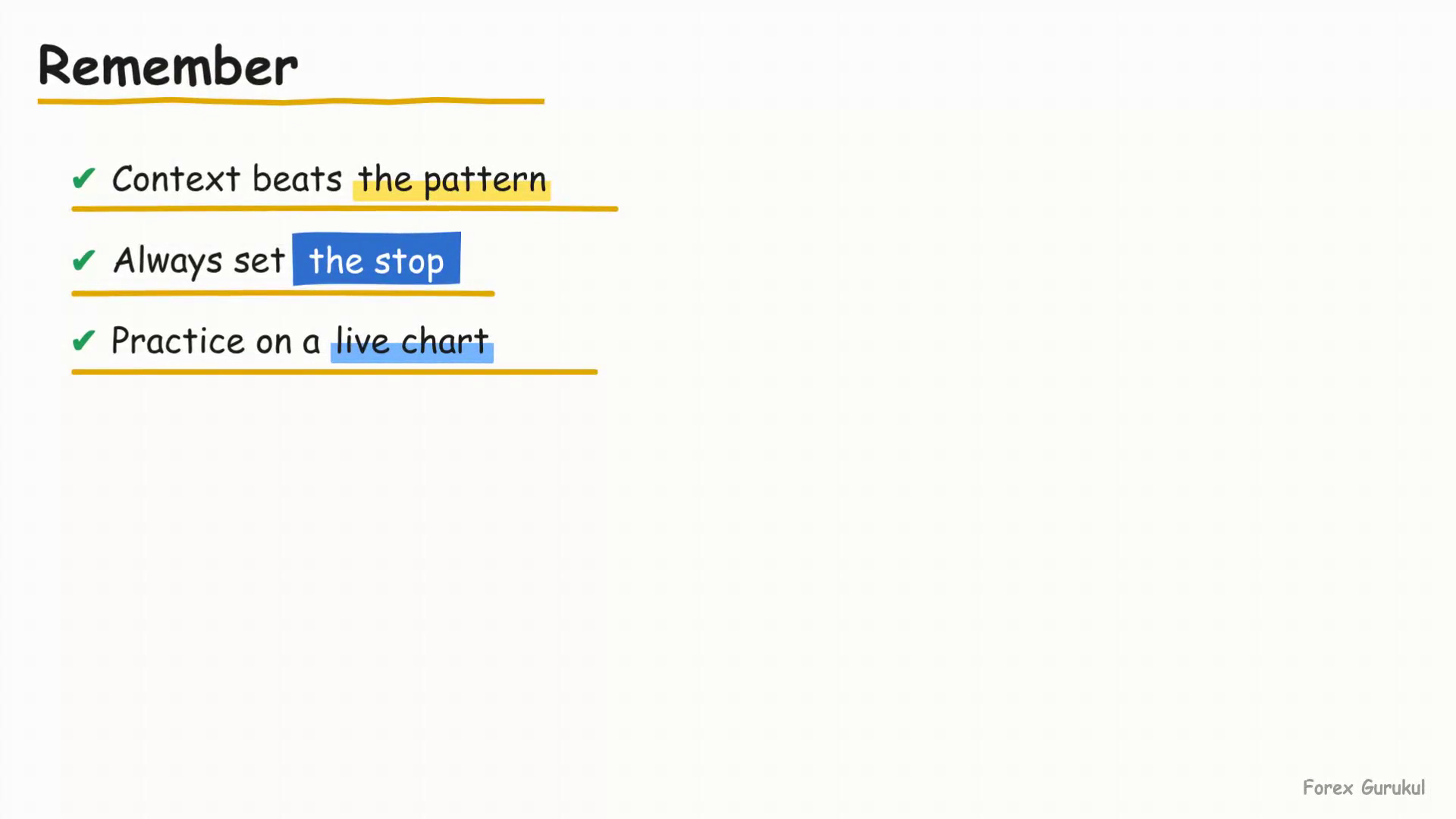
- Context beats the pattern — a chart shape means nothing without knowing why the price is where it is.
- The stop is what saves you — access to the market was never the hard part; risk control is.
- Nothing replaces practice on a live chart — history explains why you can trade; screen time is what decides whether you should.
Danny's forty minutes could have gone very differently with a stop-loss and a plan built around this same context. The market let him in. It was never obligated to let him keep his money.
Key takeaways
- The floating forex market as we know it began in 1971, when Nixon ended the dollar's link to gold and collapsed the Bretton Woods system.
- For roughly two decades after that, forex remained an interbank-only market with million-dollar minimums, phone/telex execution, and zero retail products.
- The internet plus the invention of micro and mini lot sizes in the 1990s–2000s is the specific innovation that let individuals trade with hundreds of dollars instead of millions.
- Global FX turnover has grown from $7.5 trillion/day in 2022 to $9.6 trillion/day in 2025 — retail access is a small but real part of a historically institutional market.
- Having access to the market is not the same as having an edge in it; risk management still separates traders who survive from those who don't.
Frequently asked questions
When did retail traders first get access to the forex market?
Meaningful retail access developed through the 1990s and 2000s, once internet-based trading platforms and smaller 'micro' and 'mini' lot sizes let brokers offer accounts funded with hundreds of dollars instead of the million-dollar minimums banks required.
What happened in 1971 that made forex trading possible?
President Nixon ended the US dollar's convertibility to gold, collapsing the Bretton Woods fixed exchange rate system. Currencies began floating freely against each other, creating the daily price movement that speculative trading depends on.
How big is the forex market today?
According to the Bank for International Settlements' 2025 Triennial Survey, average daily global FX turnover reached approximately $9.6 trillion, up about 28% from $7.5 trillion per day in 2022.
Why couldn't individuals trade forex before the 1990s?
Currency trading was conducted directly between banks, hedge funds, and multinational corporations over phone and telex, typically in trade sizes of a million dollars or more, with no software or product built for individual participation.
Does having access to the forex market mean it's easy to profit from?
No. Lower account minimums removed the barrier to entry, but they didn't change the skill, discipline, and risk management required to trade profitably — the market is still the same high-liquidity, institution-dominated space it always was.