
Lessons
Forex Market Participants: Who Actually Moves The Dollar
Who Really Moves The Dollar
Dave took a clean long on Euro Dollar. Nice setup, tight stop, everything by the book. Forty seconds later the candle rips against him, hits his stop, and keeps going a hundred pips before it turns back around. No news he could see. No warning. He just got run over.
Here's the truth: that candle was never random. Somebody, or a lot of somebodies, pushed it. The global forex market now trades roughly $9.6 trillion a day, according to the Bank for International Settlements' 2025 Triennial Survey — up 28% from just three years earlier (BIS). That volume doesn't come from nowhere. It comes from a small, identifiable cast of forex market participants who show up in every session, every day, whether Dave is watching or not.
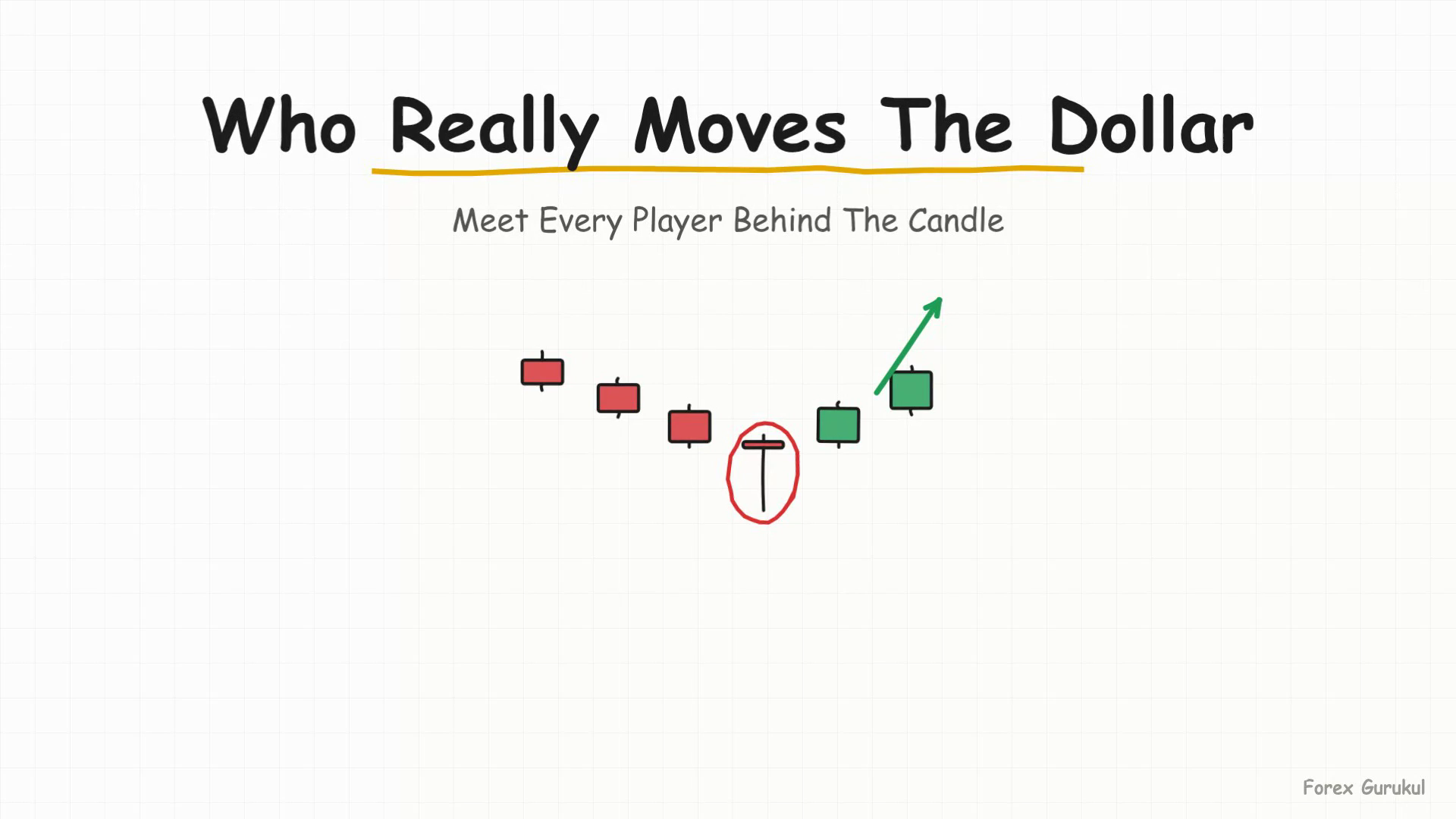
Today we're opening the hood on this market and meeting everyone who actually drives that price: the central banks, the giant banks, the algorithms, the corporations, and yes, traders exactly like you. By the end you'll know exactly who was in that candle that stopped Dave out.
From Banks-Only To Your Broker
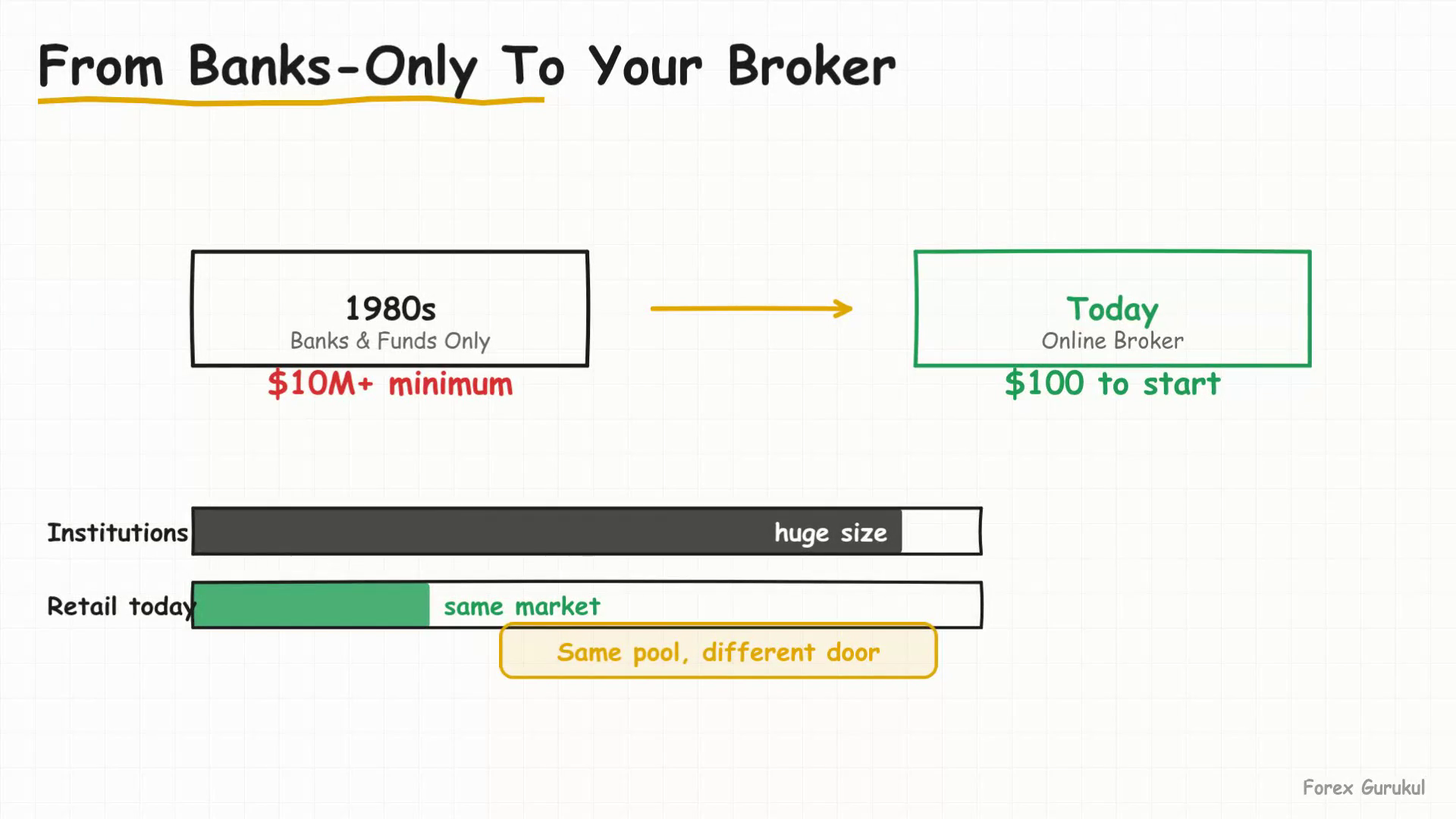
Rewind forty years and this market didn't have a seat for Dave at all. Trading currencies meant being a bank, a government, or a fund with tens of millions of dollars just to get a quote. Retail traders simply weren't invited.
Then online brokers showed up and started splitting those huge interbank trades into tiny pieces anyone could buy. Suddenly a trader could open an account with a few hundred dollars and place the exact same EUR/USD trade a billion-dollar fund places.
Central Bank Rate Hike
First fish in that pool: the central bank. The Federal Reserve, the European Central Bank — their job isn't to trade for profit, it's to manage the value of their own currency, mainly through interest rates.
Watch this. The Fed hikes rates. Higher rates mean money parked in dollars earns more, so capital flows in to grab that yield and the dollar strengthens. Cut rates, or flood the system with new money through quantitative easing, and the opposite happens — the currency gets cheaper because there's more of it chasing the same demand.
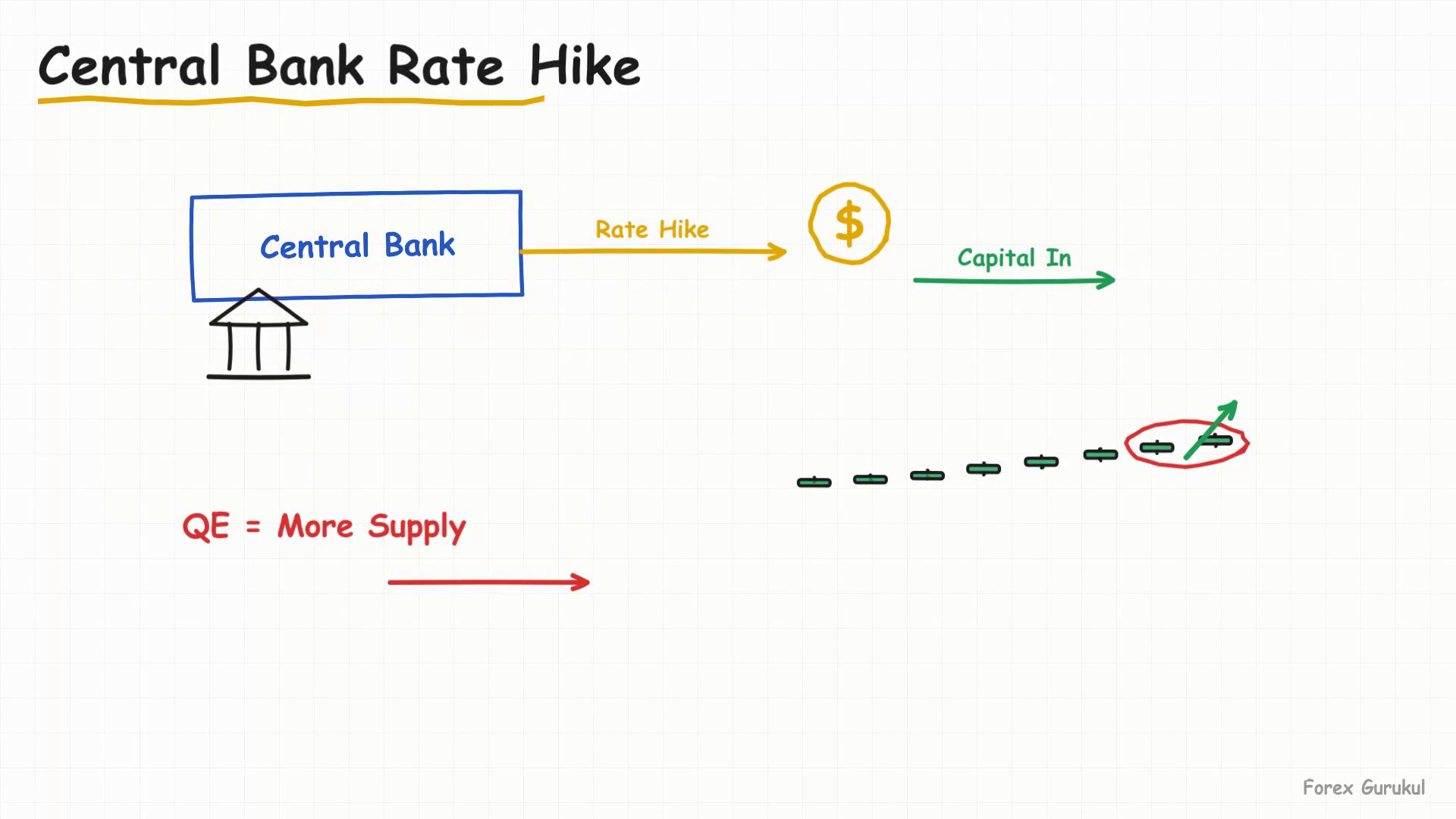
This isn't theoretical. At its July 29, 2026 meeting, the FOMC held the federal funds rate at 3.50%–3.75%, but the statement showed a divided committee, and EUR/USD still chopped around the 1.15 handle in the days after (Federal Reserve, CNBC). A single sentence from a central bank chair can move EUR/USD more in ten minutes than a whole week of retail trading.
| Date | Fed Funds Target | Market Reaction Context |
|---|---|---|
| Jul 29, 2026 | 3.50% – 3.75% (held) | Divided vote, hawkish dissent noted |
| Aug 2, 2026 | — | EUR/USD ~1.1548 |
| Aug 4, 2026 | — | EUR/USD ~1.1532 |
| Aug 5, 2026 | — | ECB reference rate 1.1554 |
If Dave's stop was anywhere near a rate decision, this is suspect number one. (ECB, OFX)
Bid/Ask Spread
Suspect two operates one level below the central bank: the super banks — names like JPMorgan, Citi, Deutsche Bank. They don't set policy, they run the plumbing. When a corporation needs to convert a billion dollars, it calls one of these banks directly.
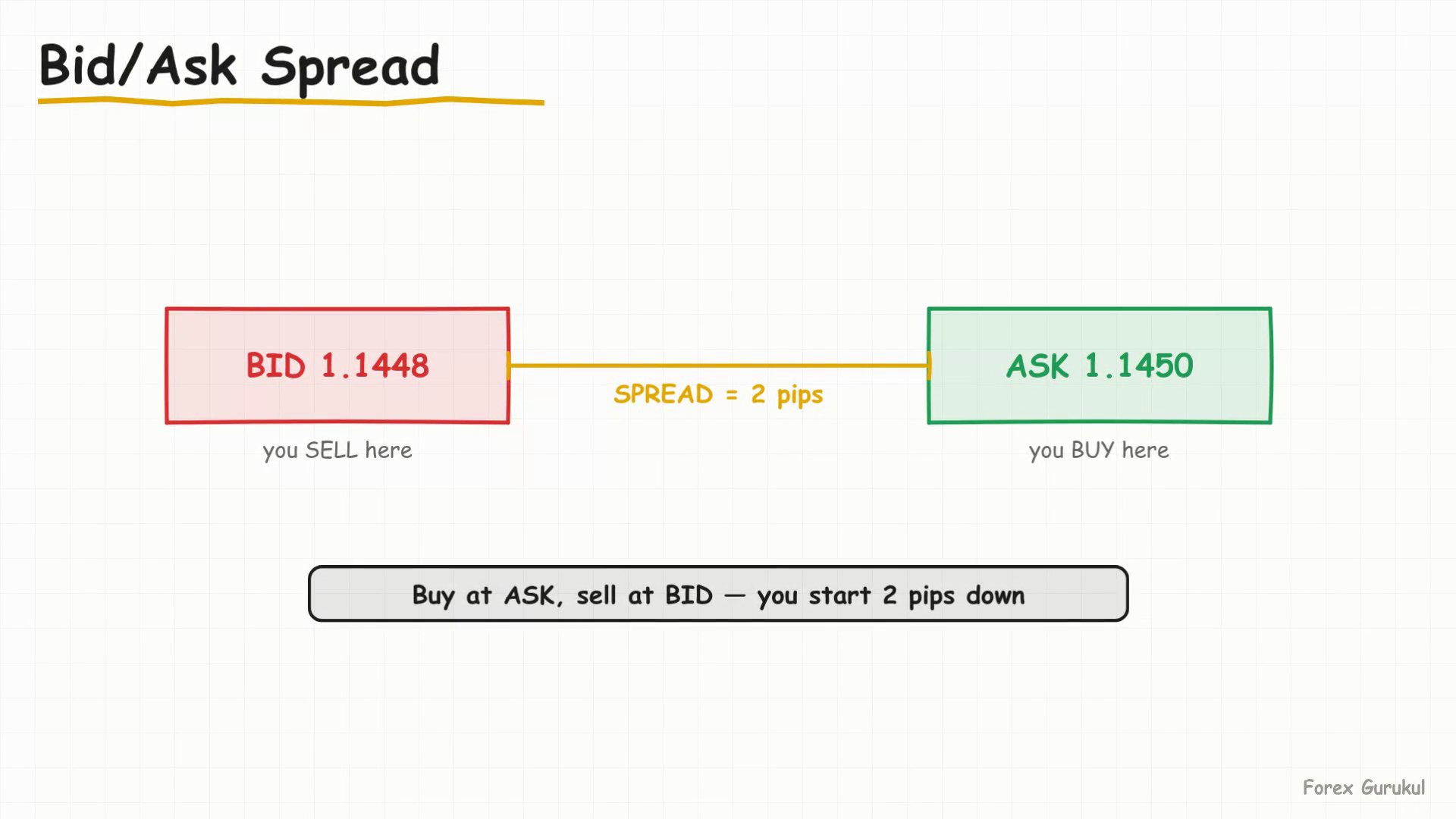
That river of bank-to-bank deals is the interbank market — decentralized, no single exchange, just banks quoting each other around the clock. These banks act as market makers too. They quote a buy price and a sell price, and the gap between them, the spread, is where they get paid for taking the other side of your trade.
Algorithms And Price Discovery
Suspect three isn't even human. Electronic liquidity providers are trading firms that quote prices and fill orders using pure code — no trader on a desk, just algorithms reacting in microseconds.
Their edge is speed. High-frequency trading strategies place and cancel thousands of orders a second, scalping fractions of a pip and stitching those fractions into real profit through sheer volume.
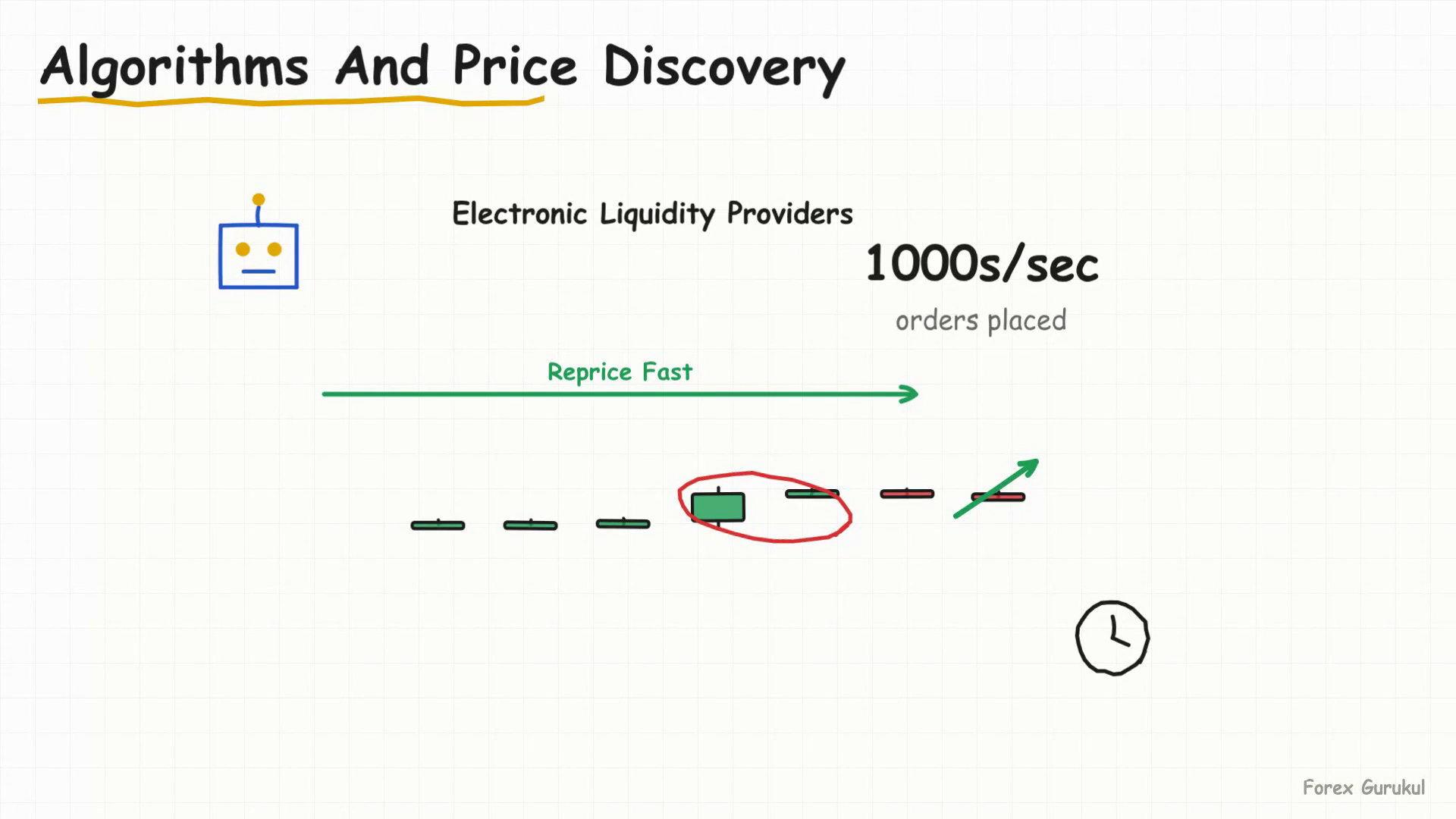
Here's why that actually helps you. When new information hits the market, these algorithms race each other to reprice instantly, which drags the market price toward what it should actually be. That fast repricing is called price discovery. It also means the tiny violent spike Dave saw could simply be algorithms sprinting to catch up to a headline half a second before he even read it.
Corporations Hedge, M&A Moves Price
Suspect four has nothing to do with speculation at all. Picture a US car company that sells vehicles in Germany and gets paid in euros. If the euro weakens before that money gets converted back to dollars, their profit margin shrinks through no fault of their own.
So companies hedge — they use forex contracts to lock in a conversion rate ahead of time and protect a deal they already agreed to.
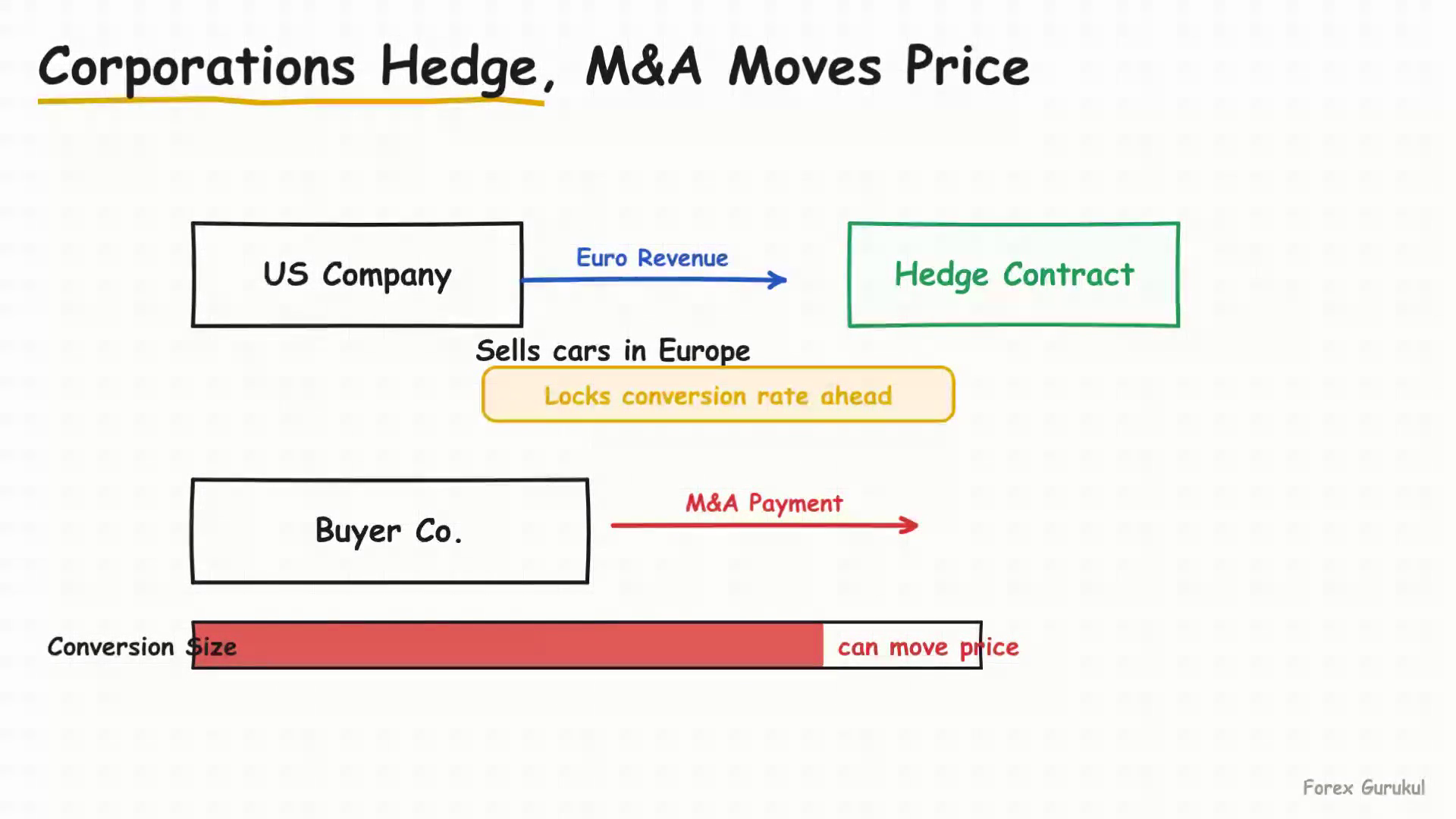
Now scale it up. When one company buys another across a border, the buyer often has to convert an enormous pile of one currency into another just to pay for the deal. That single conversion can be large enough to nudge the exchange rate on its own, especially in a quiet session. None of this is speculation. It's business protecting itself, and it still moves your chart.
Speculators Add Fuel
Suspect five is closer to home: the speculator. Hedge funds, prop firms, and retail traders like Dave all fall into this bucket. None of them are hedging a real business need — they're simply trying to profit from the move itself.
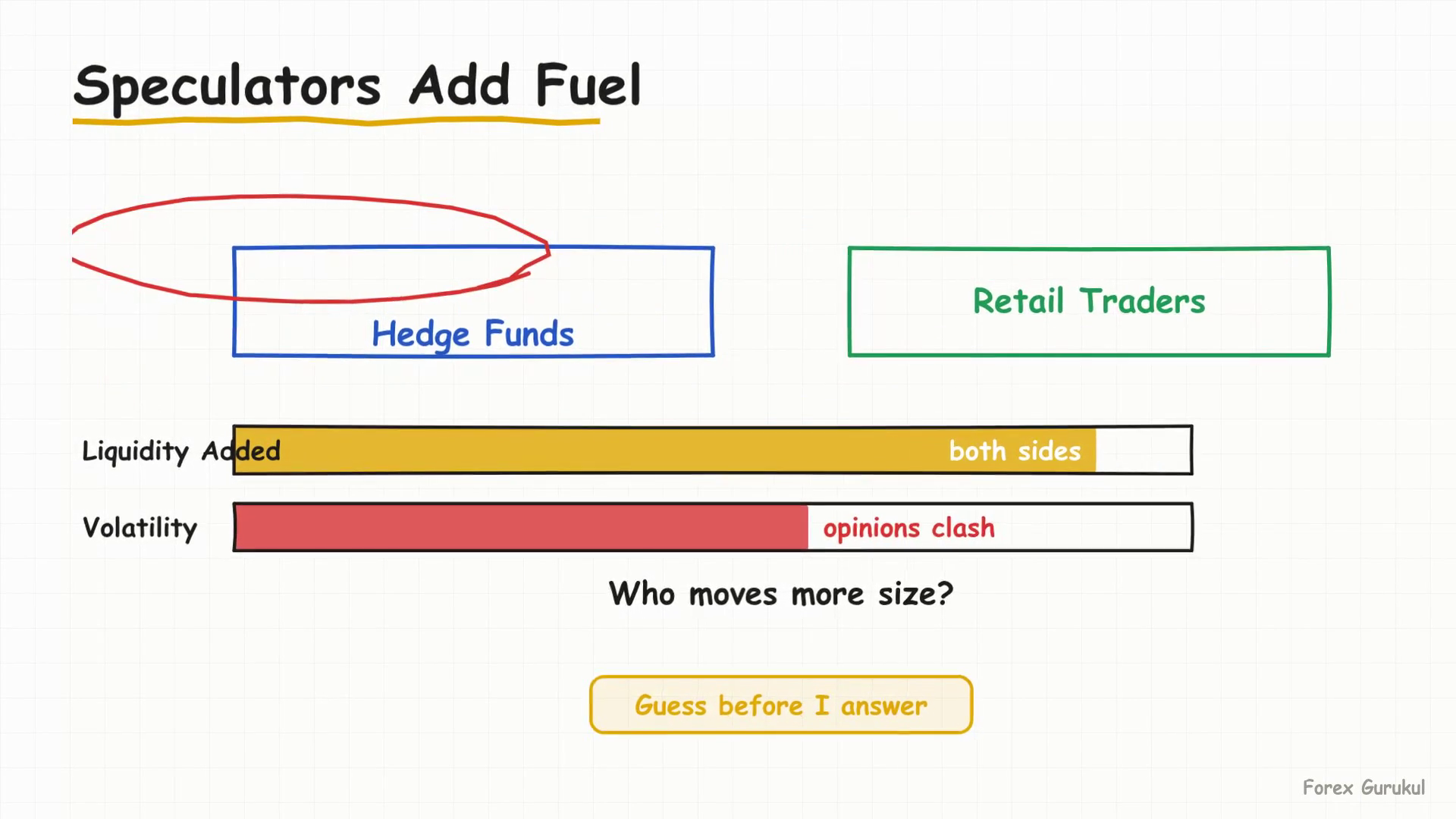
That sounds risky, and it is for the trader taking it on, but for the market it adds liquidity — thousands of small orders on both sides of every big move, absorbing risk that banks and corporations don't want to hold. Retail speculation is a real slice of that $9.6 trillion daily figure the BIS tracks; it's just the smallest, most reactive slice, which is exactly why it gets pushed around by everyone listed above rather than the other way around (BIS).
| Participant | Primary Motive | Typical Time Horizon |
|---|---|---|
| Central banks | Manage currency value / inflation | Months to years |
| Super banks | Market-making, client flow | Seconds to days |
| Algorithms / ELPs | Speed arbitrage, price discovery | Milliseconds |
| Corporations | Hedge real business exposure | Weeks to years |
| Speculators (funds & retail) | Profit from the move | Minutes to weeks |
Remember
Remember: context beats the pattern, the stop is what saves you, and nothing replaces practice on a live chart. Dave's candle wasn't random — it was central bank positioning, bank liquidity pulling back, algorithms repricing a headline, maybe a corporate flow, and a wave of speculators all landing in the same forty seconds. You can't out-trade that combination on setup alone. You can only respect it with sizing, a real stop, and the humility to know which of these six players is likely driving the session you're in.
- Check the economic calendar before every session — central banks move the dollar more than any pattern.
- Watch spread behavior, not just price — a widening spread is banks telling you volatility is coming.
- Don't fight sharp, newsless spikes near data releases — that's usually algorithms doing price discovery, not a trend.
- Treat your stop as insurance, not a suggestion — it's the only thing standing between you and the next Dave moment.
Key takeaways
- Six real forex market participants — central banks, super banks, algorithms, corporations, funds, and retail traders — drive every EUR/USD candle, not randomness.
- The global FX market trades about $9.6 trillion a day (BIS, 2025), and central bank policy moves it faster than any technical pattern.
- A widening bid/ask spread is a liquidity warning from banks, not noise — watch it before major moves.
- Algorithms drive price discovery in milliseconds; sudden newsless spikes are often just algos repricing headlines instantly.
- Corporate hedging and cross-border M&A deals can shift price with zero speculative intent, especially in quiet sessions.
Frequently asked questions
Who are the biggest forex market participants by volume?
Central banks set the tone through rate policy, but the day-to-day volume is dominated by super banks like JPMorgan and Citi running the interbank market, followed by electronic liquidity providers and hedge funds.
Why did EUR/USD move without any news?
It likely wasn't newsless — algorithms, corporate flows, or bank liquidity shifts often move price seconds before headlines are visible to retail traders, and small conversions can nudge quiet sessions.
How big is the daily forex market in 2026?
The BIS's 2025 Triennial Survey put average daily FX turnover at $9.6 trillion, a 28% jump from three years prior, and volumes have stayed elevated into 2026.
Does the Fed still control the dollar's direction in 2026?
Yes. The FOMC held rates at 3.50%–3.75% at its July 29, 2026 meeting, and EUR/USD continued trading around the 1.15 handle in the days following, showing policy still anchors the pair.
Can retail traders actually move the dollar?
Individually, no — retail flow is the smallest slice of daily volume. Collectively, speculators add liquidity and can extend moves that central banks, banks, or algorithms already started.