
Lessons
Forex Trading Sessions: Why 3 A.M. Trades Get Stopped Out
Forex Trading Sessions
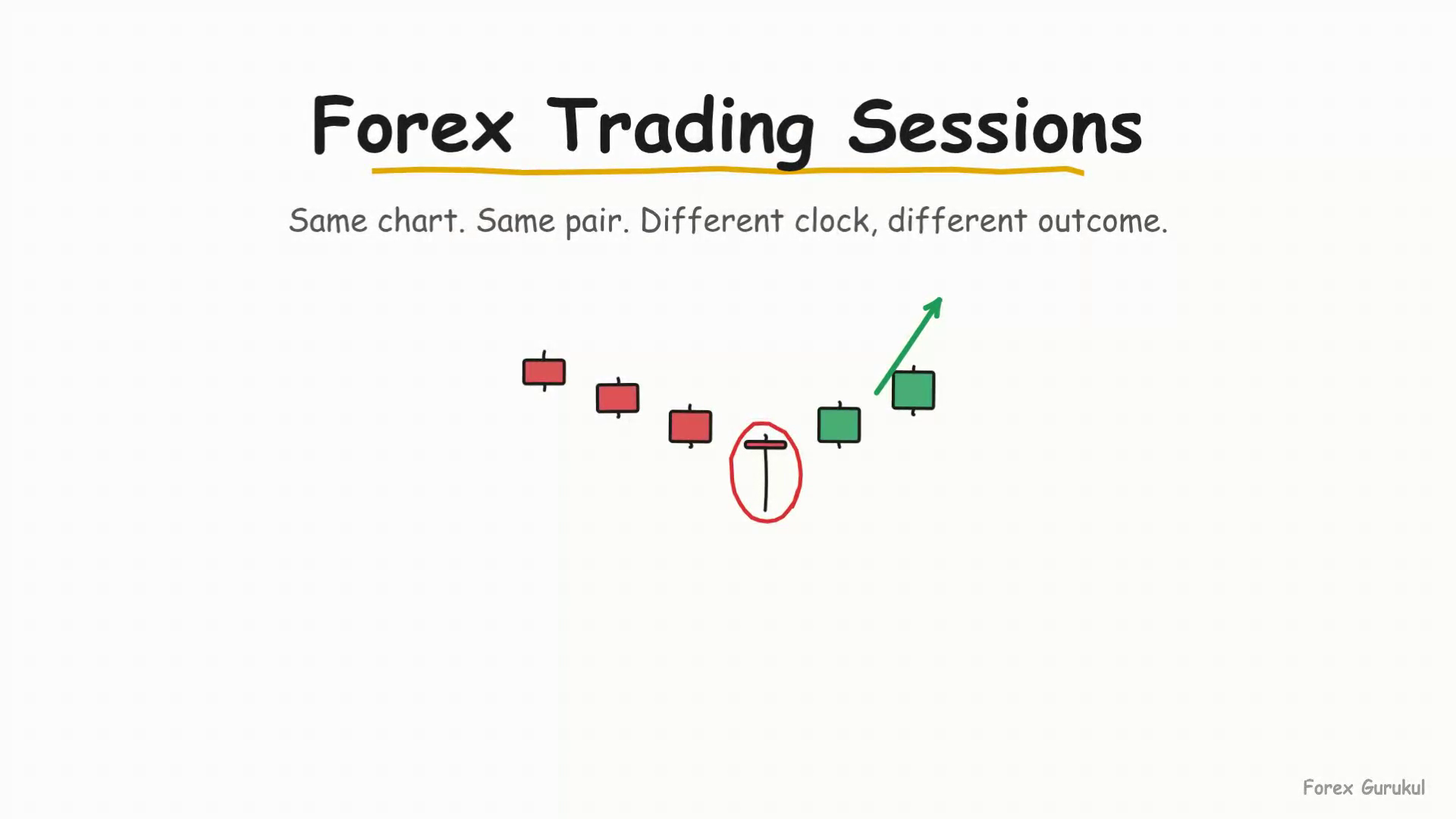
Same chart. Same pair. Same setup. Two completely different outcomes, depending on what time the clock reads when you press the button. That's the part almost nobody explains on day one of forex trading — the market trades twenty-four hours a day, five days a week, but it is not equally alive for all twenty-four of those hours. There are dead hours where price barely breathes, and there are windows where the entire market seems to wake up at once.
Miss that distinction and even a technically flawless trade can get run over. This is the map that should have come before your first live trade: the four sessions, where the real volume sits, and why the same breakout means something completely different depending on the hour.
Maria's Overnight Trade
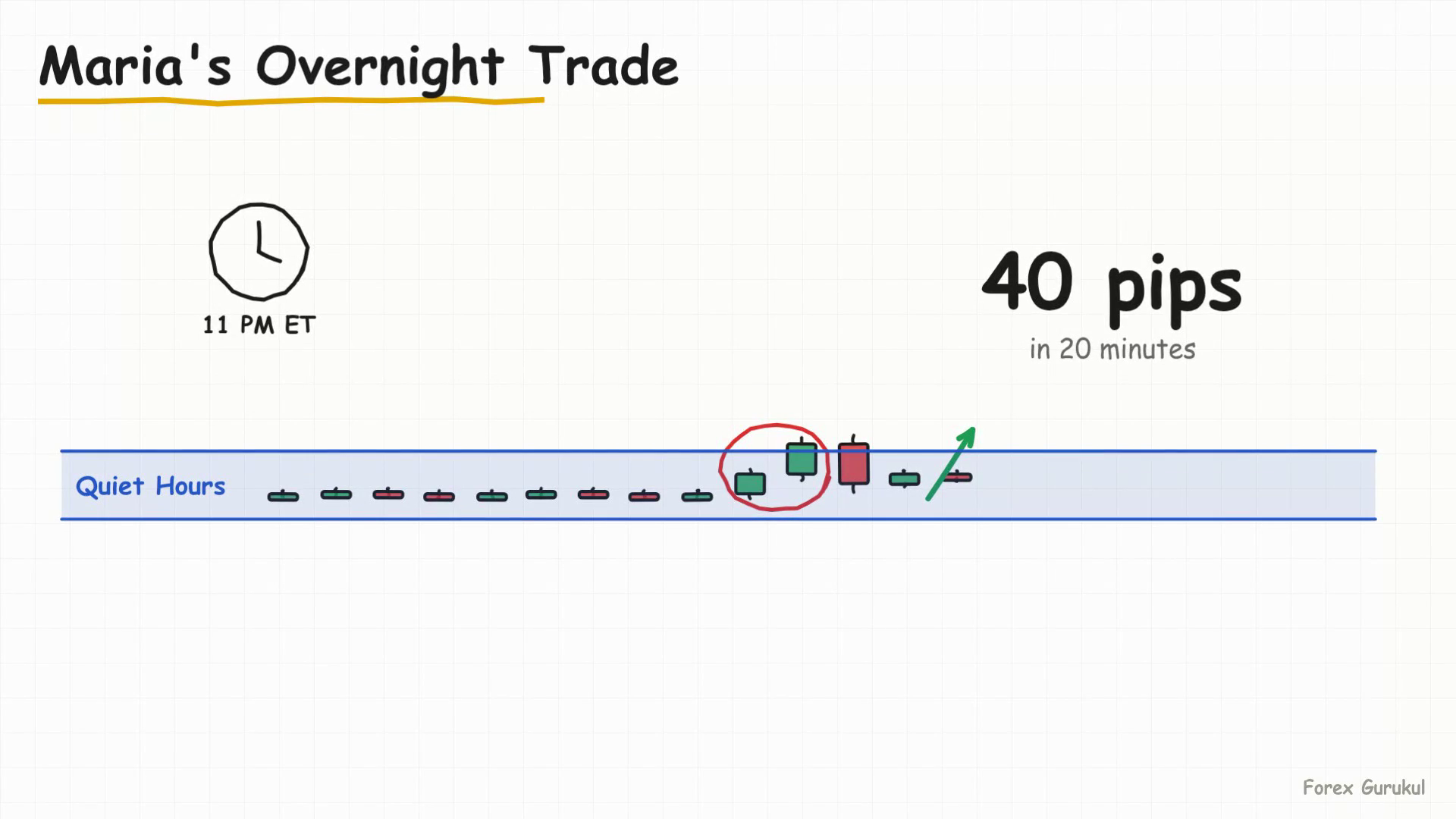
Maria shorts EUR/USD at 11 p.m. Eastern. The setup looks textbook — clean resistance, a tight stop, everything lining up. Then nothing happens. For three straight hours the candles barely move, four or five pips of total range. She's half asleep, refreshing her phone, wondering if the chart has frozen.
Then at 3 a.m., without warning, the pair rips forty pips in twenty minutes — straight through her stop. Same currency pair. Same day. Same setup. So what actually changed in those twenty minutes? Not the technicals. Not a news headline. The clock.
The Four Sessions
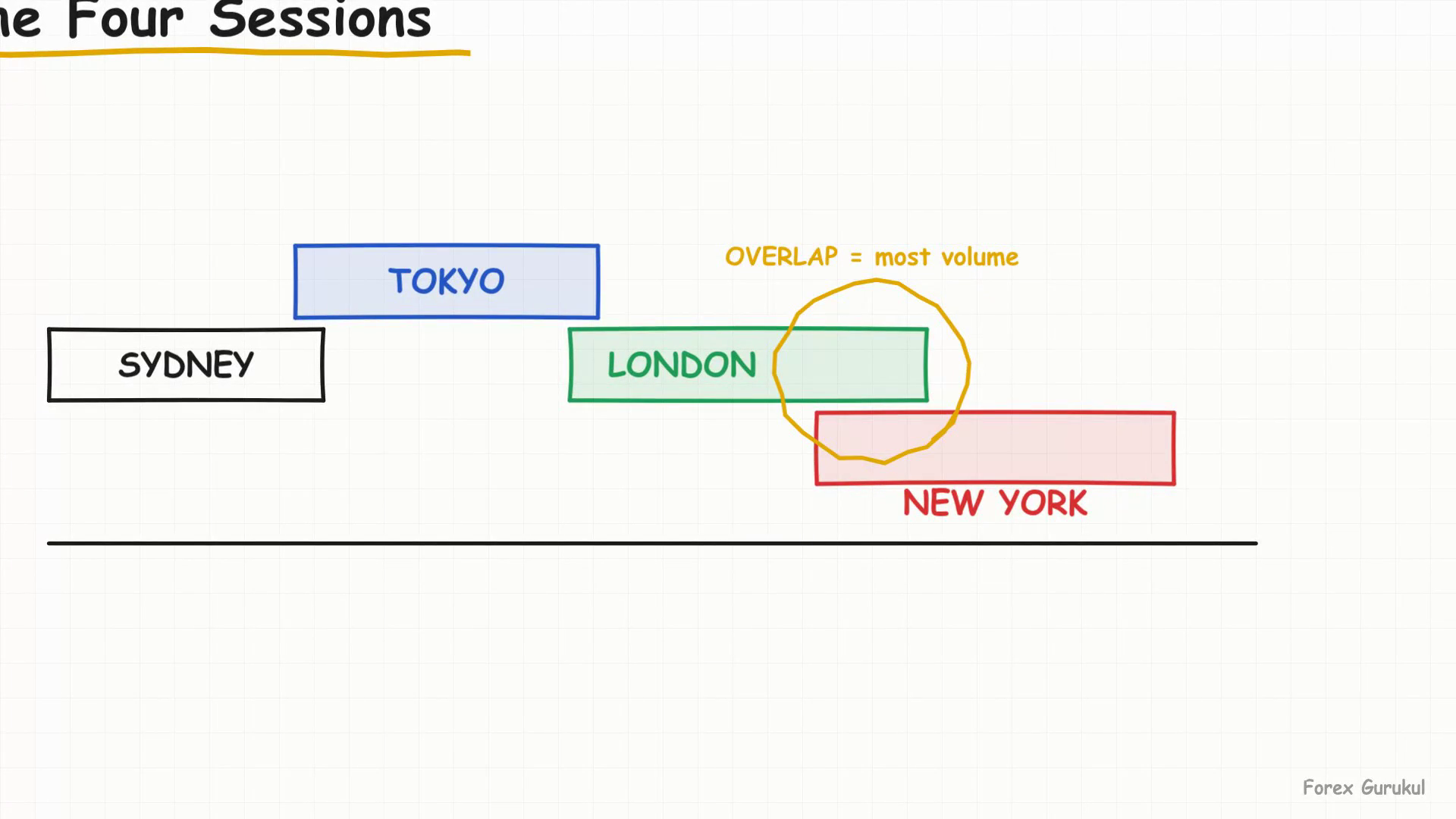
The forex day breaks into four trading windows, each centered on a major financial city: Sydney, Tokyo, London, and New York. Sydney opens the week first, Tokyo picks up a couple of hours later, London takes over next, and New York closes it out before handing the baton back to Sydney.
You'll hear these referred to by city name or by continent name — Sydney and Tokyo together are called the Asian session, London is the European session, and New York is the North American session. Same four windows, two sets of labels, used interchangeably across brokers and trading forums, so it pays to know both.
| Session | Approx. Open (ET) | Approx. Close (ET) | Also Known As |
|---|---|---|---|
| Sydney | 5:00 PM | 2:00 AM | Asian session (part 1) |
| Tokyo | 7:00 PM | 4:00 AM | Asian session (part 2) |
| London | 3:00 AM | 12:00 PM | European session |
| New York | 8:00 AM | 5:00 PM | North American session |
Four Cities, Three Windows
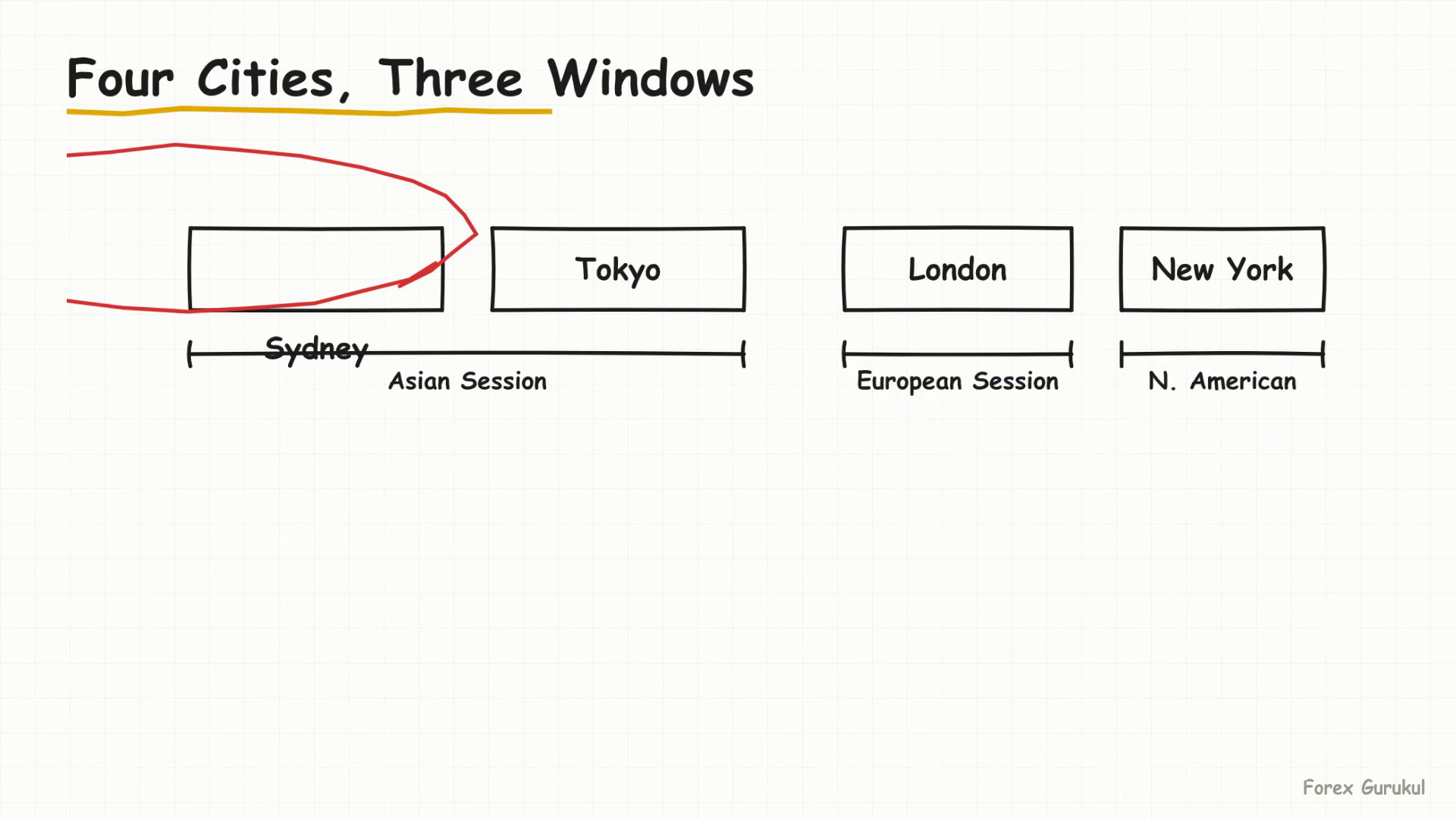
Here's the detail that trips people up: almost nobody actually trades all twenty-four hours, and almost nobody treats all four cities as separate peaks. Sydney and Tokyo overlap enough in time that they get folded into one combined Asian session rather than counted as two distinct windows.
So the real decision a trader makes every morning isn't which of four cities to watch — it's which of three windows fits their schedule and their pair. Trade EUR/USD or GBP/USD, and you'll care most about European and North American hours. Trade yen pairs or AUD/NZD crosses, and Asian hours matter far more.
- EUR/USD, GBP/USD, USD/CAD → watch London and New York hours
- USD/JPY, AUD/USD, NZD/USD → watch the Asian session closely
- Any pair during the London/New York overlap → highest volume of the day
Where The Volume Actually Lives
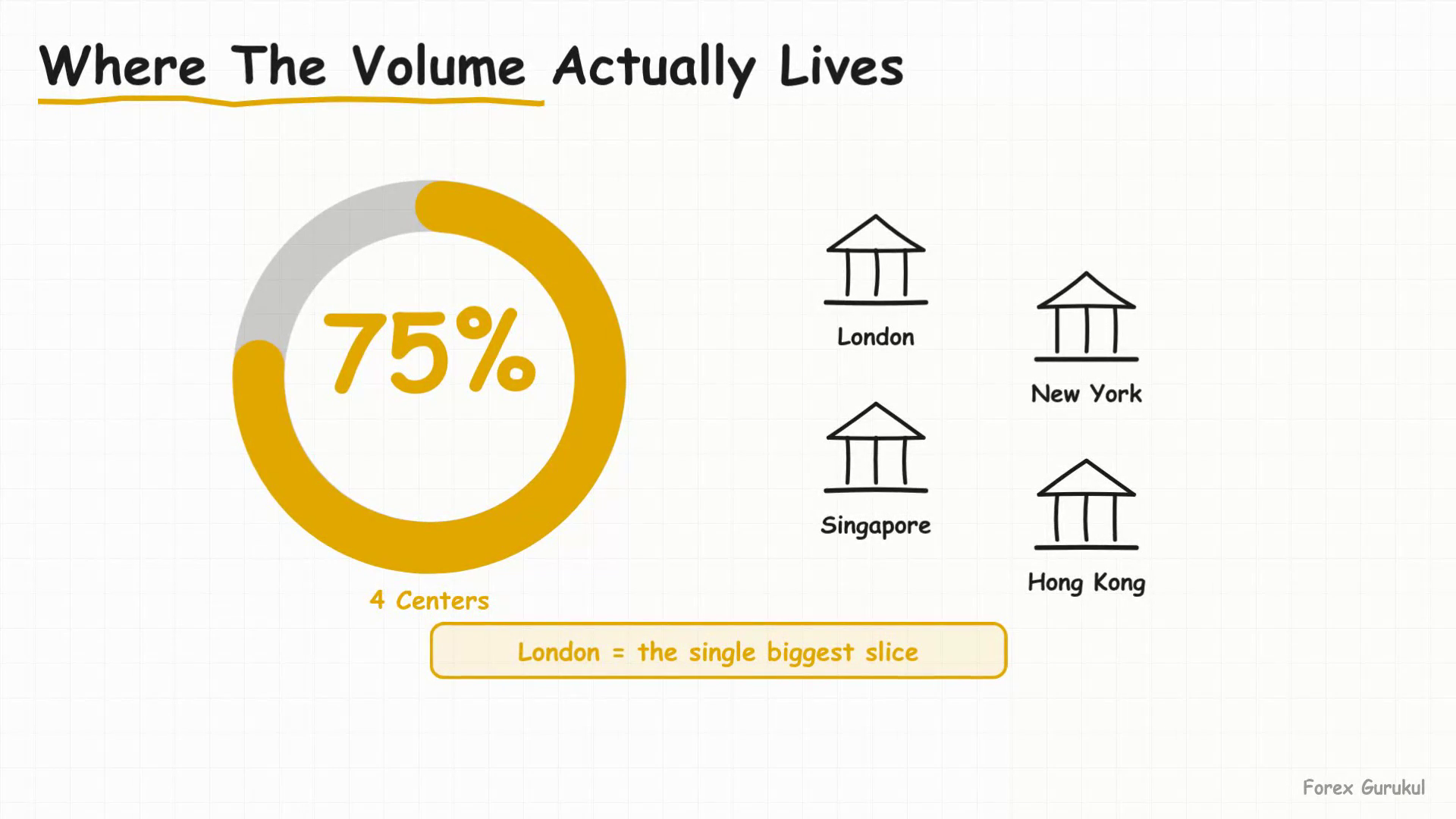
Here's a number that surprises almost every new trader: according to the Bank for International Settlements' 2025 Triennial Survey, the top four trading jurisdictions — the United Kingdom, the United States, Singapore, and Hong Kong SAR — together account for roughly 75% of all global FX turnover. Notice something odd there: two of those four, Singapore and Hong Kong, aren't one of our named sessions at all.
That's the key distinction. Sessions describe time windows; volume concentrates in specific financial centers that happen to sit inside those windows. Global OTC FX turnover hit $9.6 trillion per day in April 2025, up 28% from $7.5 trillion just three years earlier. The UK alone still commands roughly 38% of that volume, with the US close to 19%, and Singapore climbing to 11.8% — up from 9.5% in 2022. Hong Kong's turnover jumped 27.2% year-on-year to $883.1 billion a day.
| Financial Center | Approx. Share of Global FX Turnover |
|---|---|
| United Kingdom (London) | ~38% |
| United States (New York) | ~19% |
| Singapore | ~11.8% |
| Hong Kong SAR | ~6% |
| Combined top 4 | ~75% |
Volatility, Overlaps, And The Trade
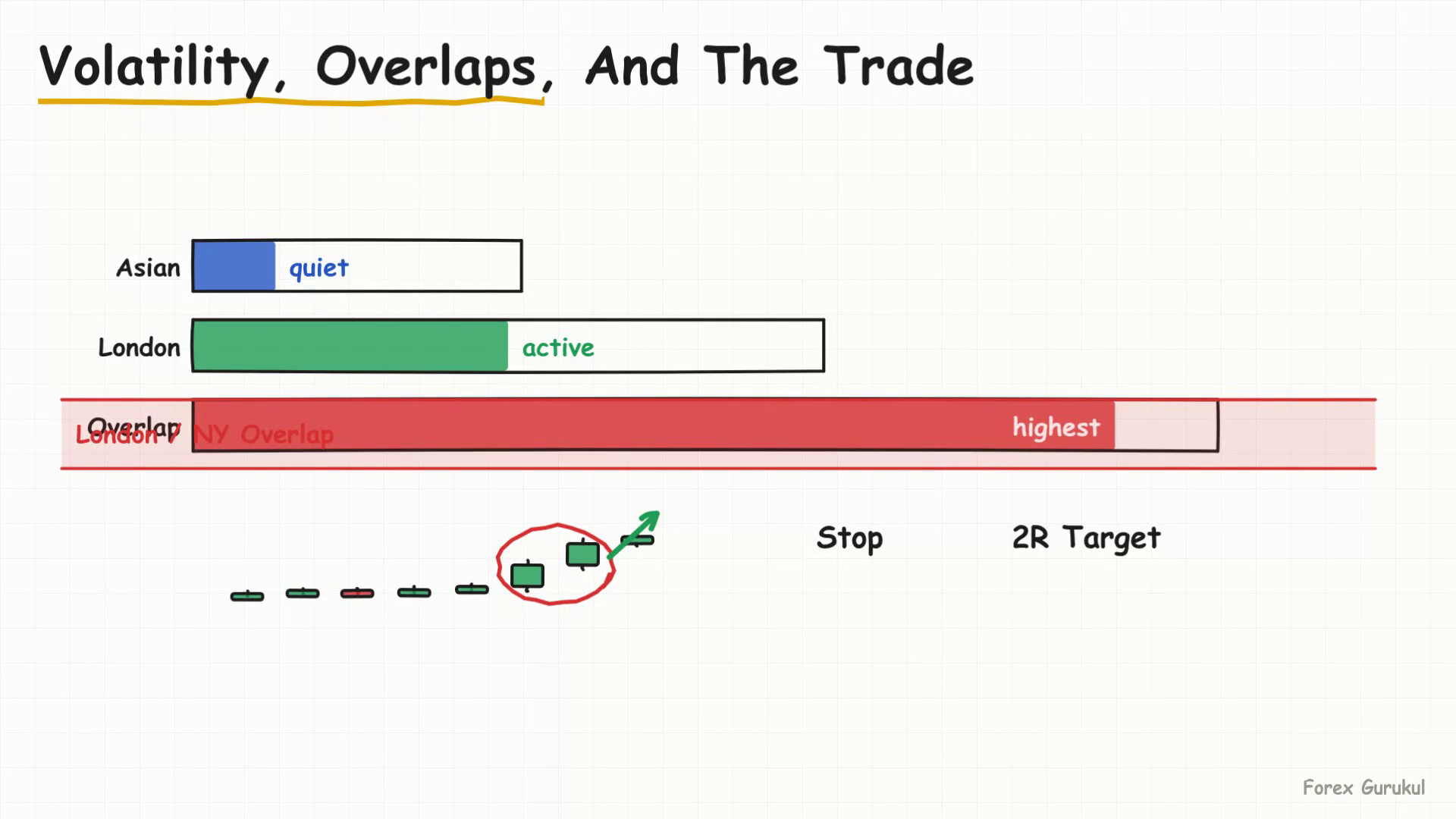
This is the part that actually protects your account. Every session has its own personality, and that shows up directly in average pip movement. During the quiet Asian hours, EUR/USD might drift ten to fifteen pips total. During London hours, that jumps meaningfully. Recent tracking of EUR/USD puts its 10-week average daily range around 60 pips, with the 5-week average sitting near 53 pips — and a large share of that daily range is compressed into the two-to-three-hour window where London and New York trade at the same time.
That overlap — roughly 8 a.m. to 12 p.m. Eastern — is where average movement often effectively doubles, because two of the planet's biggest liquidity pools are open together. It's also where a real, gradeable trade idea actually lives.
| Session Window | Typical EUR/USD Behavior |
|---|---|
| Asian session (quiet hours) | ~10–15 pips total range |
| London open | Range expansion begins |
| London/New York overlap | Volatility roughly doubles vs. quiet hours |
| New York afternoon (post-overlap) | Momentum typically fades |
A gradeable overlap-breakout trade idea
- Entry trigger: price breaking out of the tight range that built during the quiet Asian hours, right as the London/New York overlap begins
- Stop-loss: just beyond the opposite edge of that quiet range, plus a few extra pips for spread
- Target: risk-to-reward based — twice your risk is a reasonable starting point
- Reminder every single time: the breakout can fail. It's the stop, not the pattern, that protects the account
Why The Week Starts In Wellington
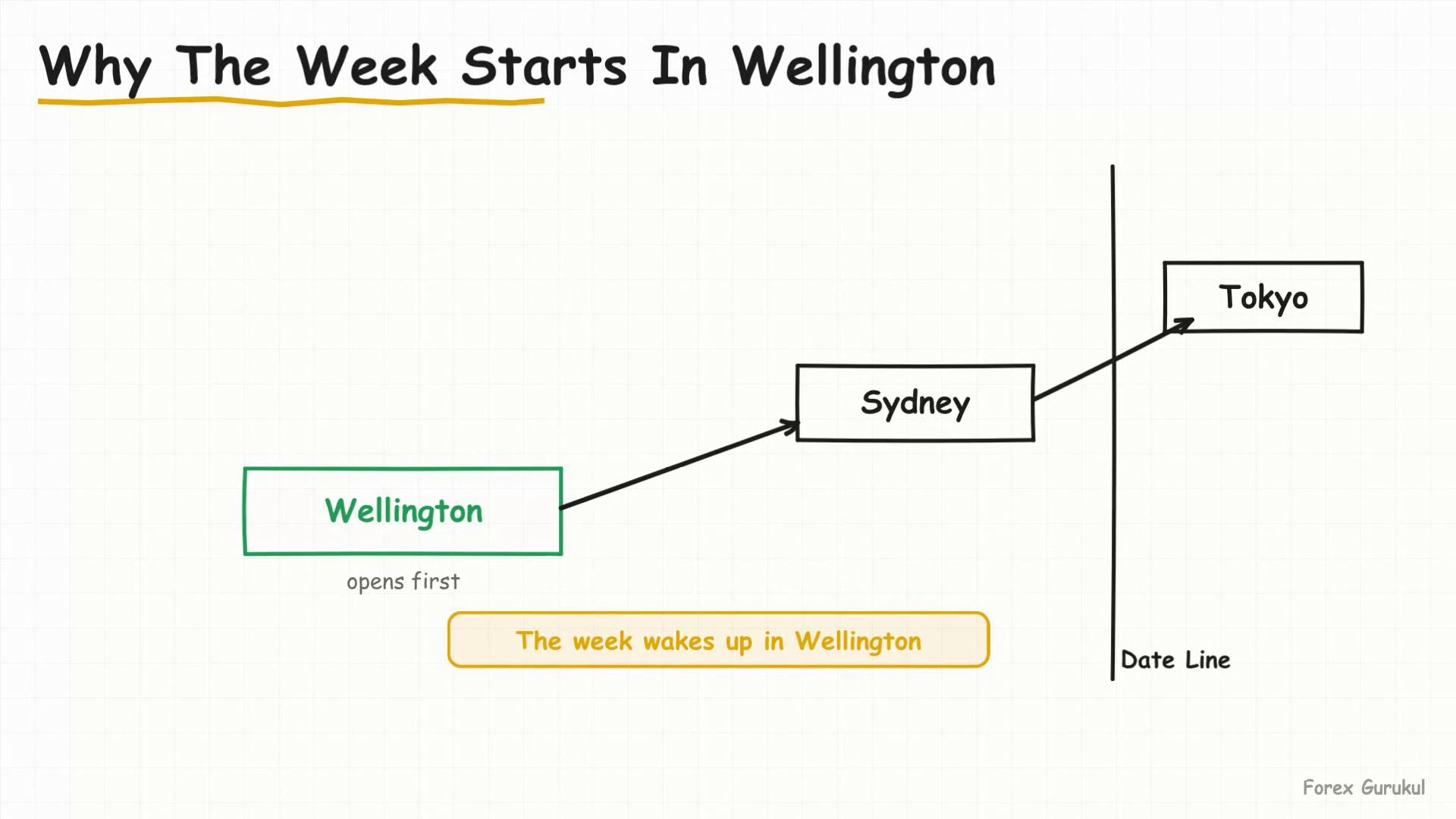
There's a strange wrinkle in when the forex trading week even begins. The International Date Line runs down the Pacific, marking where the calendar flips from one day to the next. Because of exactly where that line sits, Wellington, New Zealand becomes the first major financial center to open on Monday morning local time — technically making it the very first place the forex week wakes up.
Everything else — Sydney, Tokyo, London, New York — opens after that, chasing the sun westward around the globe. It's a small fact, but it explains why some brokers quote the trading week as starting Sunday evening Eastern time: that's simply Monday morning already underway on the other side of the date line.
Remember
Maria's trade wasn't wrong on the chart. It was wrong on the clock. A tight stop during a dead Asian-session range can look perfect right up until the London/New York overlap arrives and blows straight through it in twenty minutes. Context — knowing which session you're trading and what that session typically does — beats the pattern every time.
- Learn both naming systems: city names and continent names refer to the same four sessions
- Three windows matter more than four cities — Sydney and Tokyo share the Asian spotlight
- London, New York, Singapore, and Hong Kong handle roughly 75% of global FX volume
- The London/New York overlap is where volatility — and real trade opportunity — concentrates
- The stop-loss is what saves the account, not the setup
Key takeaways
- Forex trades 24/5, but liquidity and volatility are concentrated in specific windows — not spread evenly across the day
- Three practical windows matter more than four cities: Asian, European, and North American sessions
- London, New York, Singapore, and Hong Kong together handle about 75% of global FX turnover ($9.6 trillion/day as of April 2025)
- The London/New York overlap roughly doubles average volatility on major pairs like EUR/USD versus the quiet Asian hours
- A tight stop set during a dead session can get run over the moment the next session's liquidity arrives — trade the clock, not just the chart
Frequently asked questions
What are the four forex trading sessions?
Sydney, Tokyo, London, and New York. Sydney and Tokyo are commonly grouped as the Asian session, while London and New York are called the European and North American sessions respectively.
Why did the trade get stopped out at 3 a.m.?
A 3 a.m. Eastern move typically coincides with the transition out of the quiet Asian range and into the more active London hours, when liquidity and volatility increase sharply — often blowing through stops set during the calmer overnight period.
Which session has the most trading volume?
London dominates, and the London/New York overlap (roughly 8 a.m.–12 p.m. Eastern) sees the highest combined volume and volatility of the trading day, since two of the world's largest FX centers are open simultaneously.
Does the forex week really start in New Zealand?
Technically yes. Because of where the International Date Line sits, Wellington is the first major financial center to open each Monday, ahead of Sydney, Tokyo, London, and New York.
How can traders avoid getting stopped out overnight?
Recognize which session you're trading in, size stops for that session's typical range, and be cautious holding tight stops through a session transition — especially into the London or London/New York overlap window where volatility expands quickly.