
Lessons
Forex Vs Futures: How Brokers Really Charge You
Forex Vs Futures: The Same Loss, Two Different Bills
Dave had four hundred dollars and a plan. He opened a futures account because that's what his uncle traded. First trade, the broker made him buy one full contract — no smaller size allowed. His stop got hit for eleven dollars of loss. Commission on the way in and the way out took another nine. Twenty dollars gone on a trade that was barely wrong.
That's the part most beginners never see coming. Futures brokers itemize their fee — you see the commission line on every confirmation slip. Forex brokers, on the other hand, mostly don't charge commission at all on standard accounts. Instead, the cost is baked directly into the price you're quoted. Same idea, completely different packaging, and if you don't understand the packaging, you'll misjudge what a trade actually costs you.
The Spread: Forex's Invisible Commission
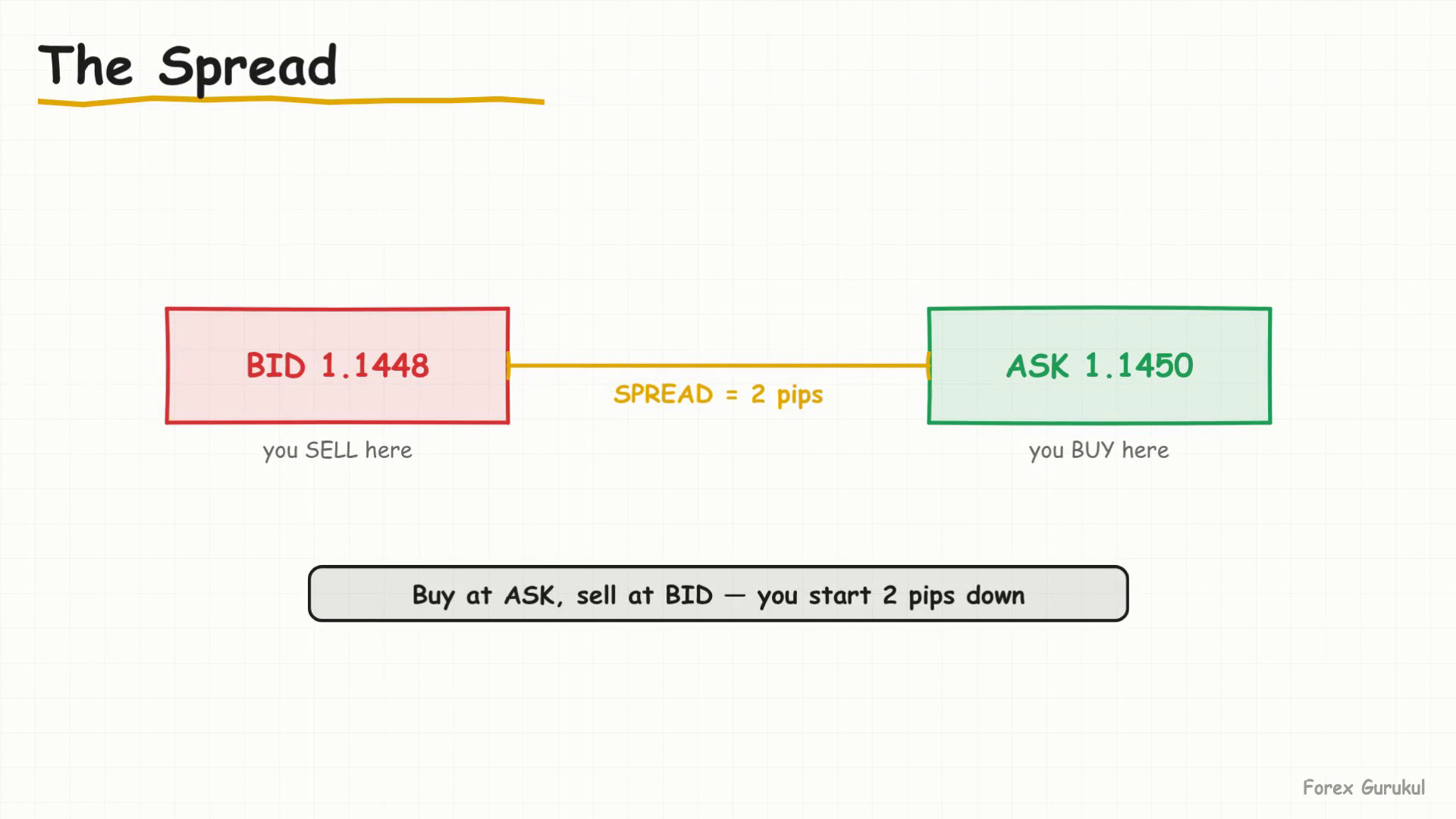
Here's the piece that actually saved Dave twenty dollars a trade. Forex brokers quote two prices at once — a slightly lower price to sell (the bid) and a slightly higher price to buy (the ask). That gap is the spread, and it's the broker's compensation, folded straight into the price rather than added afterward like a futures commission.
Brokers generally offer two flavors of this cost, and it's worth knowing the difference before you fund an account:
| Account Type | Spread | Commission | Best For |
|---|---|---|---|
| Standard | Wider (built-in markup) | None | Simplicity, no extra math per trade |
| Raw / ECN | Near-zero, raw interbank price | Small fee per lot | Frequent traders wanting tighter pricing |
The total cost usually lands in roughly the same place — brokers aren't running a charity. What changes is how transparent that cost is and how it scales with your trading style. A scalper making dozens of trades a day often prefers the raw spread plus commission model because it's easier to calculate exact cost per trade. A swing trader holding for days barely notices the difference either way.
Lot Size Flexibility: Why Futures Trapped Dave
Here's the part that actually trapped Dave. In futures, one contract is one contract — a fixed size set by the exchange, take it or leave it. If the exchange says a contract controls a set notional value, that's what you're trading, regardless of whether it fits your $400 account or your risk tolerance.
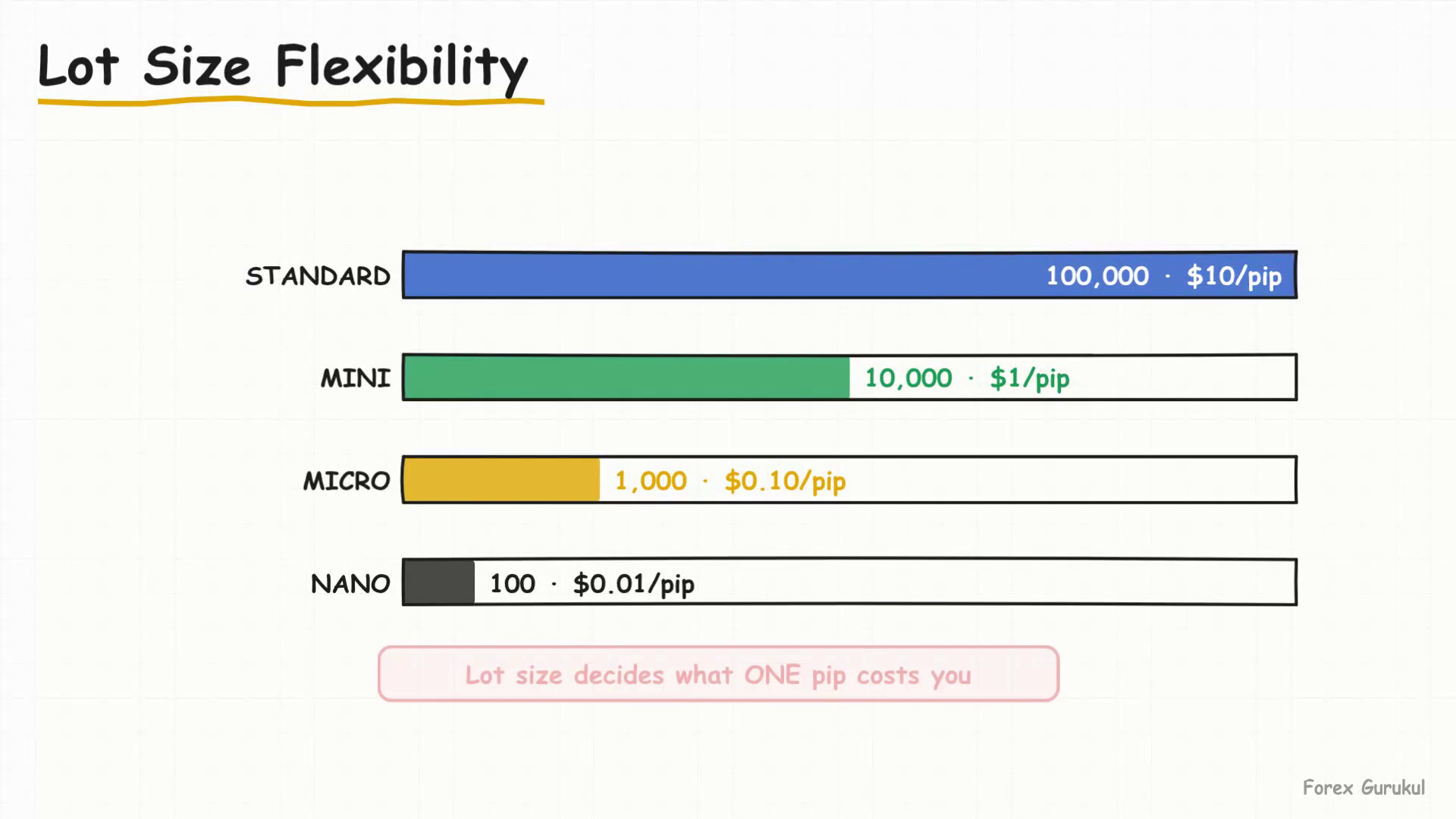
Forex doesn't work that way. Position size is divisible almost down to the unit:
| Lot Type | Units of Base Currency | Typical Use |
|---|---|---|
| Standard Lot | 100,000 | Larger, funded, or institutional accounts |
| Mini Lot | 10,000 | Small-to-mid retail accounts |
| Micro Lot | 1,000 | New traders, tight risk control |
| Nano Lot (some brokers) | 100 | Ultra-precise position sizing, testing |
This is the real structural advantage for beginners — not a marketing line, an actual mechanical difference. Your position size can be built to match your stop distance and your risk tolerance, instead of your risk being forced to match whatever size the exchange happens to sell. A $400 account can be sized so a loss is $5, not $50.
- Futures: fixed contract size — your risk bends to the market
- Forex: variable lot size — the market bends to your account
- Result: forex fits small accounts structurally, not just by reputation
24-Hour Clock: No Bell, No Single Floor
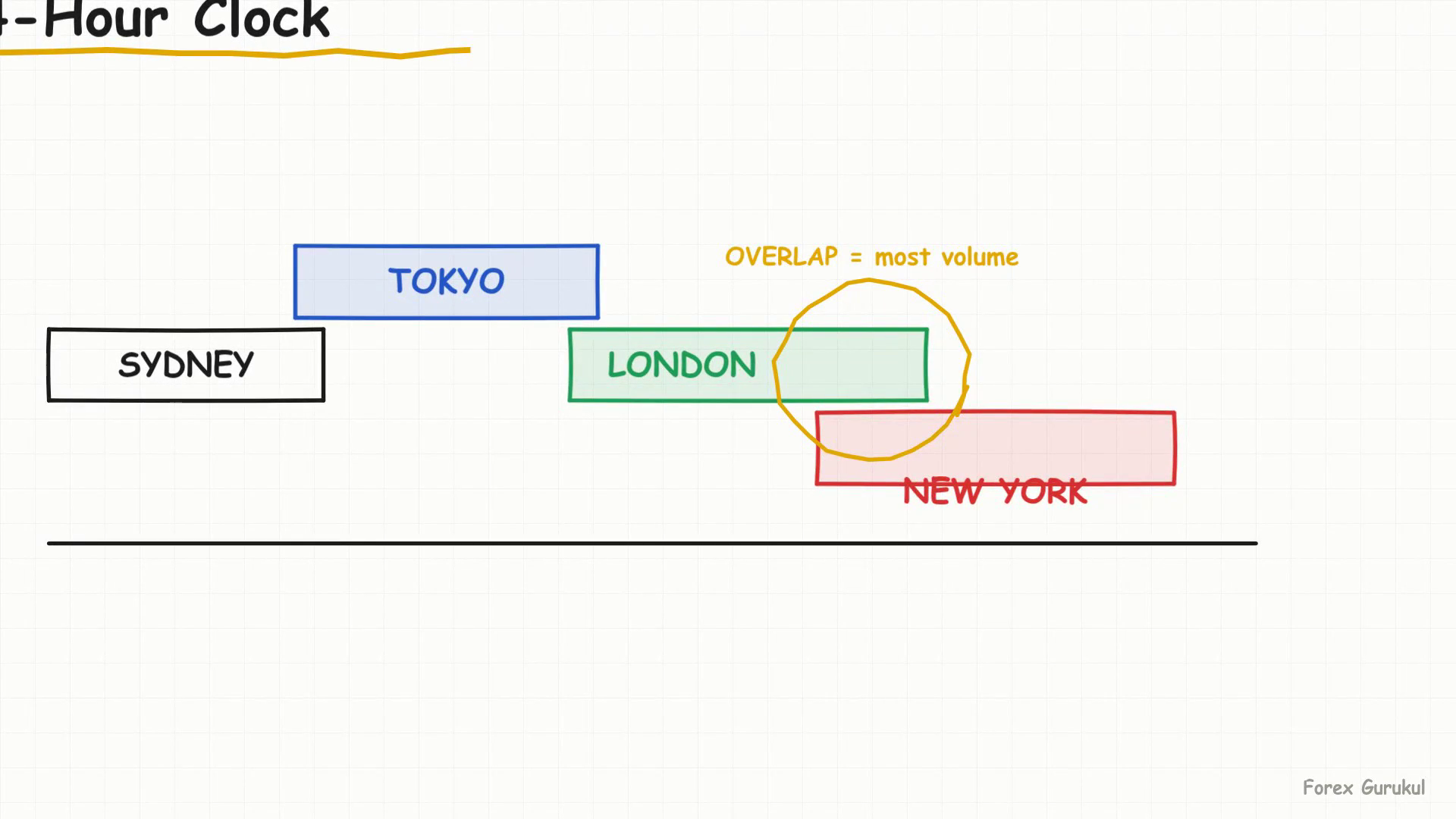
Dave's futures exchange had a bell — open at a set hour, closed at a set hour, done. Forex has no bell, because forex isn't one building. It's a network of banks in Tokyo, then London, then New York, passing the order book to each other as the earth turns. That's why it trades close to 24 hours a day, five days a week, pausing only over the weekend when banks are shut everywhere at once.
| Session | Approx. Hours (IST) | Character |
|---|---|---|
| Tokyo/Asia | 5:30 AM – 2:30 PM | Quieter, sets early tone for JPY, AUD pairs |
| London | 12:30 PM – 9:30 PM | Highest liquidity overlap begins here |
| New York | 6:00 PM – 3:00 AM | Overlaps with London, big USD-driven moves |
No single exchange floor decides the hours — that's the practical effect for you. A news event in Asia can move a pair before New York even wakes up, so the chart you check at breakfast in India may already reflect something that happened while you slept. Try it yourself: check what time it is right now in London and New York, and guess which session is actually driving the current move.
Too Big To Move: Why No Single Player Controls Price
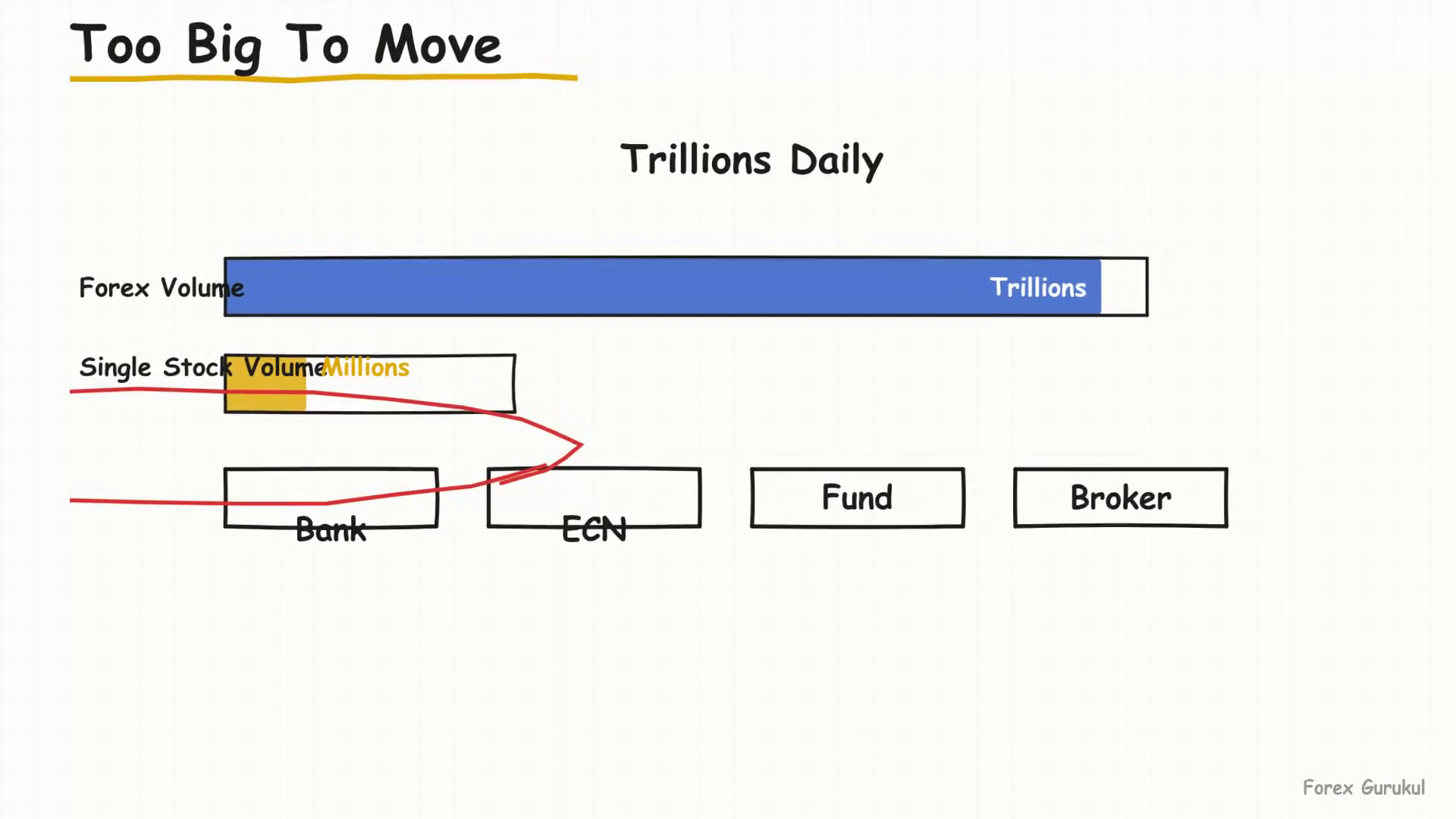
Quick myth to bust: new traders assume some big bank can just push the euro-dollar wherever it wants. Here's the number that kills that idea — global FX turnover reached $9.6 trillion per day in the Bank for International Settlements' April 2025 Triennial Survey, up nearly 30% from the previous survey three years earlier (,). That volume is spread across thousands of banks, funds, and brokers with no single exchange floor and no single decision-maker.
Compare that to one stock, where one large fund buying heavily can visibly move the price on a thin order book. In forex, that same size barely leaves a mark, because the order gets absorbed across a global network of banks and electronic communication networks (ECNs), all quoting prices and filling orders around the clock.
| Market | Approx. Daily Turnover | Price Impact of Large Single Order |
|---|---|---|
| Global Forex | $9.6 trillion | Minimal — absorbed across global liquidity |
| Single Large-Cap Stock | Billions (varies by ticker) | Can be visible, especially on thin days |
| Micro-Cap Stock | Millions | Significant — low liquidity amplifies moves |
Leverage: Two Edges of the Same Blade
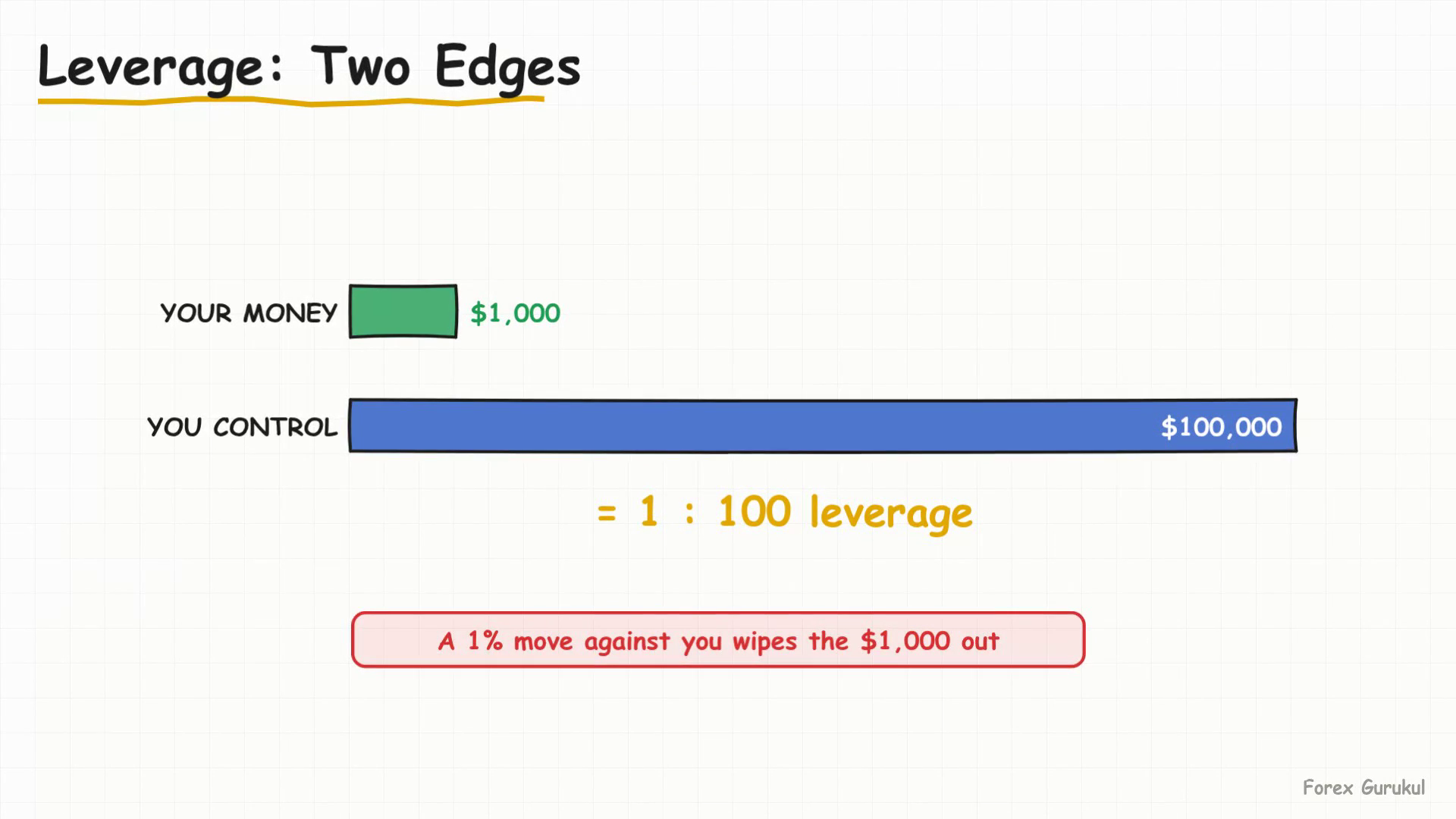
Pause here and guess: with $500 and 50:1 leverage, what's the maximum position you could control? Twenty-five thousand dollars of position, from five hundred dollars of your own money. That's leverage — the broker lets you control a position far bigger than your account balance.
In the United States, the National Futures Association (NFA) and CFTC cap retail forex leverage at 50:1 on major currency pairs and 20:1 on all other pairs, specifically to limit how much traders can amplify their exposure relative to account size (,).
| Leverage | Account Size | Max Position Controlled |
|---|---|---|
| 10:1 | $500 | $5,000 |
| 30:1 | $500 | $15,000 |
| 50:1 (US cap, major pairs) | $500 | $25,000 |
And amplification cuts both directions. A 0.5% move in your favor on a $25,000 position is a real gain relative to your $500. The same 0.5% against you is a real loss just as fast. Leverage doesn't make a trade better or worse — it makes whatever the trade does happen, bigger.
Remember: What Actually Saves Your Account
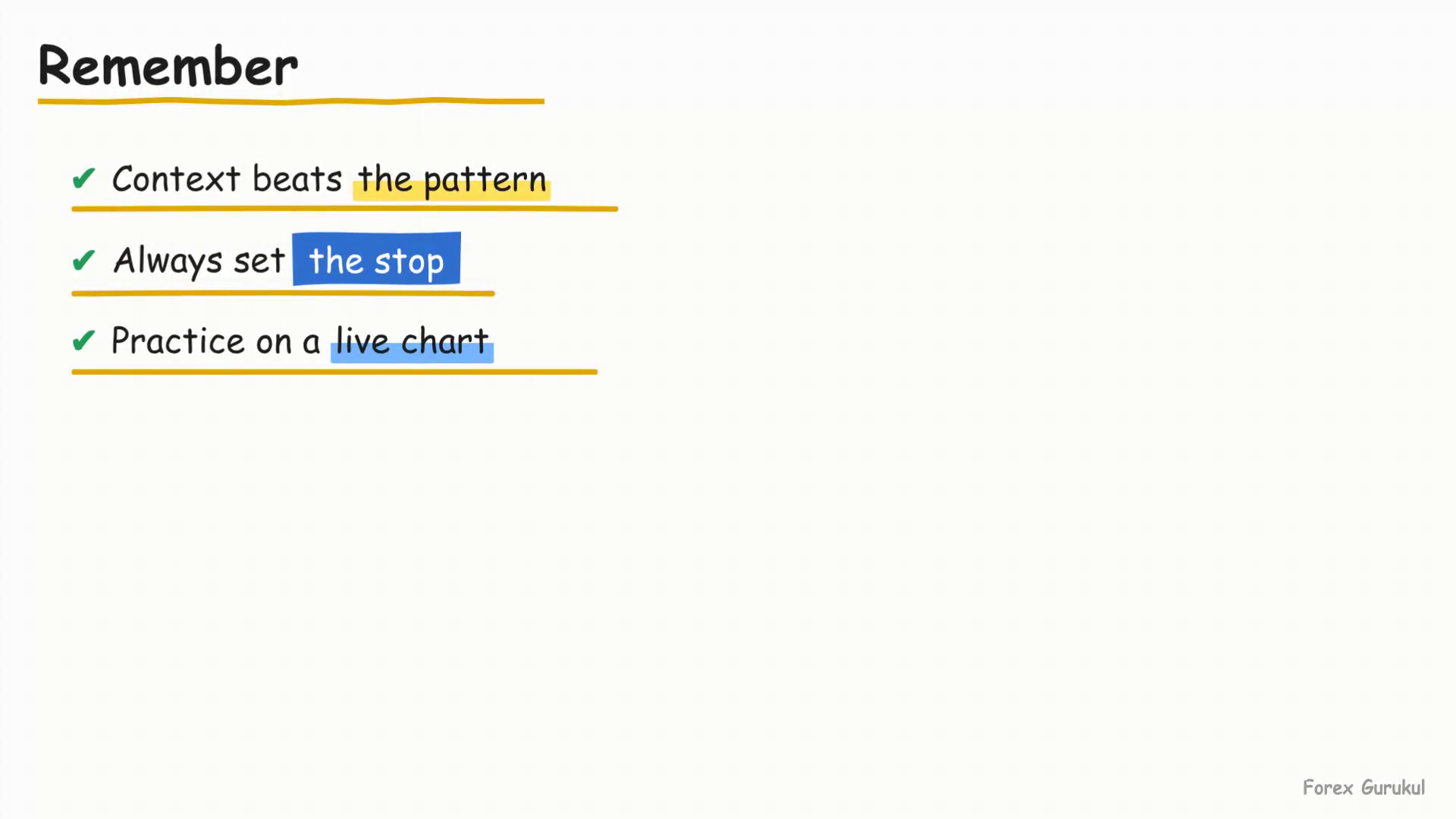
None of this — spreads, lot sizes, 24-hour sessions, leverage caps — replaces the basics of good trading. Context beats the pattern. The stop is what actually saves you, not the entry signal. And nothing replaces practice on a live chart, watching how price actually behaves across sessions instead of just reading about it.
- Understand whether your broker charges via spread, commission, or both — and compare total cost, not just the headline number
- Use micro or mini lots to size risk to your account, not the other way around
- Know which session is driving the current move before you trade it
- Respect leverage limits — 50:1 on majors in the US isn't a suggestion, it's a regulatory floor built for a reason ()
- Liquidity is your friend — a $9.6 trillion-a-day market is what lets you get in and out fast ()
Dave didn't fix his account with a better indicator. He fixed it by understanding the structure of the market he was trading in — and choosing one where four hundred dollars was actually enough to walk through the door.
Key takeaways
- Forex brokers usually skip commission but bake the cost into the bid-ask spread — the total price paid can be similar to futures, just less visible
- Forex's flexible lot sizes (standard, mini, micro) let you size risk to your account; futures' fixed contract size forces your risk to fit the exchange
- Forex trades nearly 24 hours across Tokyo, London, and New York sessions with no single exchange bell deciding the hours
- At $9.6 trillion in daily turnover (BIS, April 2025), forex is too large for any single player to move — unlike thinly traded stocks
- US retail forex leverage is capped at 50:1 on major pairs by the NFA/CFTC — leverage magnifies gains and losses equally, it doesn't favor either
Frequently asked questions
Do forex brokers really charge no commission at all?
Standard accounts typically charge zero commission but widen the spread to compensate. Raw/ECN accounts tighten the spread but add a small per-lot commission. Either way, you're paying — just packaged differently.
Why is a micro lot better for beginners than a futures contract?
A futures contract has a fixed size set by the exchange, so your risk per trade is largely fixed too. A micro lot (1,000 units) lets you size a $400–$500 account so a stop-out costs a few dollars instead of tens of dollars.
What is the maximum leverage allowed for forex trading in the US?
The NFA and CFTC cap retail leverage at 50:1 on major currency pairs and 20:1 on all other pairs, to limit how much a small account balance can be amplified into a large position.
Why does forex trade almost 24 hours a day?
Forex isn't centralized on one exchange floor — it's a network of banks across Tokyo, London, and New York time zones passing the order book to each other, so trading continues nearly around the clock on weekdays.
Can a single bank or fund move the forex market the way a large trade can move a stock?
It's far harder. Global FX turnover hit $9.6 trillion per day in the BIS's April 2025 survey, spread across thousands of banks and ECNs, so even large orders get absorbed without the dramatic price impact seen in thinner stock markets.