
Lessons
Forex Vs Futures: Why Losses Can't Wipe You Out
Forex Vs Futures: The Real Trade-Offs
Forex and futures both let you speculate on price movement with leverage, and both can be traded from the same laptop with the same coffee cup next to the keyboard. But underneath that similar-looking chart, they are built on completely different plumbing — different liquidity, different hours, different leverage caps, different cost structures, and most importantly, a different answer to the scariest question a trader can ask: what's the absolute worst this can do to me?
- Liquidity: a $9.6 trillion-a-day global market vs. exchange-specific futures volume that can dry up fast
- Hours: forex runs 24 hours a day, five days a week; futures trade on a fixed exchange schedule
- Leverage: retail forex majors capped near 50:1 in the US; futures margin is set contract-by-contract by the exchange
- Cost: forex is typically spread-based with no commission; futures charge commission plus exchange fees per trade
- The backstop: regulated US forex brokers use stop-out systems that cap losses near your deposit; futures accounts can go negative
The Overnight Gap
Sam had two thousand dollars in a futures account. He fell asleep up three hundred dollars. He woke up down eleven hundred dollars he didn't even have. No one hit his stop loss — the market simply gapped through it overnight while the exchange was closed, and there was nothing he could do about it.
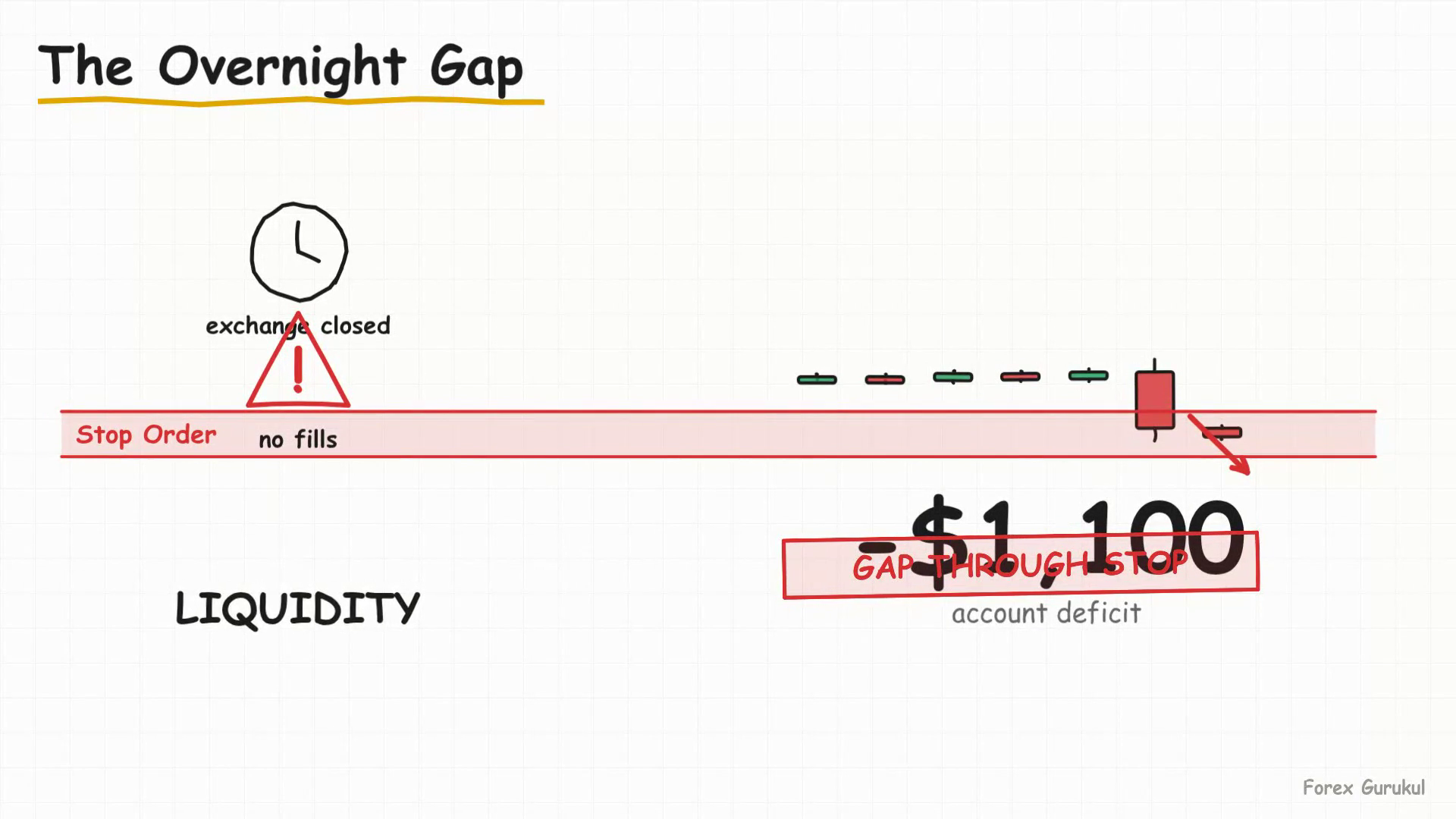
Crude oil futures trade only during set exchange hours. Sam held his position overnight through a session gap after a surprise inventory report. When the exchange reopened, price had already jumped past his stop order with no trades printing in between. His broker filled him blocks below where his stop was supposed to trigger, and the shortfall came straight out of his pocket. This wasn't a bad strategy — it was a liquidity and execution problem, and it's the exact scenario that separates futures risk from forex risk.
Liquidity And Trading Hours: Forex Vs Futures
The single biggest reason Sam's gap happened is liquidity — or the lack of it. The foreign exchange market is the largest financial market in the world by a wide margin. The Bank for International Settlements' latest triennial survey put global FX turnover at $9.6 trillion per day as of April 2025, up sharply from $7.5 trillion three years earlier. A single futures contract, by comparison, trades a fraction of that. Even a heavily traded contract like WTI crude oil averaged roughly 953,000 to 1.7 million contracts a day through 2026 on CME Group — a record for the exchange, but still nowhere near the depth of the global currency market, and volume in thinner contracts can evaporate outside peak hours.
| Market | Typical Daily Volume | Source Period |
|---|---|---|
| Global FX market (all pairs, OTC) | $9.6 trillion | BIS Triennial Survey, April 2025 |
| Global FX market (previous survey) | $7.5 trillion | BIS Triennial Survey, 2022 |
| CME WTI Crude Oil futures | ~953,000–1.7 million contracts | CME Group, 2026 |
| CME Group, all products combined | 27 million contracts (record month) | CME Group, July 2026 |
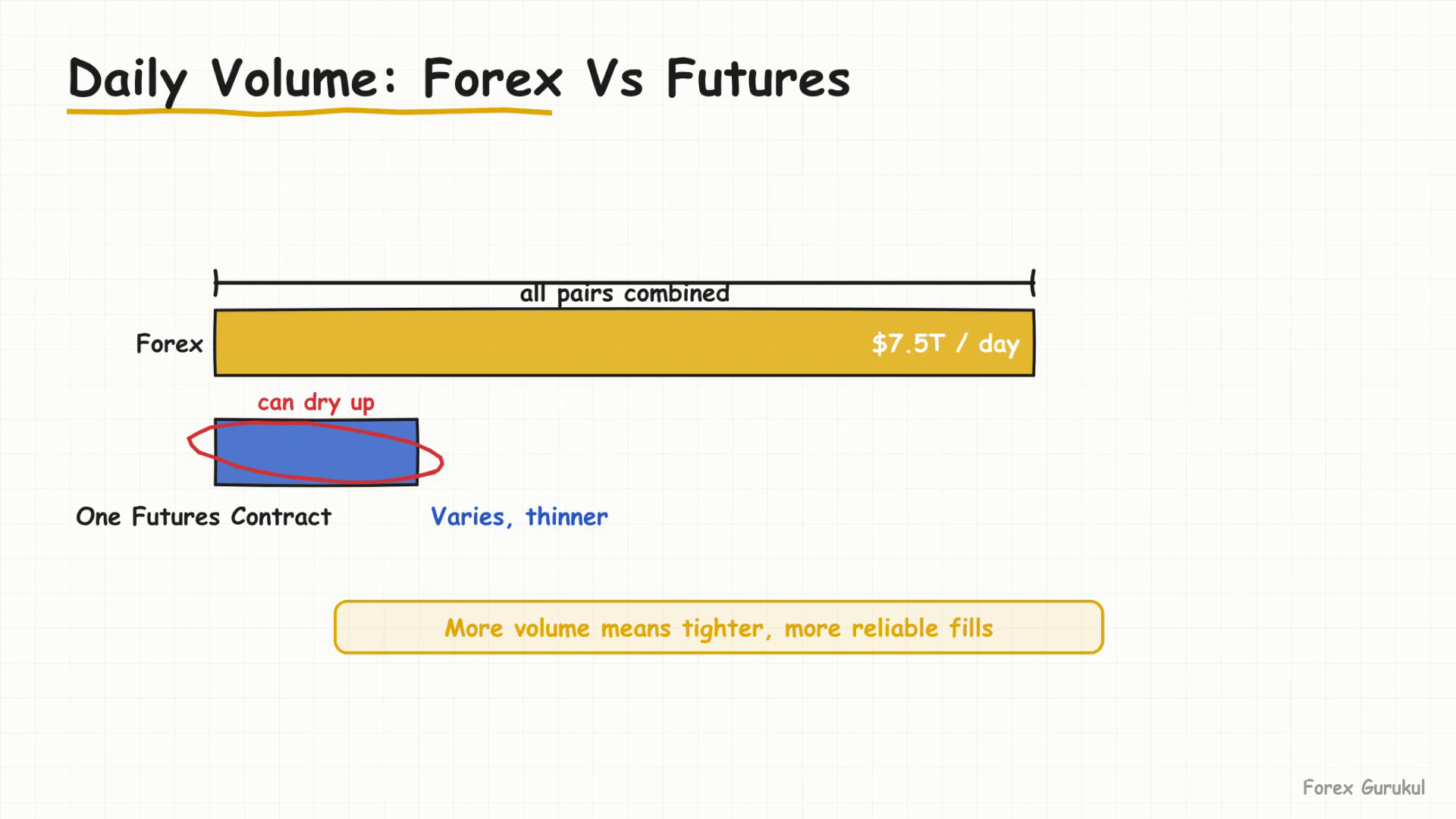
More volume on both sides of every price means your order fills close to what you see on screen. Less volume means gaps, and gaps mean exactly what happened to Sam. But volume alone didn't cause his blowup — timing did.
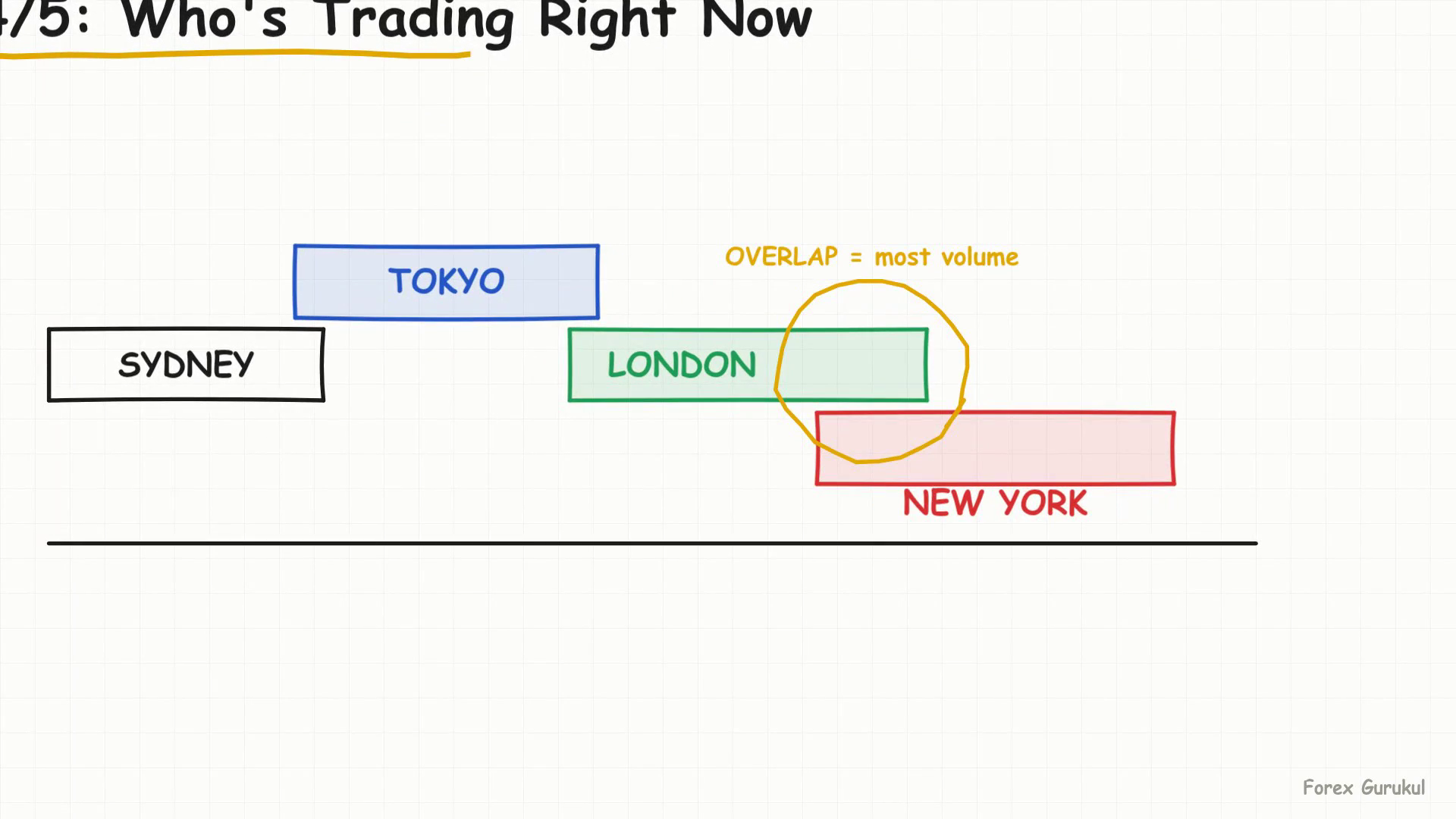
Futures trade on a fixed exchange schedule with defined open and close times, often with a maintenance break in between. Miss that window and you cannot react, which is precisely the trap Sam fell into. Forex has no single exchange — it's a network of banks and brokers across Sydney, Tokyo, London, and New York handing the ball to each other as one session closes and the next opens. Five days a week, there is almost always a session open somewhere, and a price you can actually trade at.
Leverage: Two Very Different Ratios
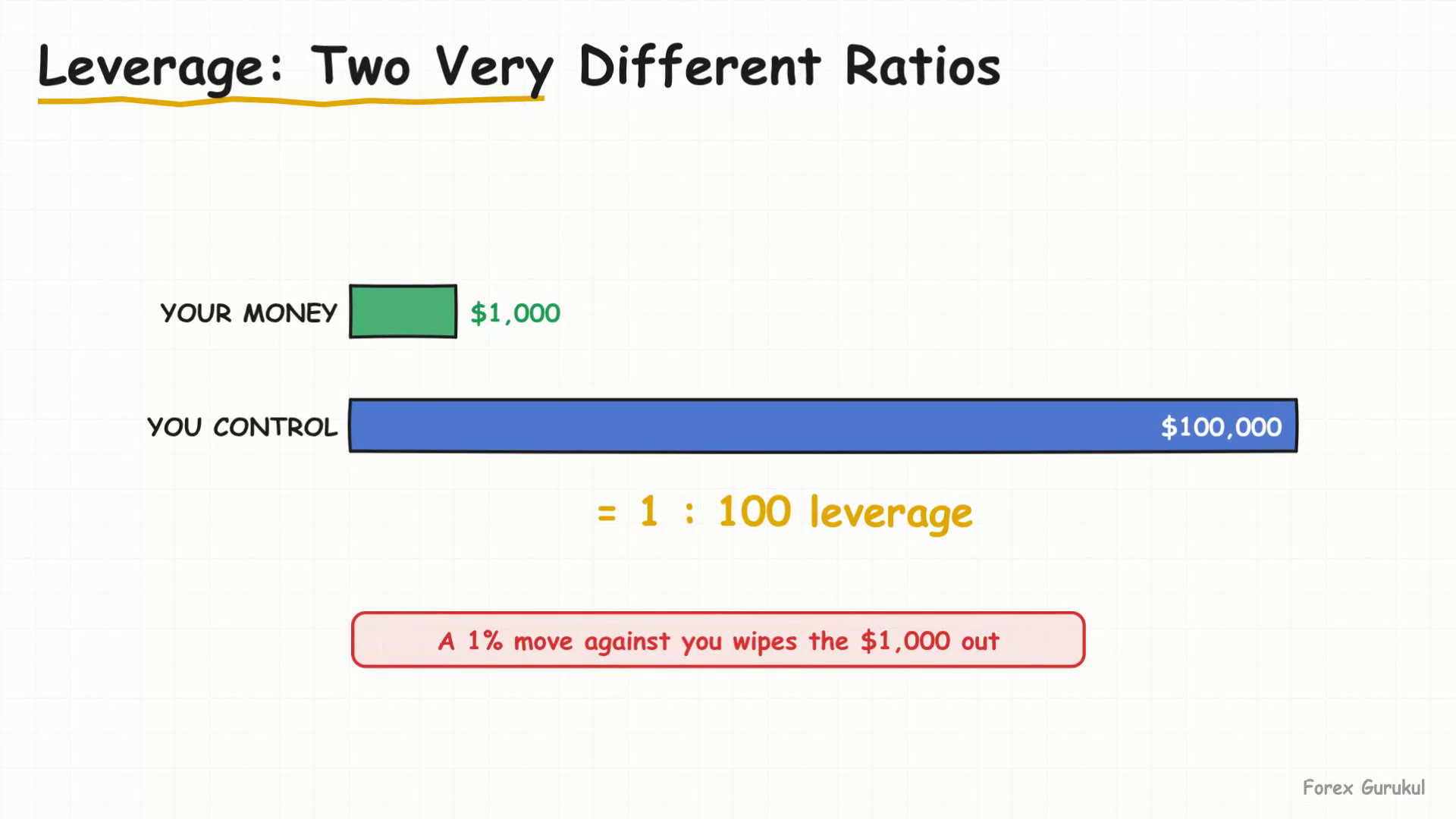
Quick pause — guess the number before you read it. How much of your own money do you need to control $100,000 worth of currency in forex? Most beginners guess it's close to the full amount. It isn't. Under CFTC and NFA rules, US retail forex brokers can offer leverage up to 50:1 on major currency pairs, meaning that $100,000 position might need only $2,000 of margin. Futures also use leverage, but it's set exchange-by-exchange based on the contract's volatility and notional value, and it typically requires a larger slice of the contract's value up front than the retail forex minimum.
| Market | Instrument | Typical Leverage / Margin Rule |
|---|---|---|
| Forex (US regulated) | Major pairs (EUR/USD, USD/JPY, etc.) | Up to 50:1 |
| Forex (US regulated) | Minor / exotic pairs | Up to 20:1 |
| Futures (CME) | Index and commodity contracts | Margin set per-contract by the exchange, adjusted with volatility |
Higher leverage cuts both ways. It let Sam open a bigger position than his account justified, and that same leverage turned a normal gap into a negative balance. Leverage doesn't create risk — it multiplies whatever risk is already sitting underneath it.
How Your Broker Actually Gets Paid
Here's a cost most beginners never notice until they add it up. Futures brokers typically charge a commission per contract, plus exchange and clearing fees, every single time you enter and exit a trade. Most forex brokers charge zero commission and instead build their fee into the spread — the small gap between the buy price and the sell price you already see quoted.
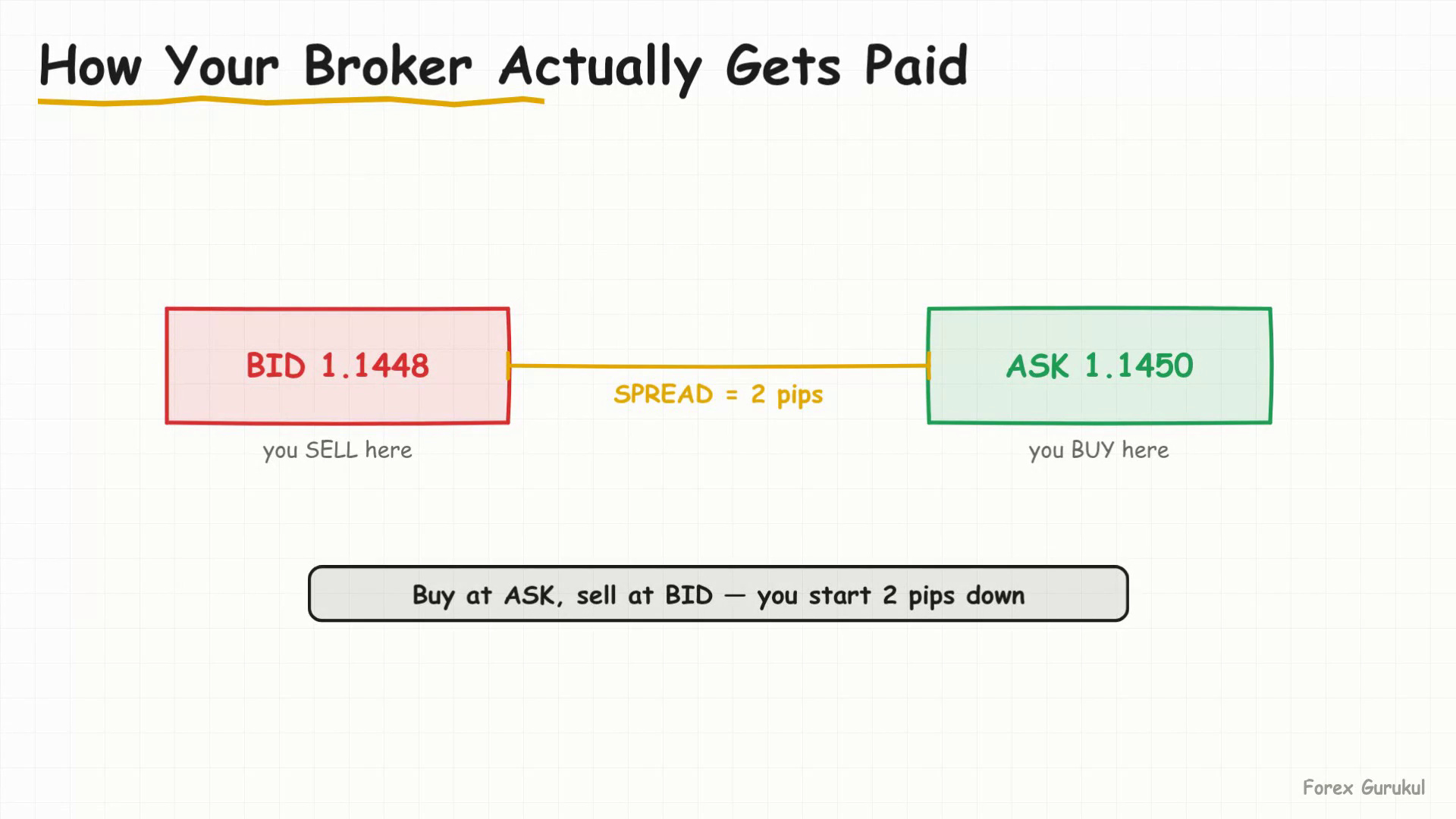
Trade a handful of times a month and that difference is pocket change. Trade several times a day — the way many active forex traders do — and futures commissions add up fast, while a tight forex spread on a liquid pair like EUR/USD barely dents your account.
Order Sent Vs Order Filled
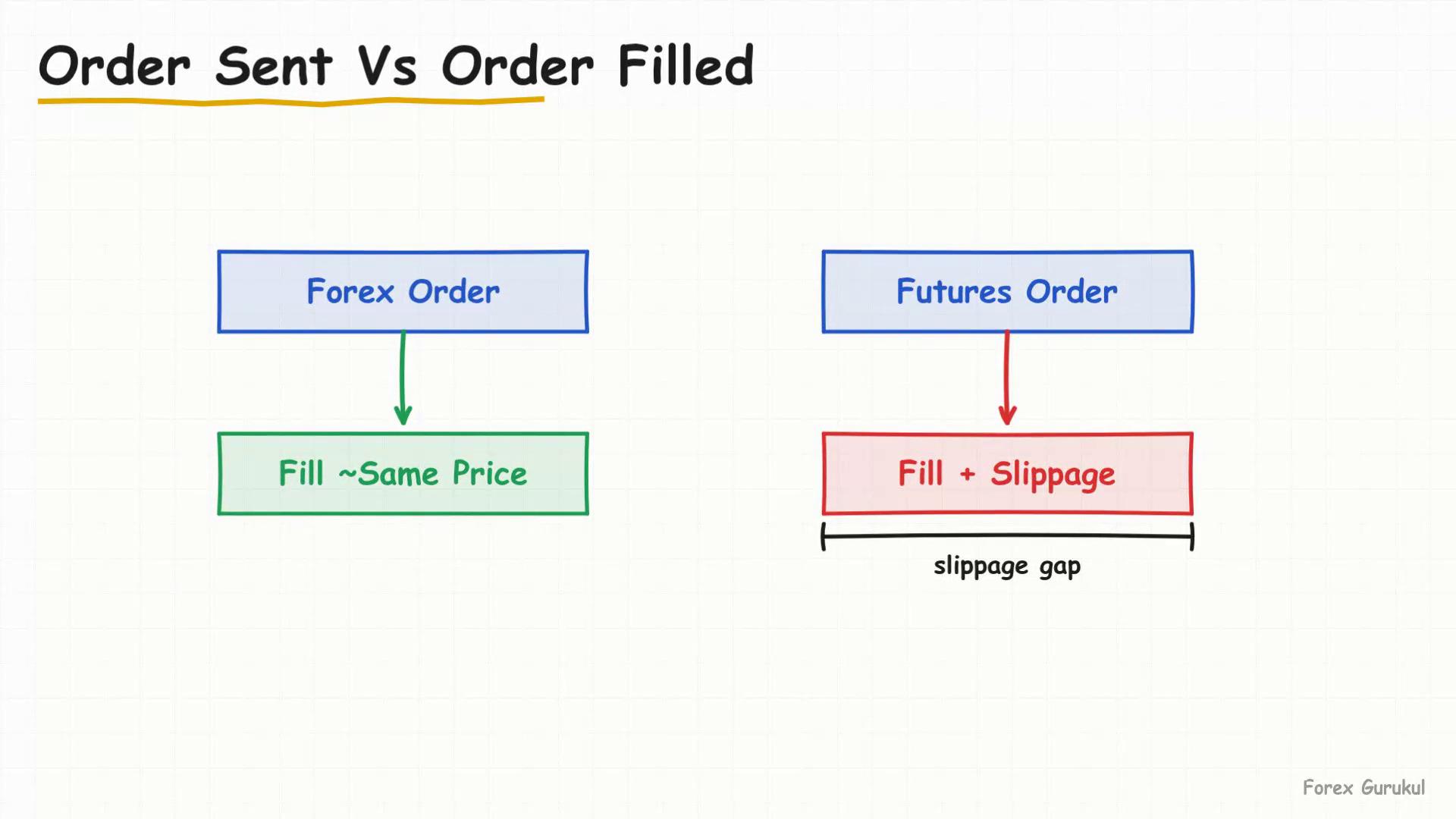
Cost isn't the same as certainty, though, and certainty is where futures can struggle. On a normal, liquid forex pair, you almost always get filled at or extremely close to the price on your screen, because there's so much depth sitting behind that quote. In futures — especially in thinner contracts or fast-moving moments — your order can sit unfilled, or fill several ticks away from where you clicked, simply because there aren't enough opposite orders sitting right there.
The Floor Under Your Account
This is the piece that actually explains Sam's negative balance, and it's the one worth writing down. Most retail forex platforms in the US run a stop-out or margin-call system: before your losses can exceed the money in your account, the broker automatically starts closing your positions once your margin gets too thin. Your downside is mechanically capped near your deposit.
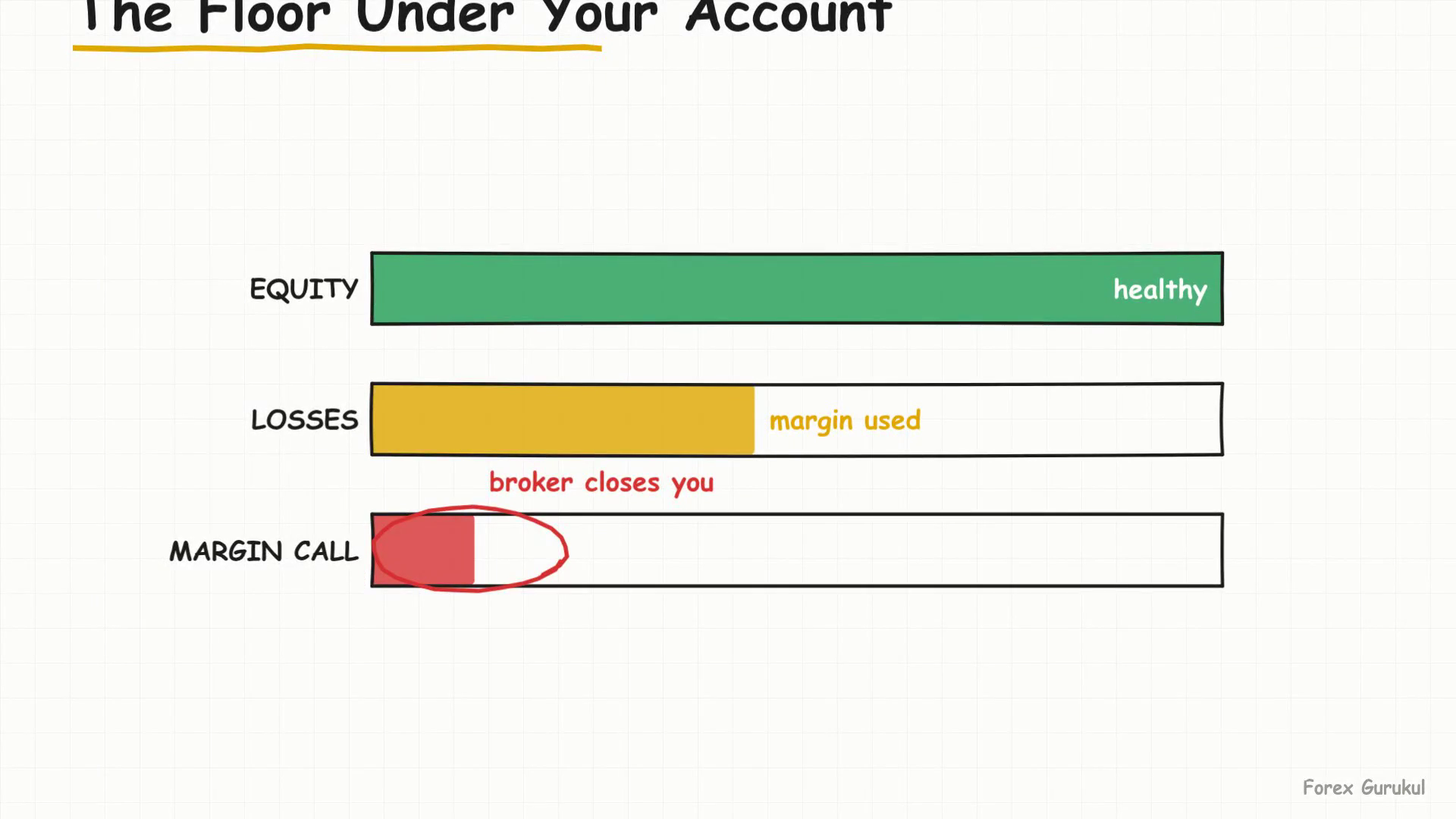
Futures accounts don't work that way. You can genuinely owe your broker more than you put in — exactly like Sam did — because there's no automatic backstop between a wild overnight gap and your balance. This is the answer this whole article has been building toward: forex gives retail traders a structurally safer floor, not because the market itself is gentler, but because the account mechanics are different.
Who Writes The Rules
This last piece explains why the other differences exist at all. Futures trade on centralized exchanges under one regulator, with standardized contracts, margin rules, and daily settlement enforced the same way for everyone. Forex is decentralized — a global network of banks and brokers, regulated differently depending on where the broker is based, which is exactly why leverage limits, stop-out levels, and even spreads vary from broker to broker.
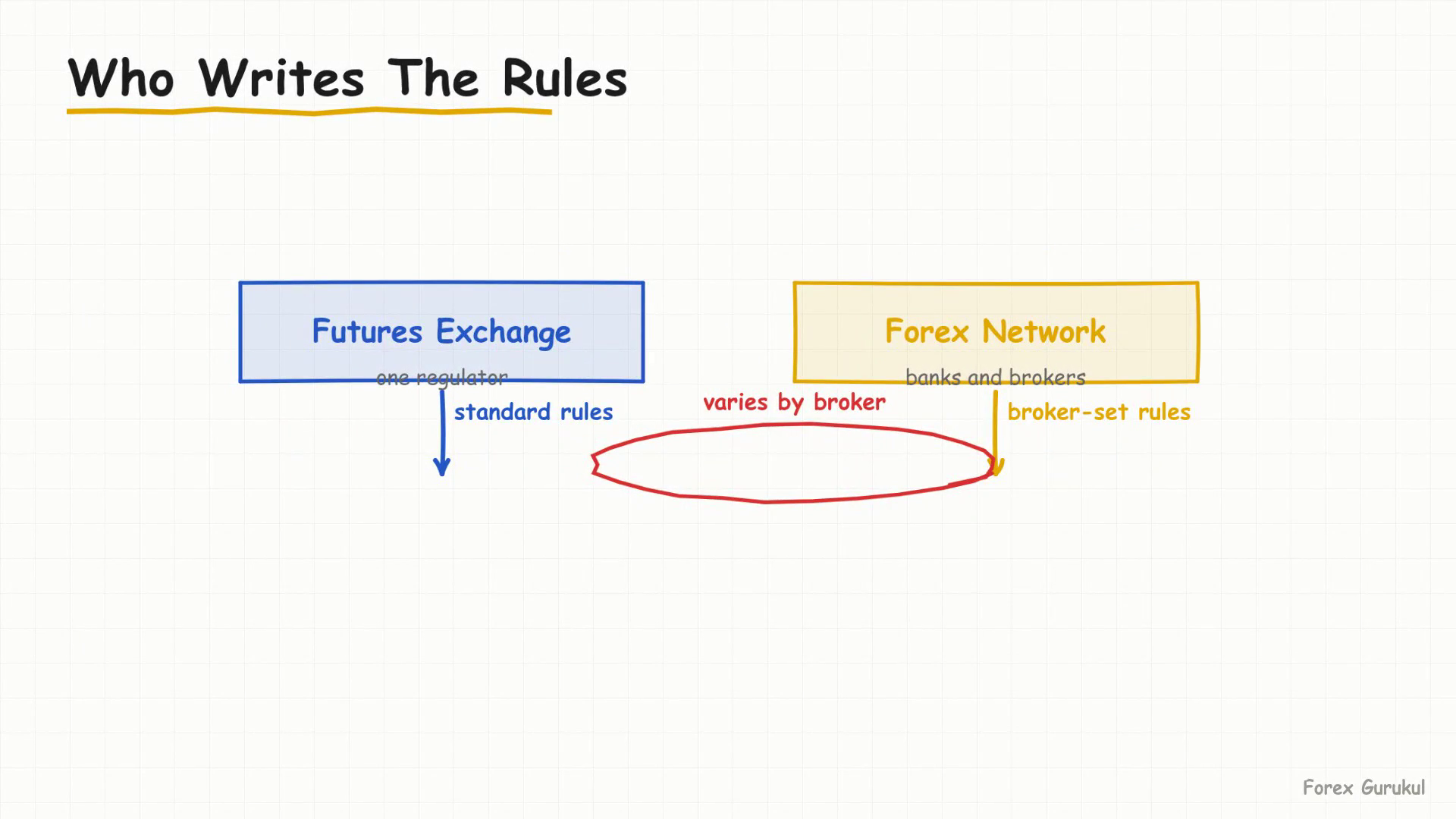
Less central oversight is part of why forex can offer more flexibility. It's also exactly why choosing a properly regulated US forex broker — one registered with the NFA and overseen by the CFTC — matters more here than it would on a single centralized futures exchange. Rules built into the market versus rules chosen by your broker: that's the real dividing line between these two markets.
Euro Dollar: Hunt The Engulfing
All of this liquidity, leverage, and margin structure plays out live on a chart every single day. Take EUR/USD right now: the pair is trading around 1.1563, sitting close to a three-week high after a recent pullback. Just days ago it pulled back from the year's August high near 1.1743, printing a fresh weekly low around 1.1613 before stabilizing.
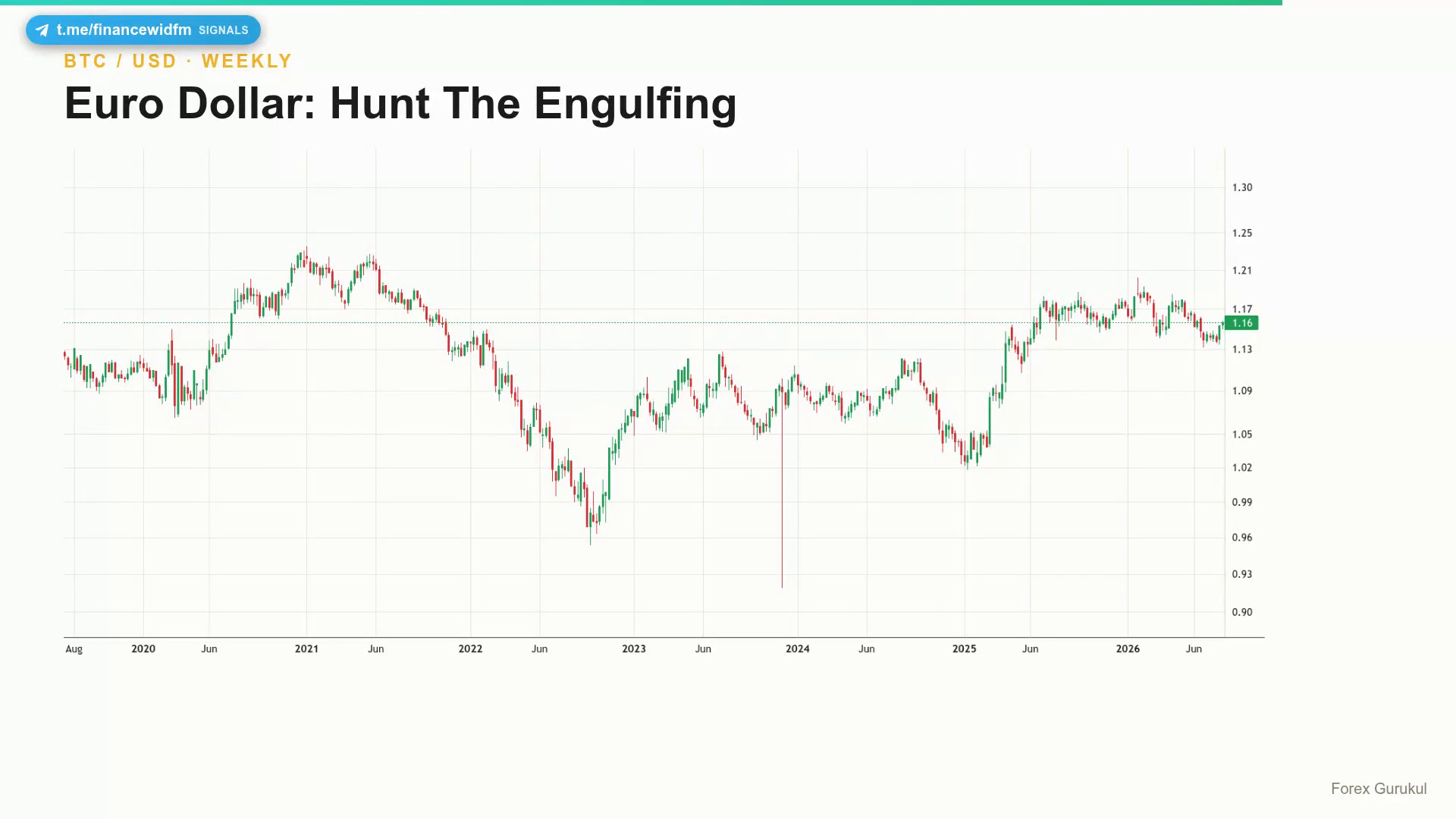
| Level | Price | Context |
|---|---|---|
| Recent August high | 1.1743 | Prior swing high |
| Fresh weekly low | 1.1613 | Pullback low |
| Current price | 1.1563 | Near three-week high |
This is exactly the kind of pair where forex's structure matters most: EUR/USD is one of the deepest, most liquid instruments on the planet, which is why traders can hunt for an engulfing candle at a pullback zone with reasonable confidence their stop will actually fill near where they placed it — a confidence Sam never had on his overnight crude position.
Forex Vs Futures: Recap
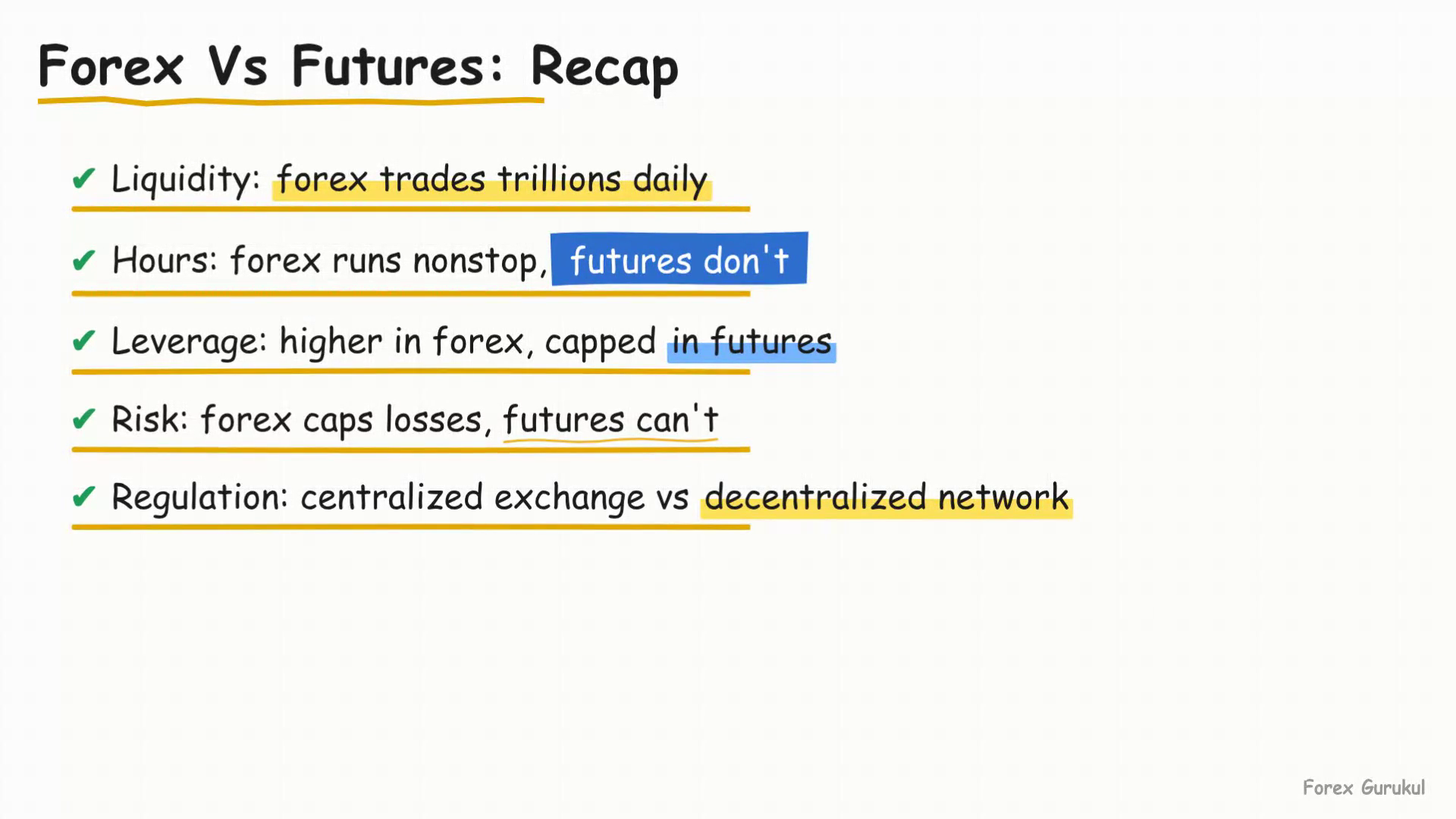
Sam's blown-up account wasn't a bad trade idea — it was a market structure problem. Forex and futures both offer real opportunity, but they hand you very different account mechanics, and those mechanics decide what happens the moment a trade goes badly wrong.
| Factor | Forex | Futures |
|---|---|---|
| Daily volume | $9.6 trillion (global) | ~1M contracts on major products |
| Trading hours | 24 hours, 5 days a week | Fixed exchange schedule with breaks |
| Typical retail leverage | Up to 50:1 on majors | Set per-contract by the exchange |
| Cost structure | Built into the spread | Commission + exchange fees per trade |
| Worst-case loss | Capped near deposit via stop-out | Can exceed deposit, balance goes negative |
Key takeaways
- Sam's overnight loss happened because futures markets close and forex doesn't — five days a week, a session is almost always open somewhere.
- Global FX volume of $9.6 trillion a day dwarfs single futures contracts, which is why forex fills are typically tighter and more reliable.
- US retail forex leverage tops out around 50:1 on majors, while futures margin is set contract-by-contract by the exchange.
- The real difference isn't the market — it's the account mechanics: regulated forex brokers use stop-out systems that cap losses near your deposit; futures accounts can go negative.
- Choosing a properly regulated NFA/CFTC forex broker matters precisely because forex rules aren't centralized like a futures exchange's.
Frequently asked questions
Can you lose more money than you deposit in forex?
With most US-regulated forex brokers, no. A stop-out or margin-call system automatically closes positions before losses can exceed your account balance, capping downside near your deposit.
Why did Sam's futures account go negative overnight?
Futures trade on a fixed exchange schedule. When the exchange was closed, an inventory report moved the market past his stop with no trades printing in between, so his fill came in well below his stop price — and futures accounts have no automatic backstop against that.
Is forex more liquid than futures?
Generally yes for the major currency pairs. Global FX turnover was $9.6 trillion a day as of the 2025 BIS survey, far exceeding the volume of most individual futures contracts, though top contracts like WTI crude still trade over a million lots a day.
How much leverage can I get trading forex versus futures?
US retail forex brokers can offer up to 50:1 leverage on major currency pairs and 20:1 on minors, per CFTC/NFA rules. Futures leverage is instead expressed as exchange-set margin requirements that vary by contract and volatility.
Why do forex brokers not charge commission the way futures brokers do?
Most forex brokers build their fee into the bid-ask spread rather than charging a separate commission. Futures brokers typically charge a per-contract commission plus exchange and clearing fees on every entry and exit.