
Lessons
Forex vs Stocks: Why Traders Watch Only 7 Pairs
The Trade That Broke Mike
Mike had eleven positions open, three earnings reports due, and a short trade that had just been stopped out by a rule he did not even know existed. He was trying to short a stock that looked ready to fall. His broker delayed the order because of an old short-selling restriction, and by the time it cleared, the stock had already turned against him.
That same night, an analyst downgrade gapped the stock down eight percent. Mike was not even in the trade anymore — he had already been stopped out. Between commissions and slippage on that one attempt, he was down almost two hundred dollars before the real move ever happened.
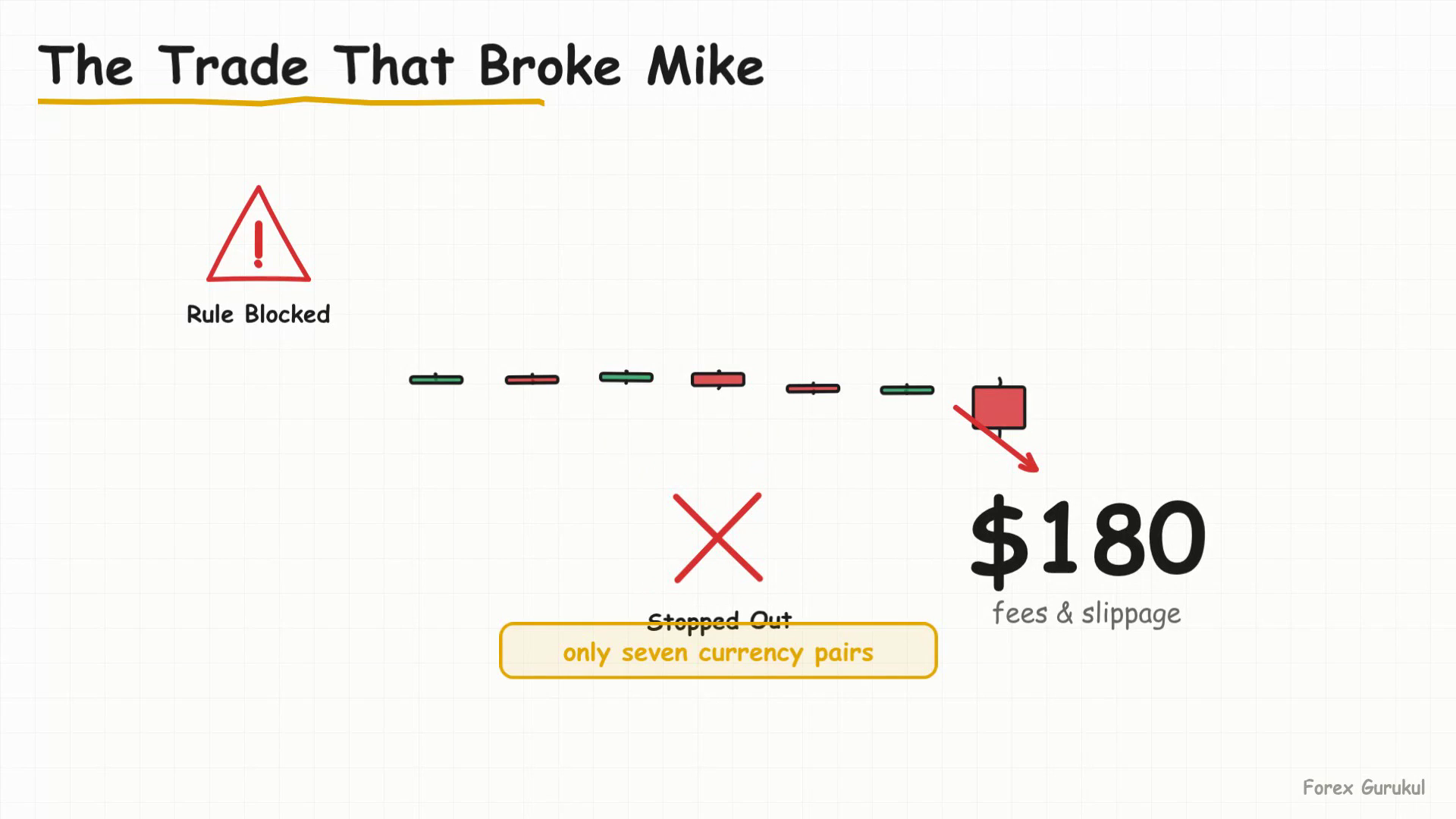
He was tracking eleven stocks that week, with thousands more he felt he should be watching too. The next morning he pulled up a chart with only seven currency pairs on it, and he has not looked at a stock screen the same way since.
Seven Pairs vs Five Hundred Stocks
A typical stock trader has to track a slice of a market built on more than eight thousand listed names across US exchanges alone, hunting every session for the handful that are actually moving. The total universe of listed companies globally sits above 58,000, with the Nasdaq alone home to thousands of domestic and international tickers.
Forex flips that completely. Nearly all the volume and liquidity that actually matters in the currency market sits inside seven major pairs — the ones built around the world's most-traded currencies like the US dollar, euro, yen, and pound. The US dollar alone is involved in trades worth roughly $6.6 trillion a day, more than any other currency by a wide margin.
| Market | Universe You Could Watch | What Actually Moves |
|---|---|---|
| US Stocks (NYSE + Nasdaq) | 8,000+ listed companies | A rotating handful each session |
| Global Listed Companies | 58,200+ worldwide | Concentrated in mega-caps |
| Forex Market | 180+ tradable currencies | 7 major pairs carry most volume |
That is not a smaller market — it is a far more concentrated one. Instead of scanning a wall of tickers every morning, you get to know seven relationships deeply: how each one behaves around news, around trading sessions, around round numbers like 1.1000 or 150.00 on the yen.
Thousands vs Seven
Fewer charts does not mean less opportunity — it means the opportunity is easier to actually study. The seven majors most traders build their entire strategy around are pairs like EUR/USD, USD/JPY, GBP/USD, USD/CHF, AUD/USD, USD/CAD, and NZD/USD. Together they represent the overwhelming majority of global forex turnover.
| Pair | Nickname | What Drives It |
|---|---|---|
| EUR/USD | Fiber | US Fed vs European Central Bank policy |
| USD/JPY | Gopher | Fed policy vs Bank of Japan, yield gaps |
| GBP/USD | Cable | UK data, Bank of England decisions |
| USD/CHF | Swissy | Safe-haven flows, SNB policy |
| AUD/USD | Aussie | Commodity prices, China demand |
| USD/CAD | Loonie | Oil prices, Bank of Canada policy |
| NZD/USD | Kiwi | Dairy exports, RBNZ rate path |
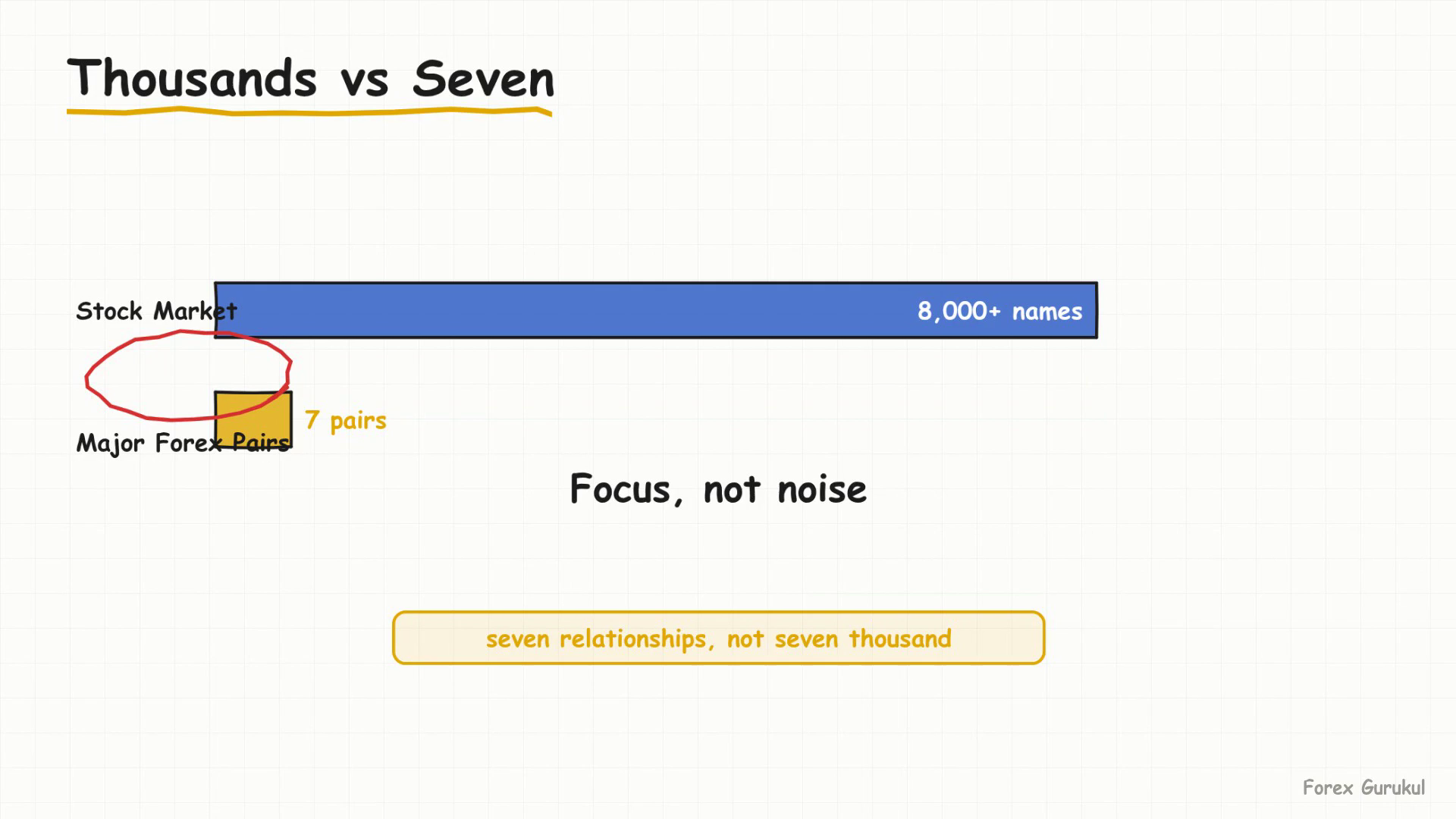
Compare that with a stock screener where you might flip between eleven names in a single afternoon, each with its own earnings date, its own sector news, its own halt rules. With seven pairs, the learning curve compounds instead of resetting every time a new ticker catches your eye.
- Fewer instruments means deeper pattern recognition over time
- Each pair has a predictable rhythm tied to specific economic releases
- You stop chasing whatever is 'hot' and start trading what you actually understand
Twenty-Four Hour Access
Watching seven pairs only helps you if the market is open when you are actually free to trade it — and that is where forex works completely differently from the exchange Mike used to watch.
Stock exchanges open at a bell and close at a bell, the same hours every day. If you have a job during those hours, you mostly watch from the sidelines. Currencies do not work that way. As the Tokyo session winds down, London opens; as London winds down, New York takes over. Somewhere in the world, this market is trading essentially around the clock on weekdays.
| Session | Approx. Open (IST) | Approx. Close (IST) |
|---|---|---|
| Sydney | 4:30 AM | 1:30 PM |
| Tokyo | 5:30 AM | 2:30 PM |
| London | 12:30 PM | 9:30 PM |
| New York | 5:30 PM | 2:30 AM |
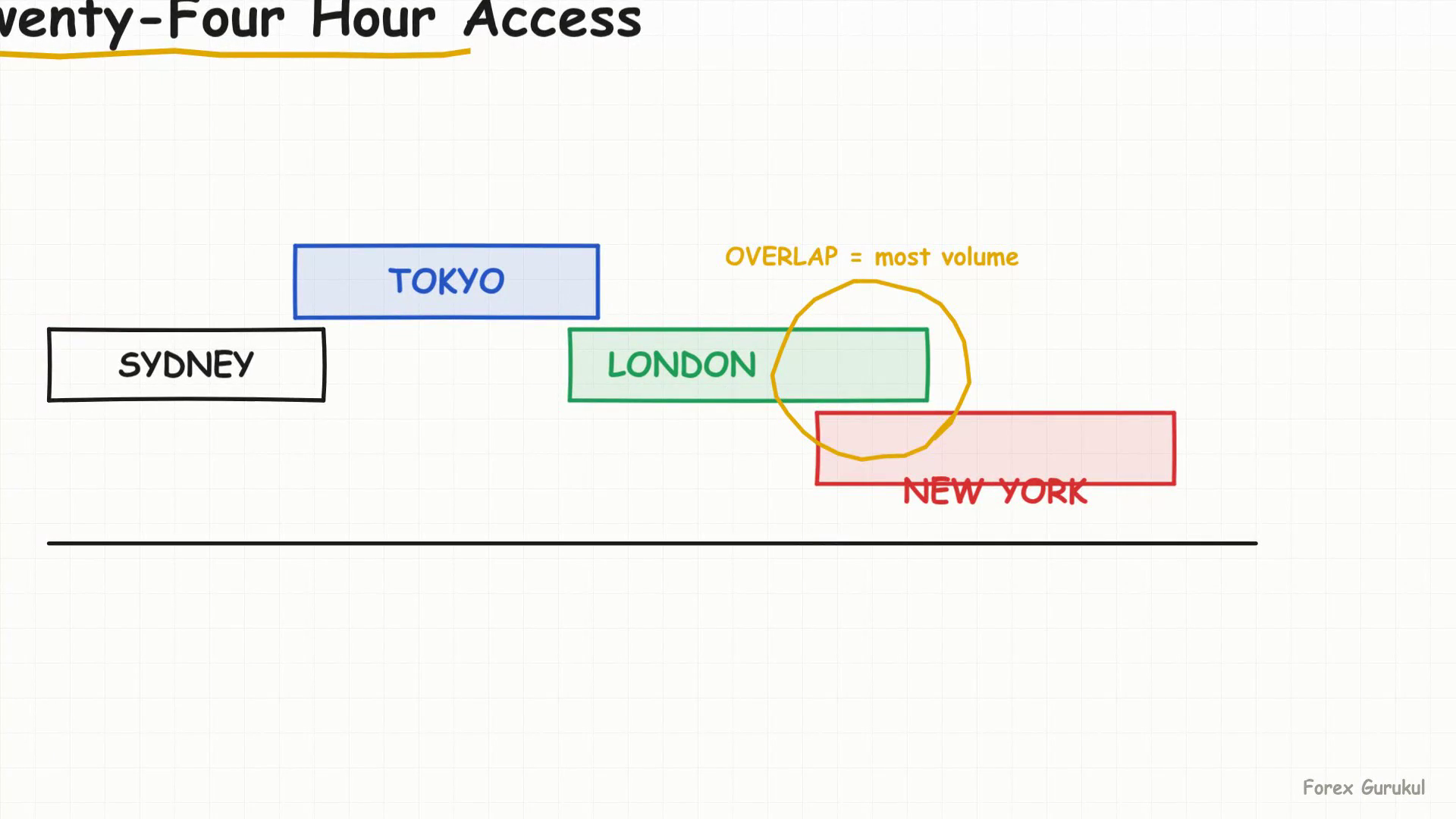
Mike could finally put on a trade after dinner instead of during a meeting. That access is a real edge — but it only matters if it is not eaten alive by fees every time you use it.
How Forex Brokers Actually Get Paid
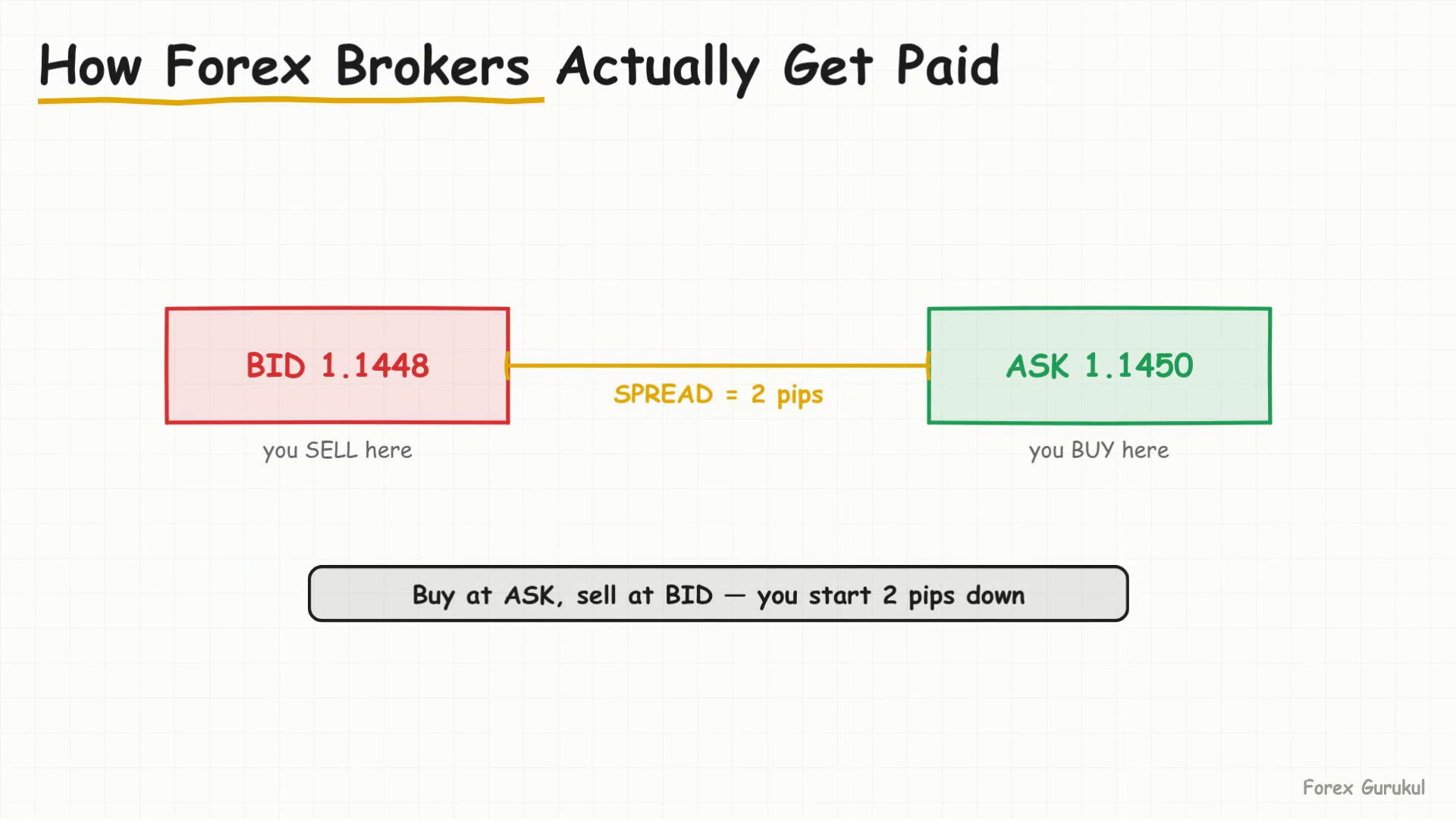
Every stock trade Mike placed had a commission stacked on top, plus whatever slippage the order picked up along the way — that is where his one hundred eighty dollars went. Forex brokers mostly skip the separate commission altogether.
Instead, they build their fee into the tiny gap between the price you buy at and the price you sell at, called the spread. On a major pair, that spread can be a fraction of a cent — worth just a few dollars on a standard position, instead of a flat fee stacked onto every single stock ticket.
| Cost Type | Stock Trading | Forex (Major Pairs) |
|---|---|---|
| Commission | Flat fee per trade | Usually none, built into spread |
| Typical Cost | $1–$10+ per ticket | A few dollars per standard lot |
| Slippage Risk | Higher on gaps/halts | Lower on deep, liquid majors |
The cost is baked into the price itself, not piled on top of it afterward. That tight spread only exists because of how much money is actually moving through this market every single day — and that number is bigger than most people think.
Global FX trading turnover hit roughly $9.6 trillion per day as of April 2025 according to the Bank for International Settlements' triennial survey, with some estimates from local surveys putting certain days closer to $10 trillion. That depth of liquidity is exactly why spreads on the majors stay so tight compared to thinner stocks.
Remember
Mike's two hundred dollar lesson was not really about stocks being bad or forex being magic. It was about focus. Eight thousand tickers spread his attention so thin that a single short-selling rule caught him off guard. Seven pairs would have let him see that same setup coming from three directions at once.
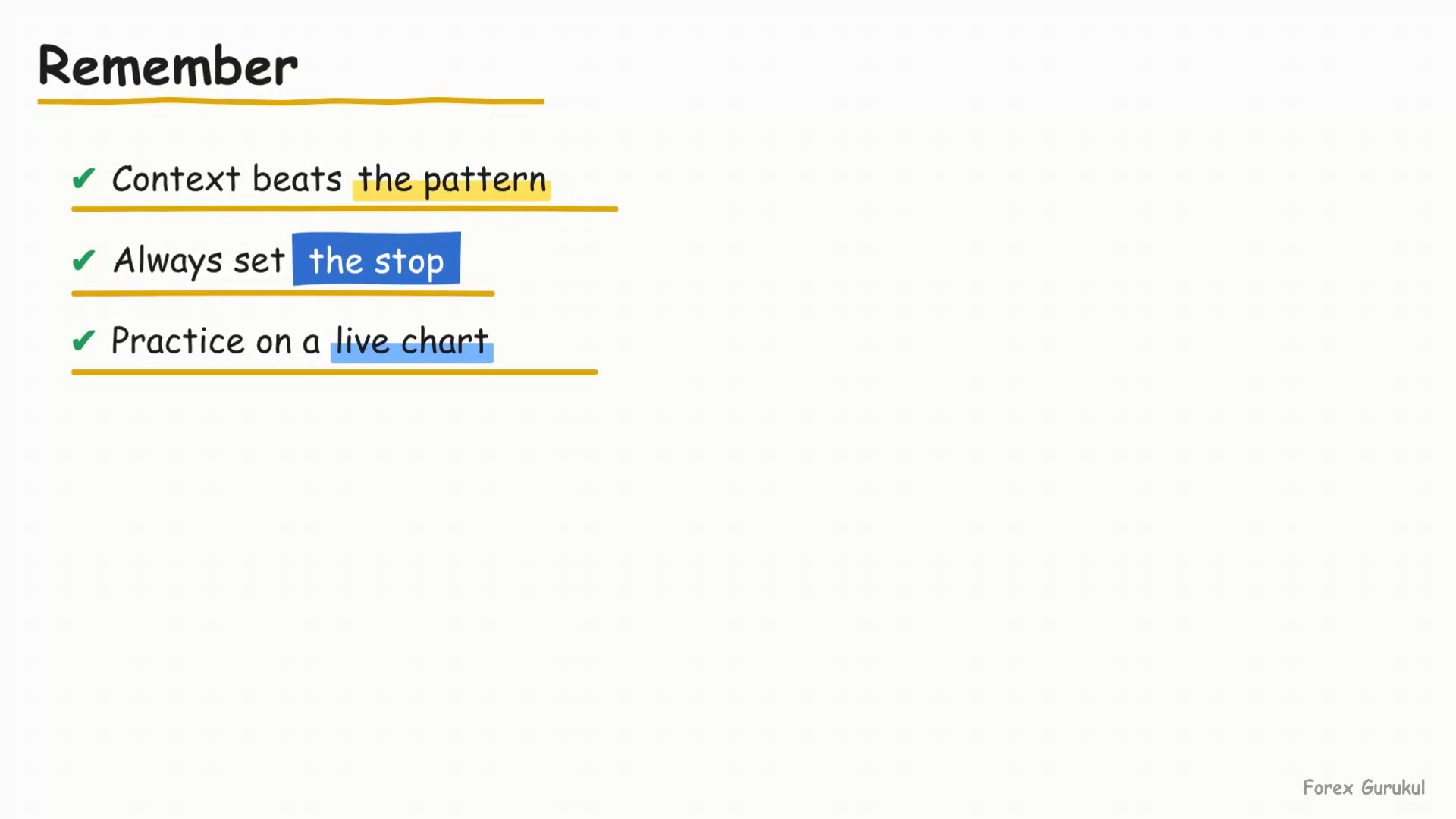
Context beats the pattern. The stop is what actually saves you, not the entry. And nothing — no article, no video, no checklist — replaces the hours you put in watching a live chart react in real time.
Whether you eventually trade seven currency pairs, five hundred stocks, or some mix of both, the underlying principle stays the same: depth of understanding beats breadth of watchlist, almost every single time.
Key takeaways
- Stock traders track a slice of 8,000+ listed companies; forex traders concentrate on just 7 major pairs that carry most global volume
- The US dollar alone is involved in about $6.6 trillion of daily forex turnover, more than any other currency
- Global FX trading hit roughly $9.6 trillion per day in April 2025 per the BIS triennial survey — dwarfing most single stock exchanges
- Forex trades essentially 24 hours across Sydney, Tokyo, London, and New York sessions, unlike fixed stock market hours
- Most forex brokers earn through the spread rather than a stacked commission, keeping per-trade costs on majors very low compared to stock tickets
Frequently asked questions
Why do forex traders only watch 7 currency pairs?
Because those seven majors — like EUR/USD, USD/JPY, and GBP/USD — carry the overwhelming majority of global forex trading volume, making them the most liquid, most predictable, and easiest to study deeply compared to thousands of individual stocks.
Is forex trading cheaper than stock trading?
On major pairs, yes in most cases. Forex brokers typically build their fee into the spread rather than charging a separate commission, while stock trades often carry a commission plus potential slippage on every ticket.
Can I trade forex 24 hours a day?
The forex market runs nearly 24 hours on weekdays because trading sessions overlap across Sydney, Tokyo, London, and New York, unlike stock exchanges which open and close at fixed daily hours.
How big is the forex market compared to the stock market?
Global daily forex turnover reached roughly $9.6 trillion in April 2025 according to the BIS, far surpassing the daily trading value of any single stock exchange.
Does trading fewer pairs mean fewer opportunities?
No — it means the opportunities are easier to spot and study. Deep familiarity with seven pairs often produces better pattern recognition than shallow exposure to hundreds of stocks.