
Lessons
Leverage Risk In Forex: How A $2,000 Account Hits Zero
Forex Gurukul
Marcus opened his first forex account with two thousand dollars he had saved for a car down payment. Three weeks later, the account showed zero. He did not pick a terrible currency pair. He did not get unlucky on some random news event. What emptied his account was leverage — on a trade that was maybe forty pips wrong, turned into a full account wipeout because of how much size he was carrying.
This happens every week to someone watching a video that promised the market would make them rich in a month. Nobody sat Marcus down and showed him the math first. That is what we are fixing right now, using his exact mistake as the map — and a live Euro Dollar chart — to show you exactly where this goes wrong, and exactly what stops it.
The Promise vs The Real Number
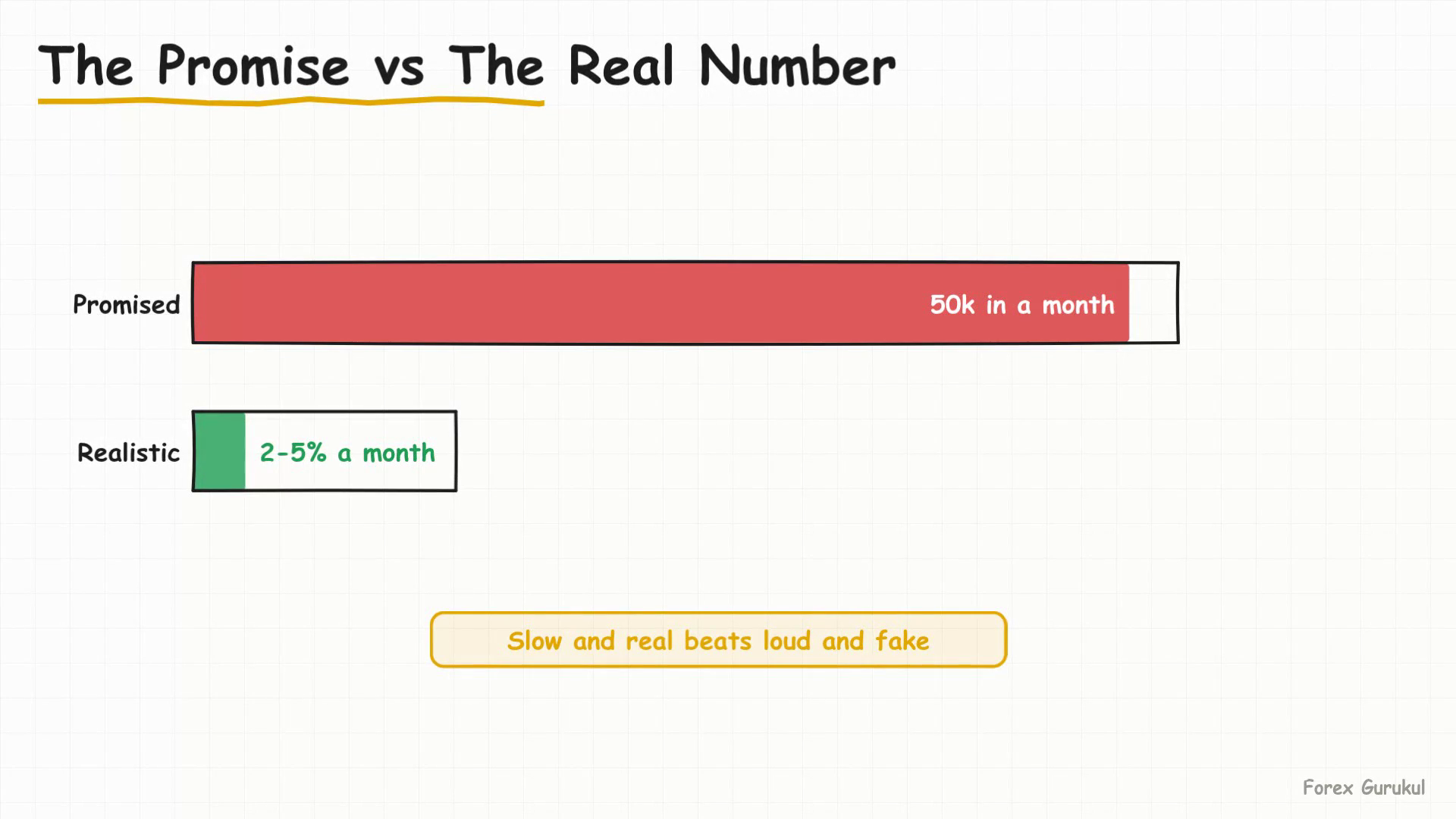
Here is the promise Marcus saw everywhere: turn two thousand dollars into fifty thousand in a month. Screenshots of yachts. Claims of triple-digit weekly returns. Now here is what a genuinely skilled professional actually targets: something like two to five percent in a good month, and some months are flat or red.
Forex can produce strong returns over years. As of late July 2026, EUR/USD is trading near 1.14, its lowest level since June, after losing roughly 0.51% over the past four weeks. That is a real-world reminder of how currency pairs actually move — in small, grinding percentages, not overnight fifty-thousand-dollar leaps. Even institutional forecasts for the pair, like MUFG's projection of a 1.15–1.18 range and JPMorgan's call for EUR/USD easing toward 1.13–1.14 by early 2026, are measured in single-digit percentage moves over months, not weeks.
But small and slow does not sell subscriptions, so the loud claim is the one that reaches new traders first. Which leads to the question that actually matters: if the promise is fake, how many people really succeed doing this for real?
Big Market, Small Winners Circle
Quick pause. Before the number, guess: out of every ten people who open a retail forex account, how many are still consistently profitable a year later? Hold that guess.
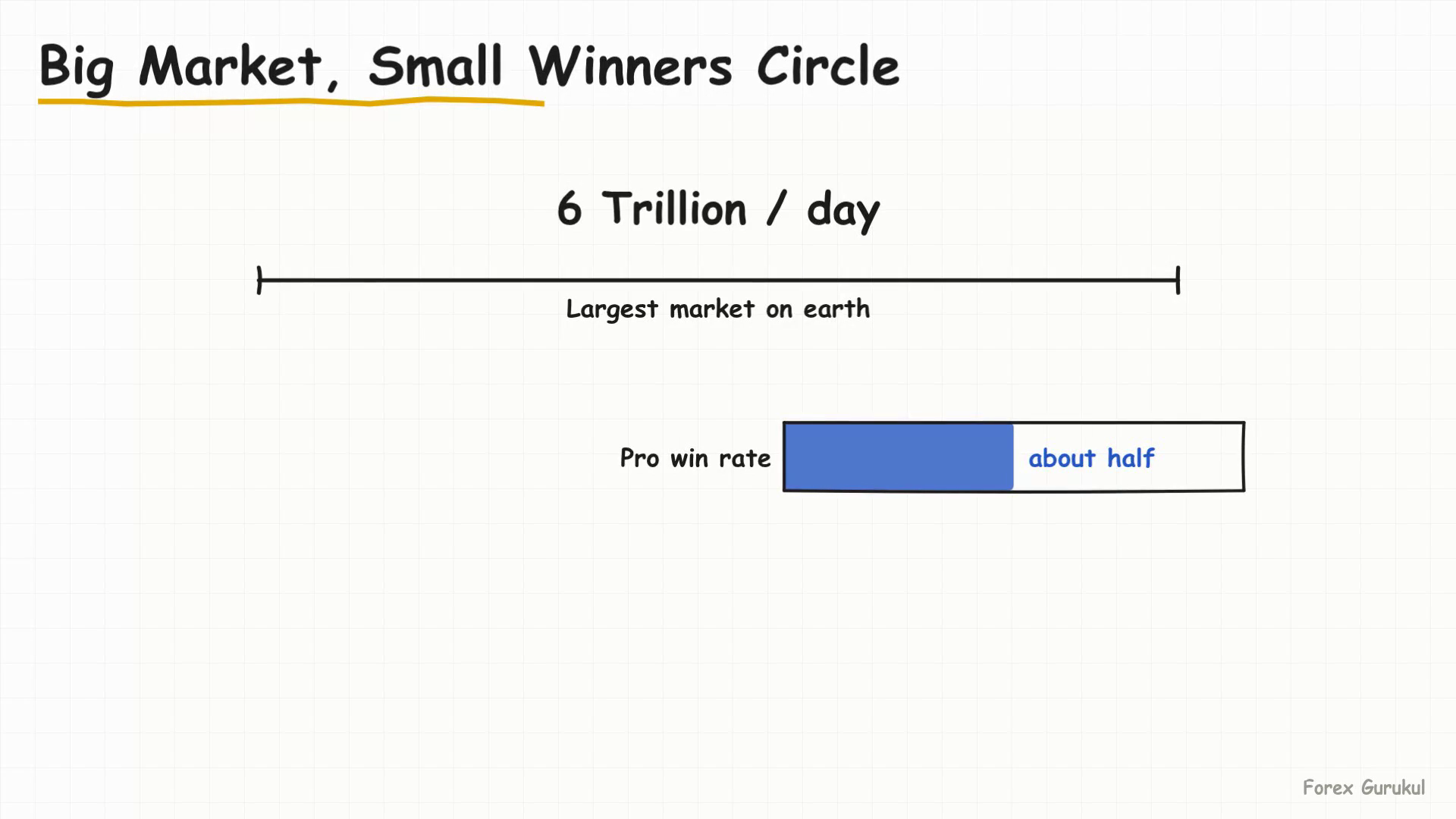
The forex market moves around six trillion dollars a day — more volume than every stock market on earth combined. That size, plus the fact that it never really closes, plus the fact that trends can run for hours, pulls in an enormous number of new traders every month. And yet, across broker studies, only around one in ten retail accounts stays net profitable over time. Regulated brokers are required to publish this reality directly on their marketing pages: one UK-regulated CFD provider discloses that 77% of retail investor accounts lose money when trading with them.
| Metric | Approximate Figure |
|---|---|
| Daily global forex volume | ~$6 trillion |
| Retail accounts reported as losing money (broker disclosure) | ~77% |
| Retail accounts staying net profitable long-term | ~1 in 10 |
| Win rate on individual trades, even at pro desks | ~50% or less |
Not because the market is rigged. Because even professional desk traders lose on close to half their individual trades. They are not paid to win every trade — they are paid to lose small and win big. Marcus never learned that difference.
How Forty Pips Emptied An Account
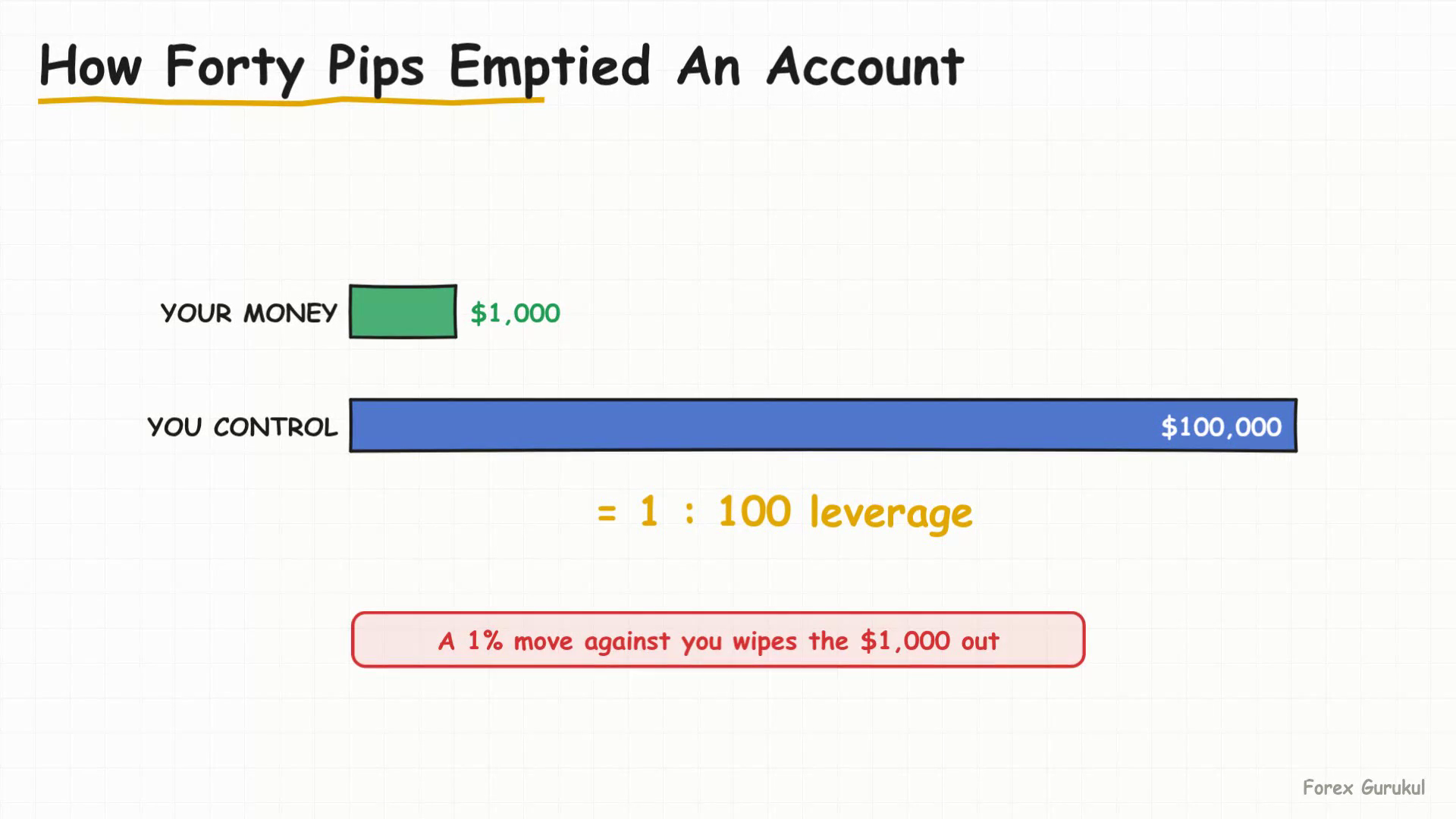
Here is exactly what happened to Marcus, drawn out. Leverage lets you control a large position with a small deposit — say, controlling ten thousand dollars of currency with only a few hundred dollars of margin. That is not evil, it is a multiplier, on the way up and on the way down.
Marcus was carrying leverage high enough that a forty-pip move against him — less than half of one percent on EUR/USD, which was around the 1.14 mark at the time — erased his entire two thousand dollars. And that two thousand dollars was money marked for a car, not spare risk capital. That second mistake matters as much as the first.
No amount of skill fixes that math after the fact. So if it is not just leverage, what actually separates the one in ten from everyone else?
Five Gaps Behind Every Blown Account
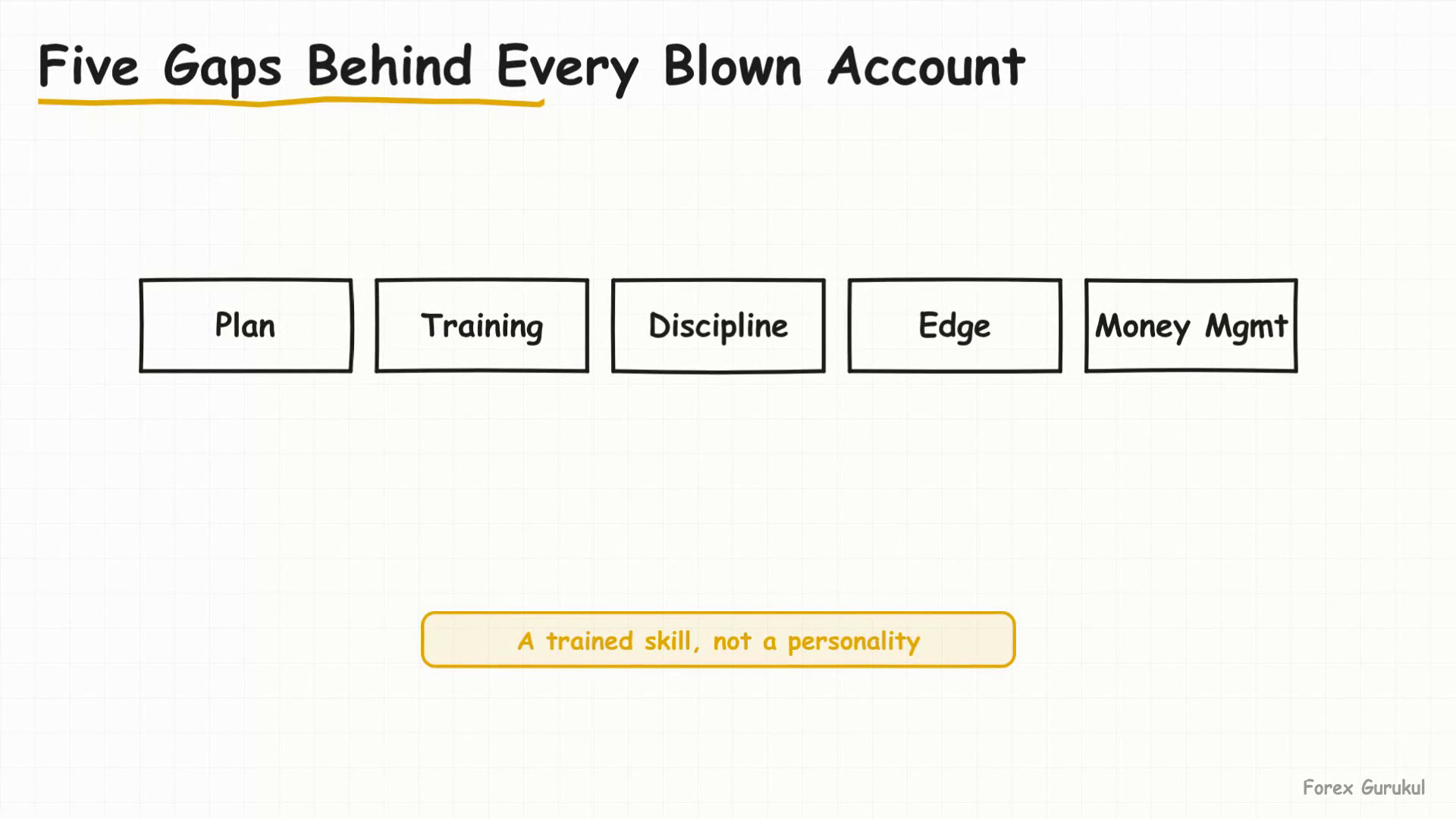
Five things separate the one in ten from everyone else, and almost every blown account is missing at least two of them.
- A written plan for entries and exits — decided before emotion enters the room.
- Real training instead of guessing — structured learning, not video-hopping.
- Discipline to follow the plan when it is uncomfortable.
- An actual edge — rules that win more than they lose over many trades, not just a feeling.
- Money management — sizing that survives a losing streak, not just a single win.
Underneath all five sits psychology. Discipline is a skill, the same as reading a chart. Staying calm after three losses in a row, not moving your stop because you are hoping — that is trained, not born. And the part that actually saves an account when all of this gets tested for real is coming up next.
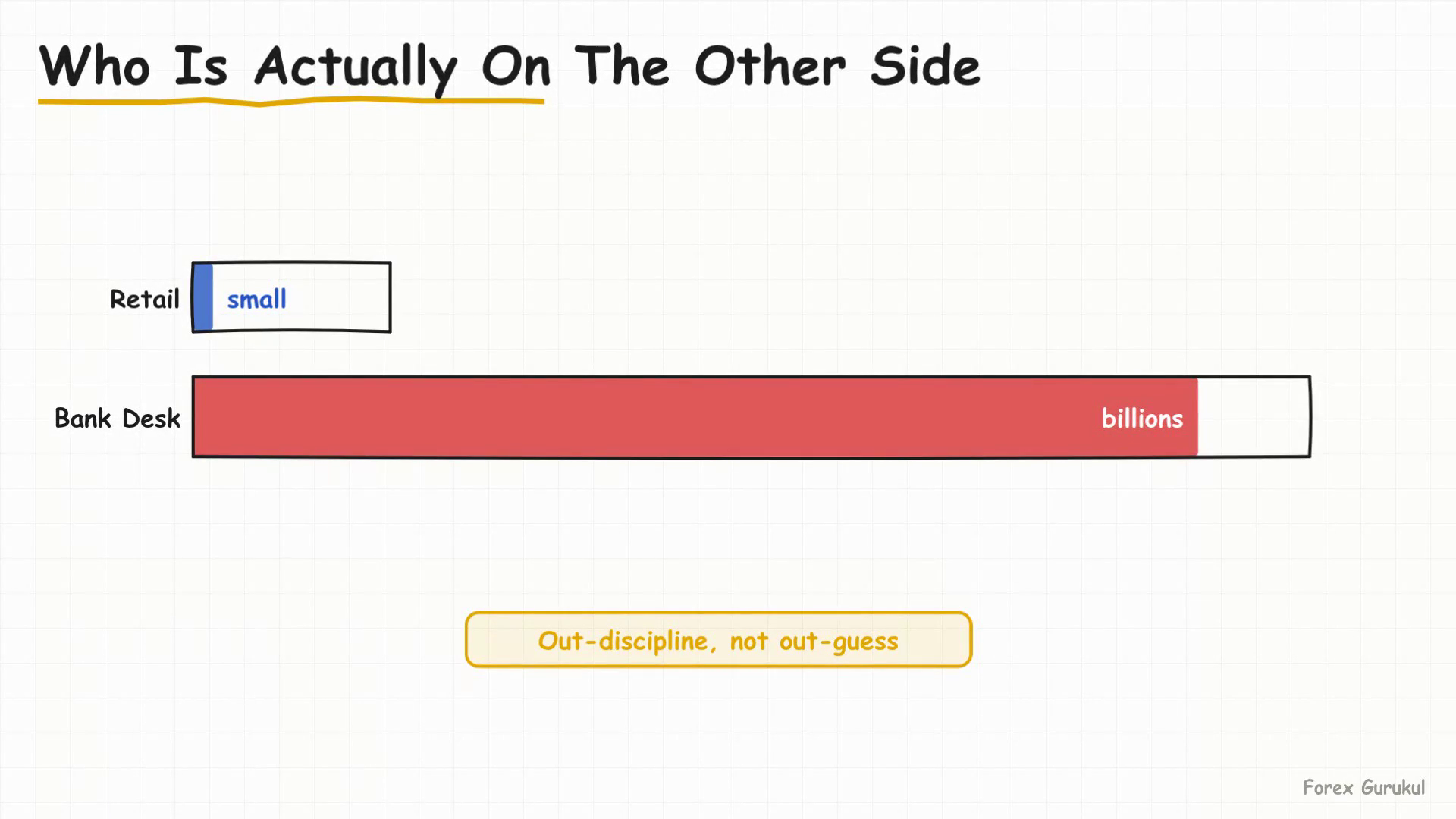
Who Is Actually On The Other Side
There is one more piece of context Marcus did not have: who is actually on the other side of his trade. Retail traders share this market with major bank desks trading positions worth billions, hedge funds with research teams, and algorithmic systems executing thousands of orders a second on data no person can react to that fast.
That is not a reason to quit — retail traders profit here every day. It is a reason to stop thinking of trading as guessing direction, and start thinking of it as risk control. You will not out-guess a machine, but you can absolutely out-discipline one, since an algorithm does not care about your account, and only you can protect it.
The Setup Marcus Was Actually In
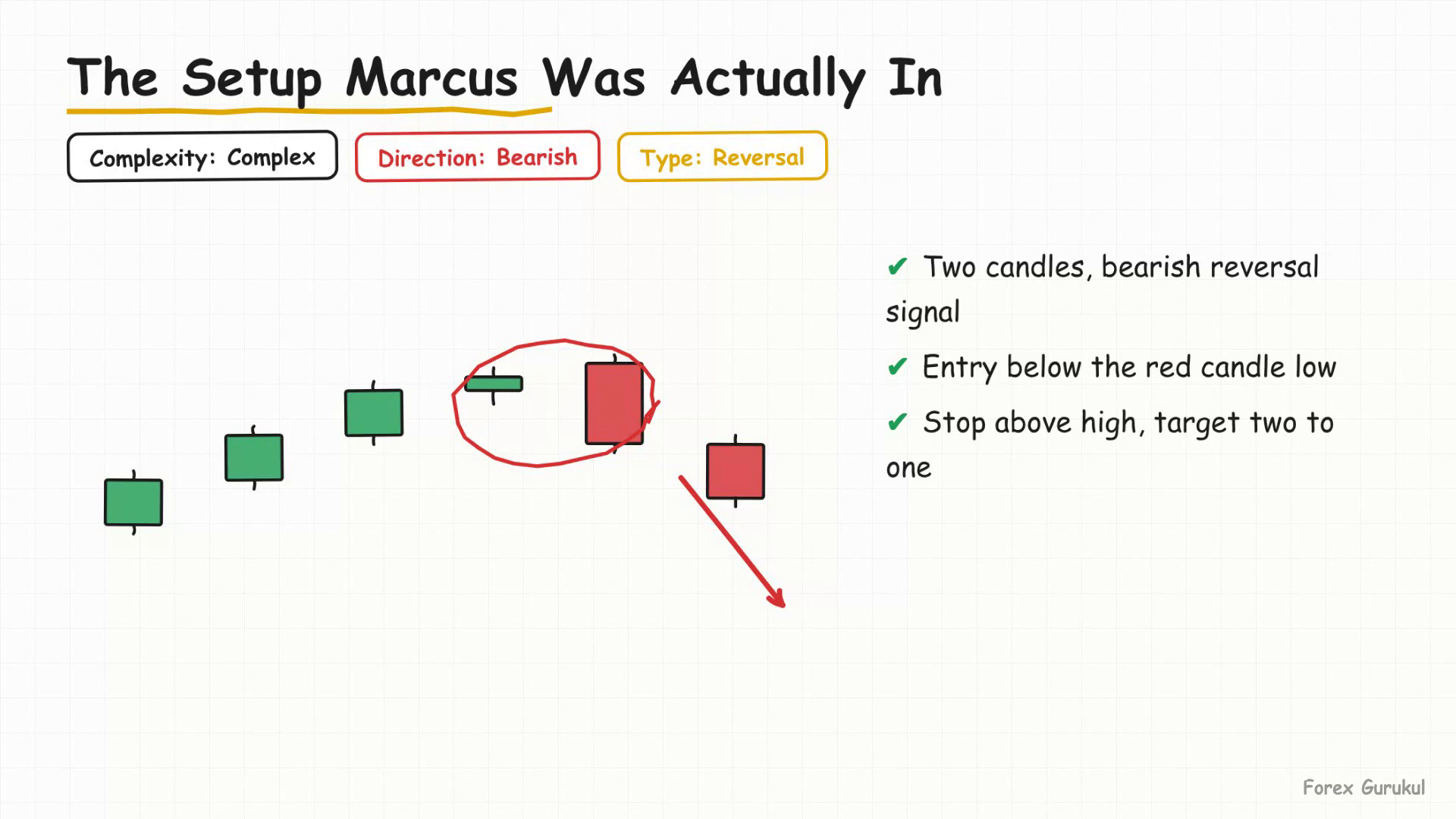
Let's look at the exact type of setup Marcus was trading when leverage caught him: a bearish engulfing. Classify it out loud, because this matters — it is a simple pattern, just two candles; it is bearish; and it is a reversal pattern, meaning it is trying to turn an uptrend down. It forms when a green candle is completely swallowed by a red candle the next session, closing below where the green one opened.
Here is the full frame for trading it, always.
| Element | Rule |
|---|---|
| Entry trigger | A break below the low of the red engulfing candle |
| Stop placement | Just above the high of the red candle, plus 5–10 pips of wiggle room |
| Target | Measured through risk-to-reward — a 20-pip stop looks for at least 40 pips (2:1 payoff) |
Now pause and pull up your own chart, and find one bearish engulfing candle — before we show you why the shape alone was never the real signal.
Hunting Context, Not Just Shape
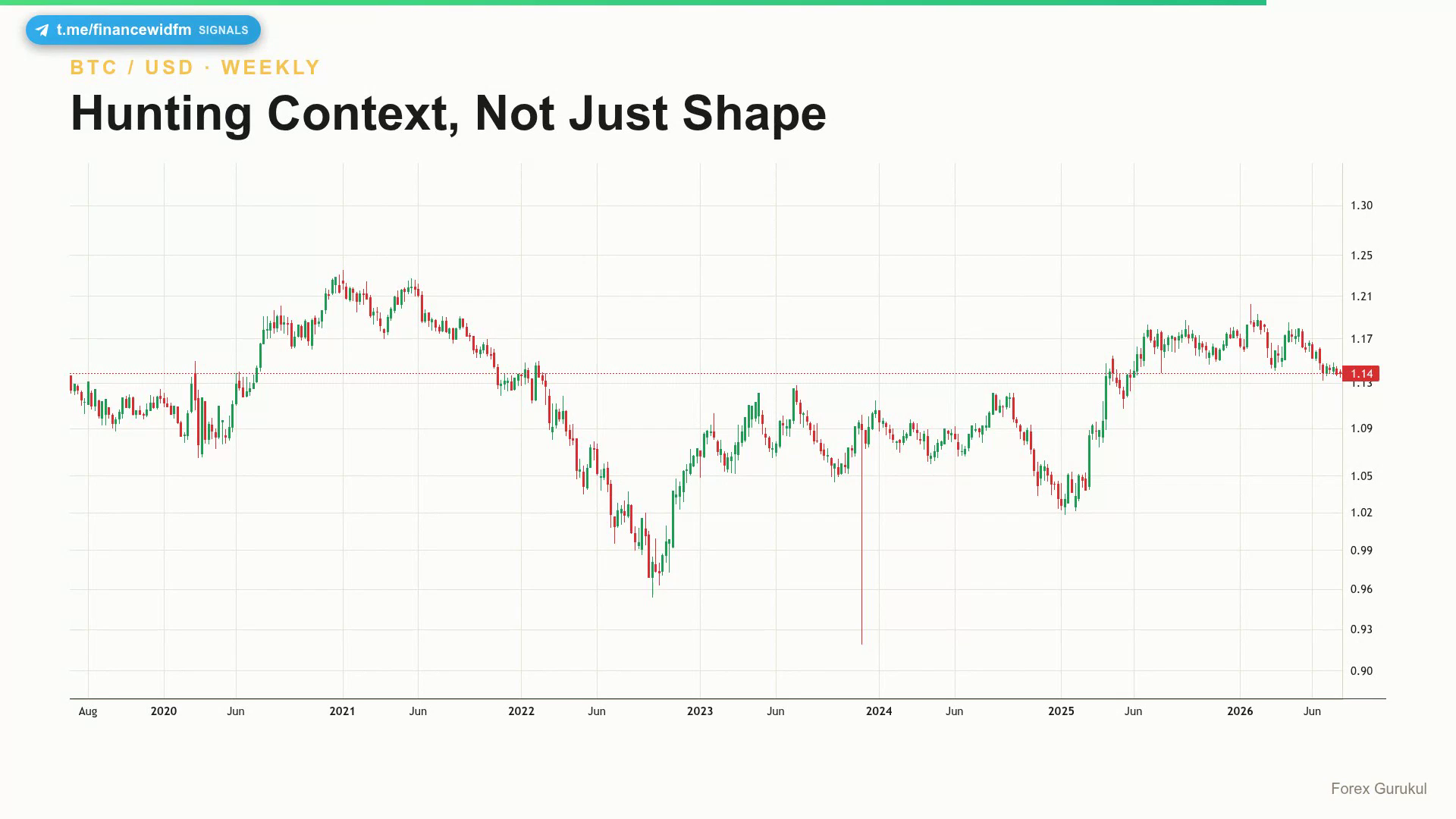
Here is a live Euro Dollar chart, the exact market this whole story has been about — currently sitting near 1.14 after a four-week slide. Do not just hunt for two candles that look engulfing; that shape shows up dozens of times a week and most of them do nothing.
Context matters more than the shape itself: is this engulfing candle happening at a level price has respected before, at the top of a clear run higher, somewhere real supply might sit? That same two-candle shape sitting in the middle of nowhere on the chart is just noise. Scan left to right, find a swing high or a prior resistance zone, and only then treat the pattern as a real signal — not before.
From Demo To Proven Edge
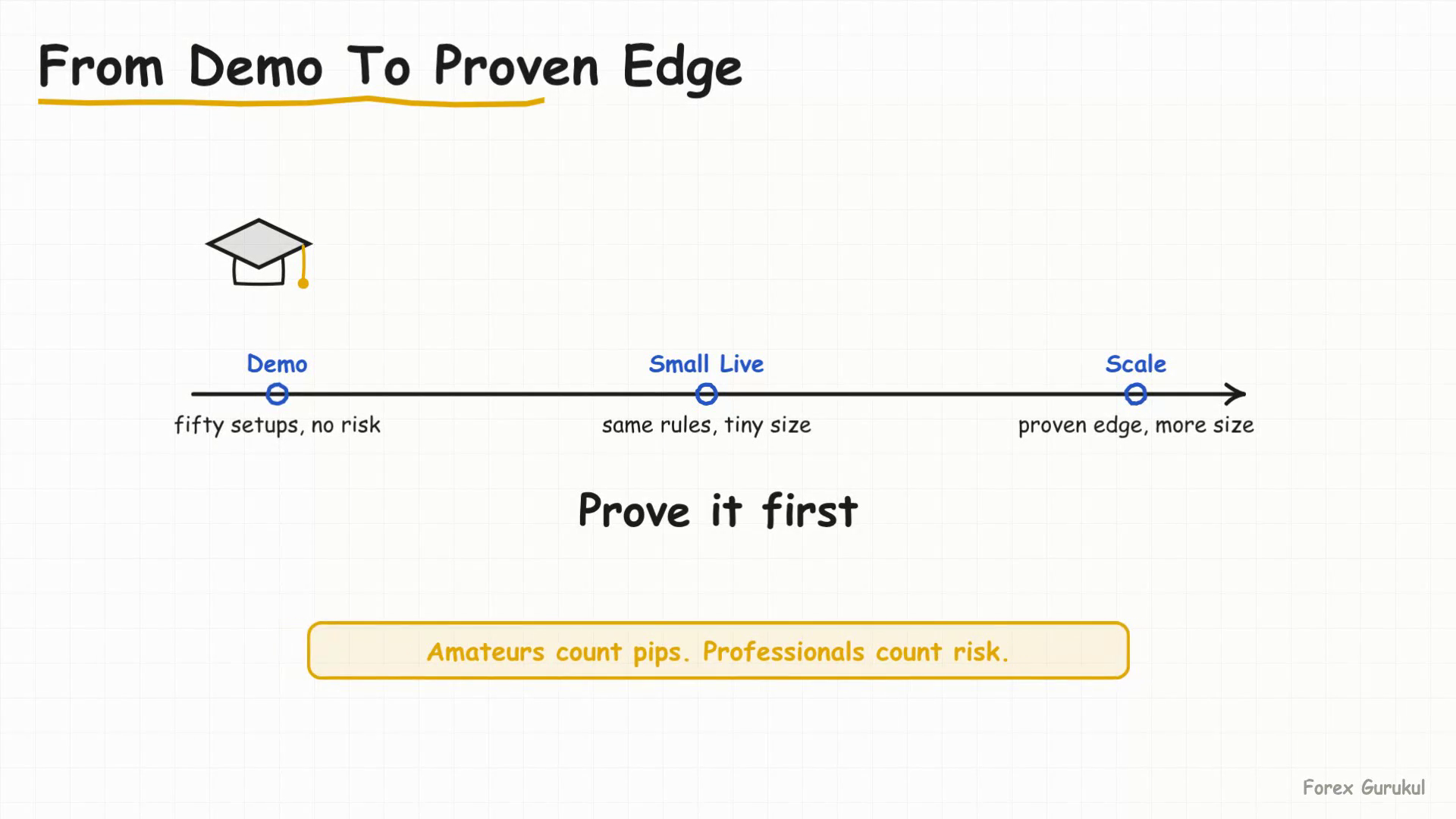
Marcus's real failure was never that he found a bad pattern. It was that he sized a real dollar amount against a setup he had not tested, in a market where analysts themselves are only forecasting single-digit percentage moves over months — EUR/USD's own 2026 range is expected to stay roughly between 1.13 and 1.18 through the year. If professionals with research desks are planning around moves that small, a retail account without a tested edge has no business risking its entire balance on one candle.
An edge is not a feeling that a setup looks good. It is a set of rules — entry, stop, target, and context — that you have tracked across enough trades to know the win rate and the payoff. That tracking happens on a demo account or in a journal, before it ever happens with a car-down-payment fund.
Before You Risk A Real Dollar
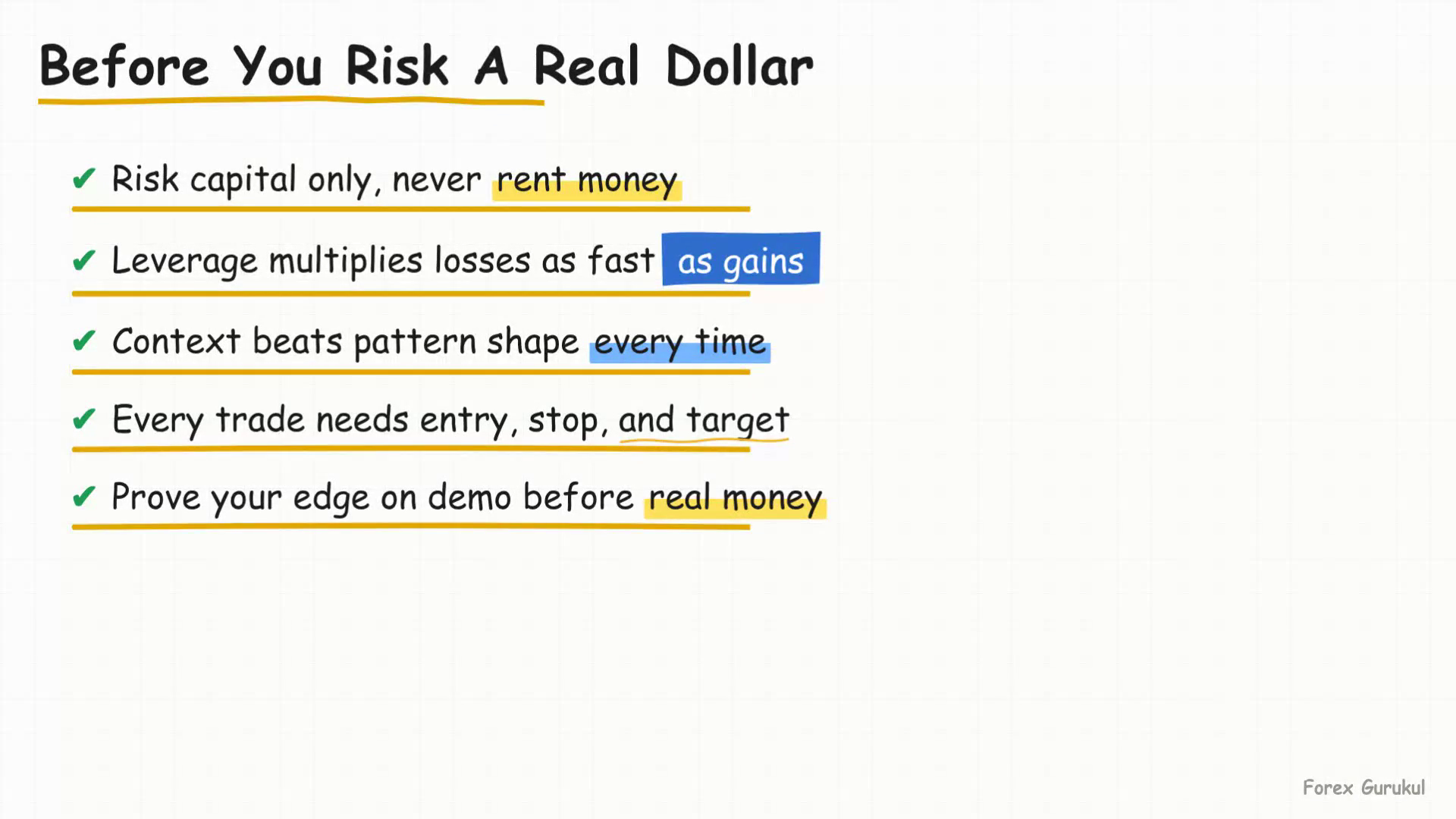
Before you risk a real dollar, run this check against Marcus's story.
- Is this money you could lose completely tonight and still be fine tomorrow?
- Do you know your leverage in real pip terms — how many pips against you wipes the account?
- Do you have a written plan with entry, stop, and target set before you click buy or sell?
- Have you tested this exact setup, with this exact context, across enough trades to know it has an edge?
- Can you follow your stop after three losses in a row without moving it?
The one-in-ten who stay profitable did not get there by finding a secret pattern. They got there by treating leverage as a multiplier of risk, not a shortcut to profit, and by respecting the same math that ended Marcus's account in three weeks.
Key takeaways
- A 40-pip move — less than half a percent on EUR/USD near 1.14 — was enough to wipe out Marcus's $2,000 account because of oversized leverage.
- Roughly 77% of retail CFD/forex accounts lose money, and only about 1 in 10 stay net profitable long-term, per broker disclosures and industry data.
- Realistic professional returns run 2–5% in a good month — not the 100%+ weekly claims used to sell courses.
- A bearish engulfing candle (or any pattern) only matters at a real support/resistance level — the shape alone appears dozens of times a week and means nothing without context.
- Never trade with money you can't afford to lose completely; test any setup on demo or in a journal before risking real capital.
Frequently asked questions
How much leverage caused a $2,000 forex account to hit zero?
Marcus's account was leveraged heavily enough that a 40-pip adverse move — under half a percent — erased the full $2,000. The exact leverage ratio varies by broker, but the lesson is the same: high leverage turns small price moves into full account losses.
What percentage of retail forex traders actually lose money?
Broker disclosures commonly cite figures around 70–80%, with one regulated provider stating 77% of retail investor accounts lose money when trading CFDs with them. Separately, only about 1 in 10 retail accounts stay net profitable over the long term.
What is a realistic monthly return in forex trading?
Experienced traders typically target 2–5% in a good month, with some months flat or negative. Claims of turning small accounts into tens of thousands of dollars within weeks are not representative of real trading.
What is a bearish engulfing candle and how should it be traded?
It's a two-candle reversal pattern where a red candle fully swallows the prior green candle's range. The standard frame is: enter on a break below the red candle's low, place a stop just above its high (plus 5–10 pips buffer), and target at least a 2:1 reward-to-risk ratio.
Why does context matter more than the candlestick pattern shape?
The same two-candle shape appears many times a week across any chart, but it only becomes a meaningful signal when it forms at a level price has respected before, such as a prior swing high or resistance zone — otherwise it's just noise.