
Lessons
London Session Trading Hours: The 43% Window
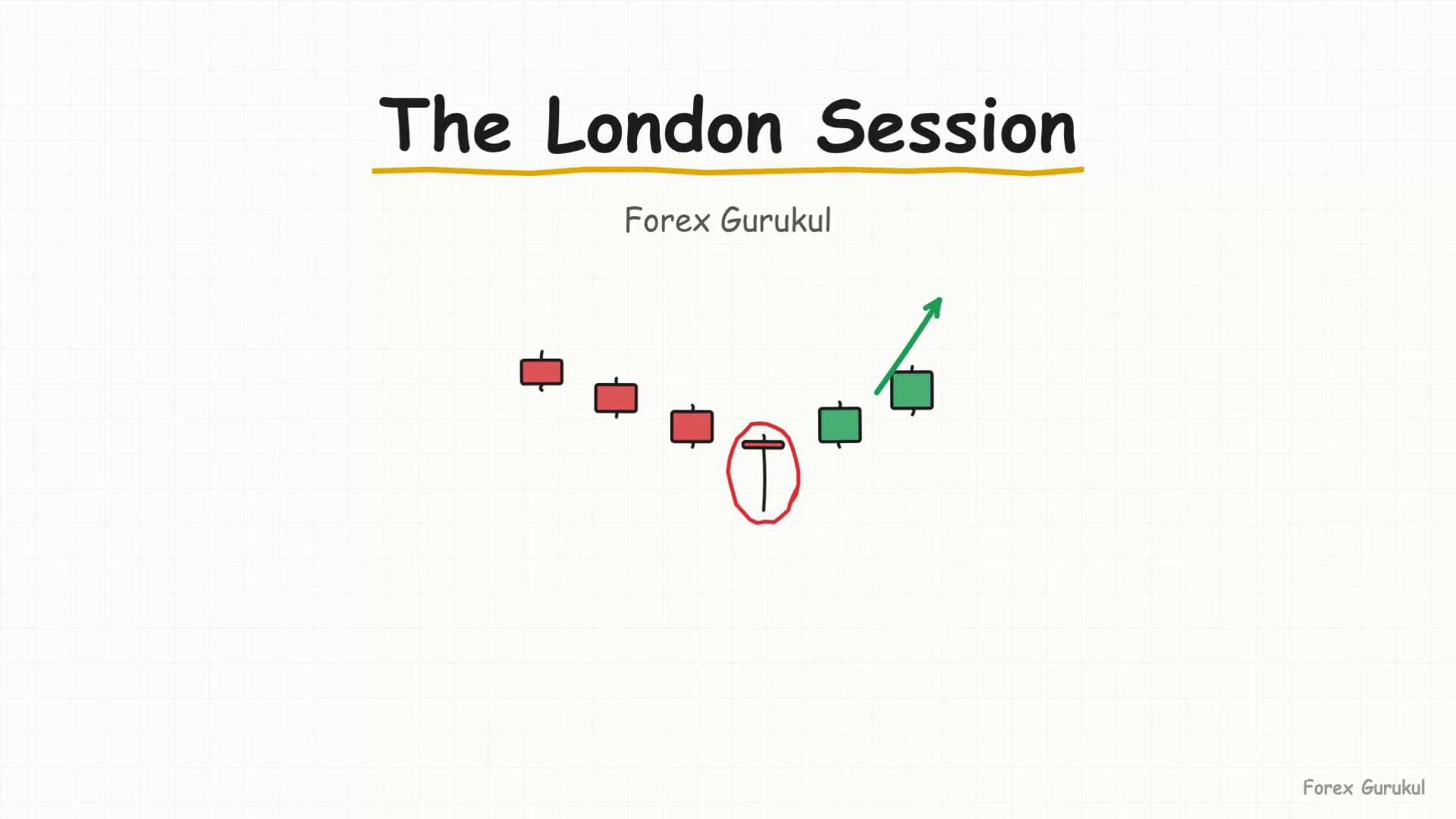
The London Session
London's trading day runs roughly 8:00 AM to 5:00 PM London time, which lands at about 3:00 AM to 12:00 PM on the U.S. east coast. Nine hours, give or take, and inside them sits the busiest stretch of the entire 24-hour forex clock.
Two seams matter more than the middle of that window. The first hour still overlaps the tail end of Tokyo's session, so Asian positioning is still unwinding while London traders arrive. The last few hours overlap New York opening for business, which is where liquidity and volatility both spike hardest. You'll also hear this stretch called the European session, because Frankfurt, Paris, and Zurich are open the exact same hours right alongside London.
3 AM Mistake
Six hundred and forty dollars, gone in nine minutes — and the trader didn't do anything technically wrong. She just picked the wrong hour to be short euro dollar.
It's three in the morning New York time. Dana's short EUR/USD, stop tight, feels smart. For two hours the chart barely breathes — five or six pips of drift, nothing more. She gets bored, doubles the position, convinced the market is asleep for good. Then, with zero warning, the candle rips fifty pips against her in under ten minutes. Stopped out, $640 lighter.
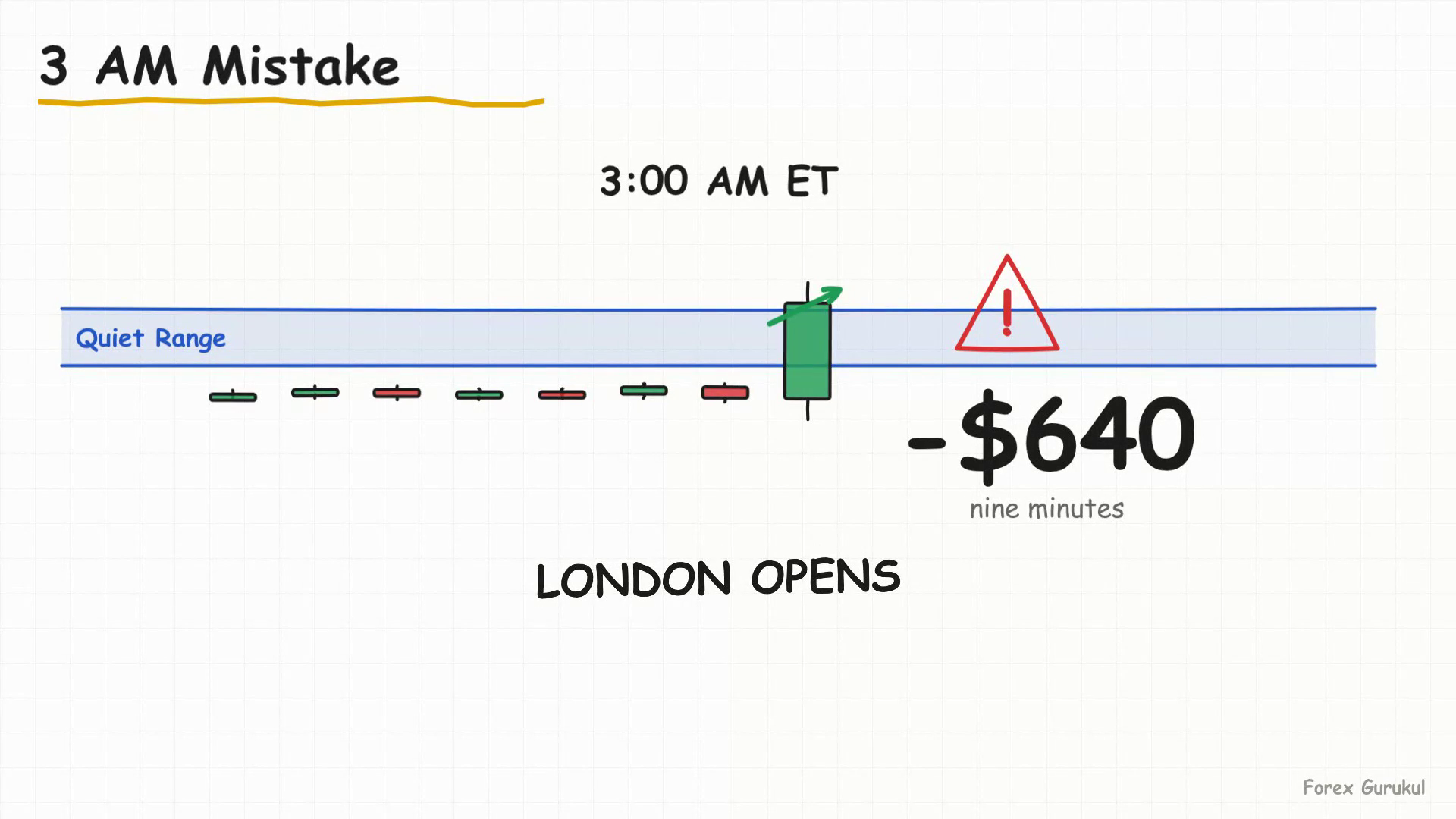
What actually happened is London opening for business. The calmest hours of Dana's overnight session were about to collide head-on with the busiest session on earth, and she had no idea it was coming because she never checked the clock against the calendar.
The Session Clock
Forex trades 24 hours a day because it hands off between four regional sessions — Sydney, Tokyo, London, and New York. Knowing where London sits relative to the other three is what turns a random hour on your chart into a hypothesis about *why* price is behaving the way it is.
| Session | Local Open–Close | Approx. GMT | Approx. ET |
|---|---|---|---|
| Sydney | 7:00 AM – 4:00 PM AEST | 21:00 – 06:00 | 5:00 PM – 2:00 AM |
| Tokyo | 9:00 AM – 6:00 PM JST | 00:00 – 09:00 | 8:00 PM – 5:00 AM |
| London | 8:00 AM – 5:00 PM GMT | 07:00 – 16:00 | 3:00 AM – 12:00 PM |
| New York | 8:00 AM – 5:00 PM ET | 13:00 – 22:00 | 8:00 AM – 5:00 PM |
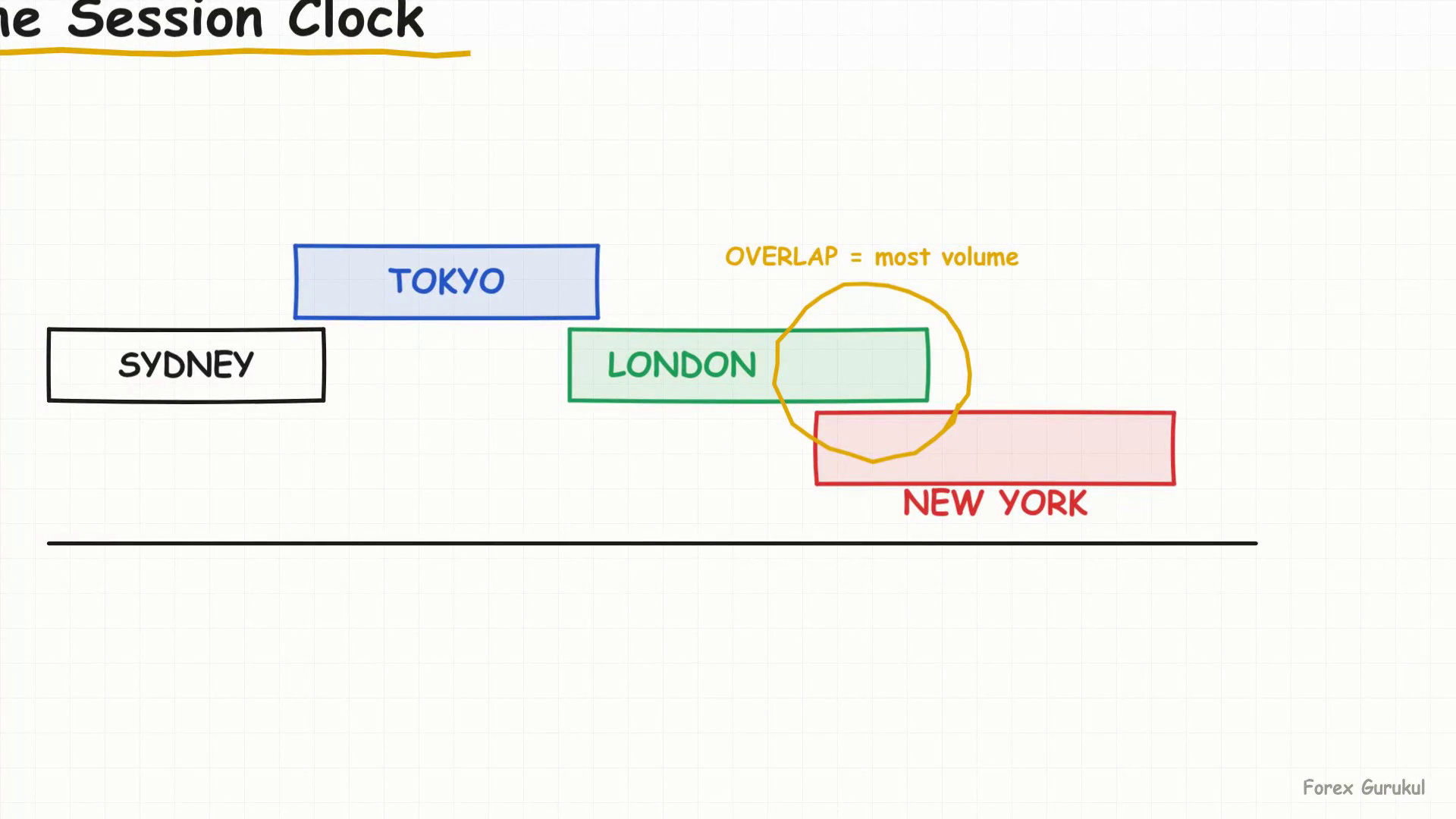
Two overlaps do the heavy lifting for volume and volatility every single day: the tail of Tokyo bleeding into London's open, and London running into New York's open between roughly 13:00 and 16:00–17:00 GMT (8 AM–noon ET). Multiple market-hours resources converge on that New York–London window as the single most active stretch of the trading day.
Why London Runs The Show
Guess, before the number: what share of all global forex volume happens inside this one nine-hour window? Most people say 15–20%. The real figure sits close to 43% — nearly half of everything traded on the planet, inside one session.
That dominance isn't a fluke of scheduling — it's centuries of financial infrastructure. London has sat at the center of world trade since long before forex went electronic, and the Bank for International Settlements' 2025 Triennial Survey confirms just how outsized the UK's role remains: average daily FX turnover in the UK hit $4.745 trillion in April 2025, up from $3.735 trillion three years earlier, out of a global daily total of $9.6 trillion. That single country accounts for close to half of everything traded worldwide, every single day, and it all happens inside London's business hours.
| Metric | 2022 | April 2025 |
|---|---|---|
| Global daily FX turnover | ~$7.5 trillion | $9.6 trillion |
| UK daily FX turnover | $3.735 trillion | $4.745 trillion |
| UK share of global turnover | ~50% | ~49–50% |
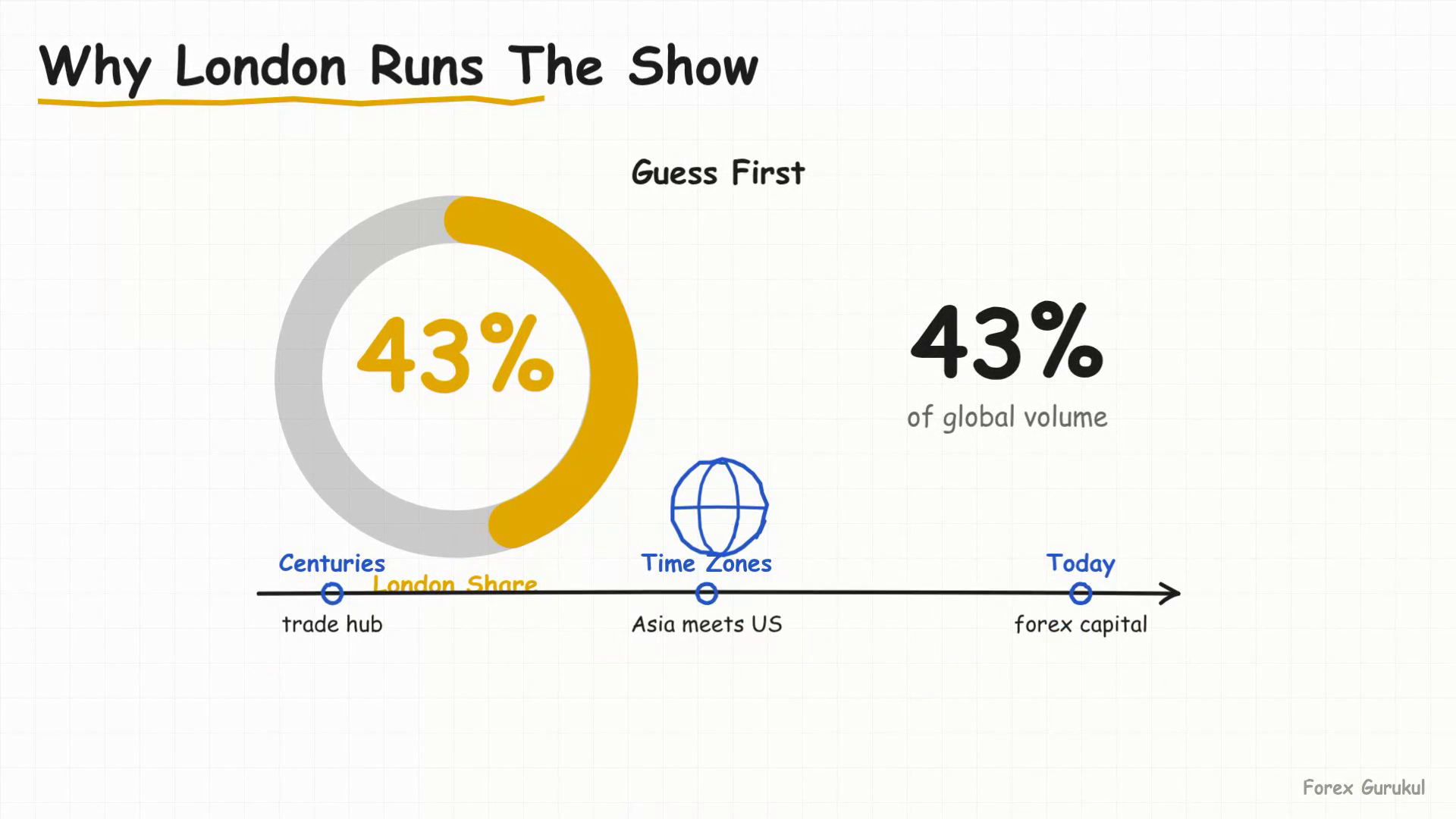
Every bank, hedge fund, and corporate treasury on earth needs a bridge between Asian markets closing and American markets waking up. London has been that bridge for generations, and the money follows the bridge.
Two Tools, No Guessing
Dana's mistake wasn't a bad setup — it was trading blind against a schedule she could have checked in under a minute. Two free tools remove almost all of that guesswork.
- A market hours converter — input your city, get session opens and closes translated into your own local clock, no mental time-zone math at 3 AM. Tools like Babypips' and Dukascopy's market hours converters do this instantly.
- An average pip range tool — shows, pair by pair, how many pips that instrument has typically moved during the current session recently. This is a baseline, not a promise — some days blow straight past it, some days undershoot it.
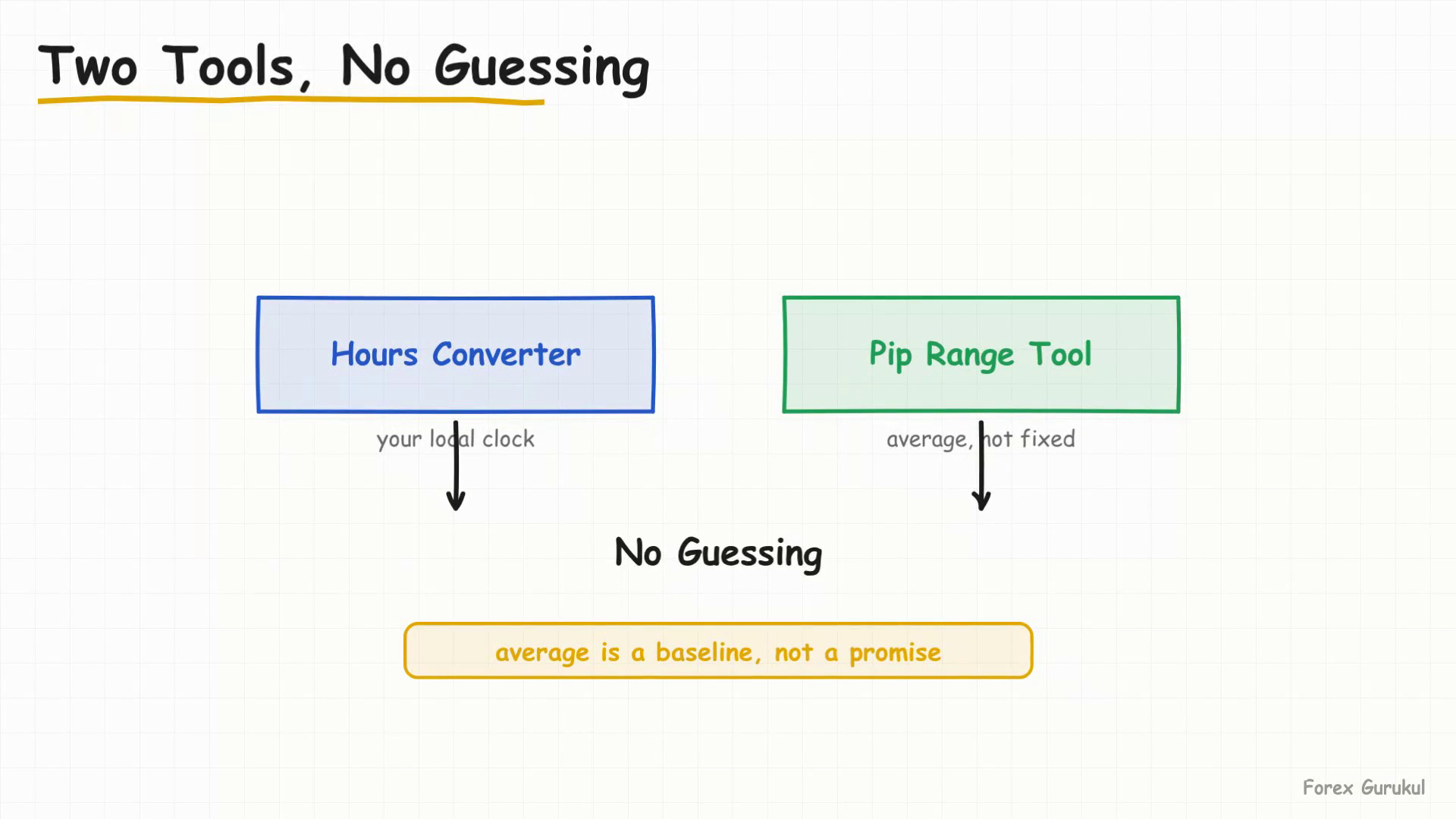
If Dana had glanced at either tool before doubling her position, she'd have seen EUR/USD's typical intraday range was nowhere near used up — the 10-week average daily move for EUR/USD sits around 53–60 pips, and only a handful of those pips had printed by 3 AM. She'd have known exactly what kind of move the day still owed her.
The Shape Of The Session
Pause and guess: inside London's nine hours, when is volatility usually highest — the open, the middle, or the last hour before close? Most people say the open, and they're only half right.
| Time Block (London Time) | What Typically Happens |
|---|---|
| 8:00 AM – 9:30 AM | Sharpest moves of the day as the overnight book gets repriced |
| 12:00 PM – 1:30 PM | Noticeable cooldown — the classic "London lunch" lull |
| 1:00 PM – 5:00 PM GMT (NY overlap) | Volume and volatility pick back up as New York arrives; spreads tighten |
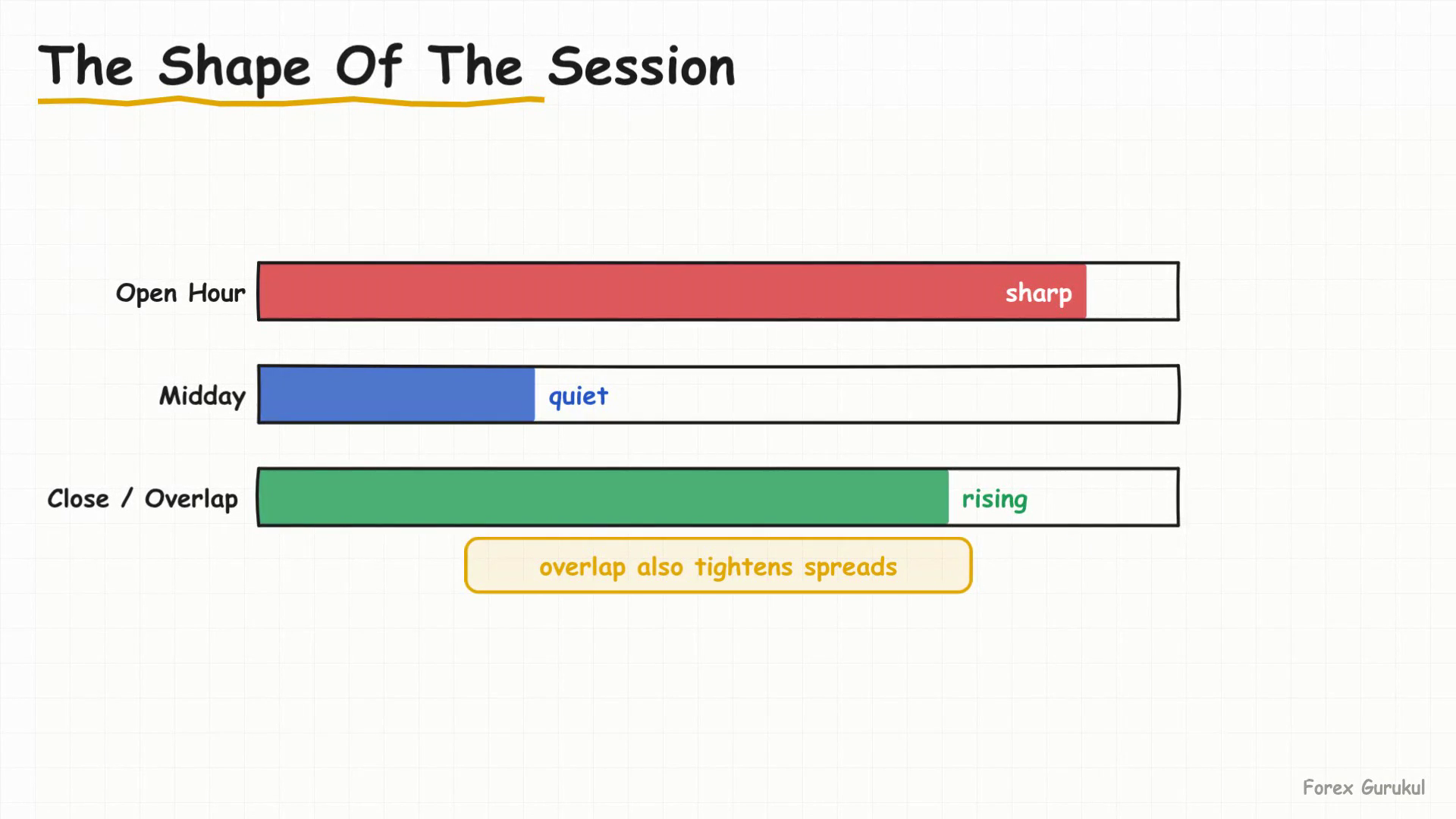
Movement is sharpest that first hour, cools around midday while London desks break for lunch, then can wake back up near the close as New York traders arrive. That New York–London overlap is also why spreads tend to tighten — more banks quoting the same pair simultaneously means tighter pricing, which is quite literally money back in your pocket on every trade.
Remember
None of this replaces a plan, a stop, or screen time — it just tells you *when* the plan is more likely to matter.
- Context beats the pattern — a chart setup means something different at 3 AM than it does at London's open. Same candle, different odds.
- The stop is what saves you — Dana's stop worked exactly as designed. It was the position size and the timing that turned a normal loss into a painful one.
- Nothing replaces practice on a live chart — knowing the session clock intellectually and feeling it in real time are two very different skills.
Key takeaways
- London's session runs about 8 AM–5 PM London time (roughly 3 AM–12 PM ET) and carries close to 43% of all global forex volume.
- The two overlaps — Tokyo-into-London at the open and London-into-New York in the afternoon — are where volume, volatility, and tighter spreads concentrate.
- The BIS 2025 Triennial Survey puts UK daily FX turnover at $4.745 trillion out of a $9.6 trillion global total, underscoring why London dominates the clock.
- Quiet pre-London hours (like 3 AM ET) aren't the market sleeping for the day — they're the market waiting, and volatility can snap back violently once London desks open.
- A market hours converter plus an average pip range tool take most of the guesswork out of sizing and timing trades around the session.
Frequently asked questions
What are London session trading hours exactly?
London's session runs roughly 8:00 AM to 5:00 PM London time, which converts to about 3:00 AM to 12:00 PM on the U.S. east coast. It overlaps Tokyo at the open and New York in the afternoon.
Why does London account for such a large share of forex volume?
London sits geographically and historically as the bridge between Asian and American trading hours, and the BIS 2025 Triennial Survey shows UK daily FX turnover at $4.745 trillion of a $9.6 trillion global total — nearly half the world's volume.
What's the best time to trade during the London session?
Most traders point to the London–New York overlap, roughly 1:00 PM–4:00–5:00 PM GMT (8 AM–noon ET), where volume, volatility, and tighter spreads all peak together.
Why is early London morning (around 3 AM ET) dangerous to trade?
That's the calm before London's desks fully switch on. Low volatility can lull traders into oversized positions, then price can move sharply within minutes once London liquidity arrives — as happened in the $640 example in this article.
How can I check average pip ranges before trading a session?
Free average-range and market-hours-converter tools let you see a pair's typical intraday move and translate session times into your local clock, so you're not guessing at how much of the day's range is left.