
Lessons
New York Forex Session Times: The Hour Traders Waste
The New York Forex Session
Today we're breaking down the New York trading session, hour by hour, so you stop losing trades to timing instead of analysis. Most traders treat "New York hours" as a single eight-hour block, roughly 8 a.m. to 5 p.m. Eastern, and trade it as if every hour inside that window behaves the same way. It doesn't. EUR/USD recently traded around 1.1528, with an intraday range between 1.1454 and 1.1547 — but where that range gets built matters just as much as the range itself.
The Trade That Should Have Worked
It's 3:45 p.m. Eastern, and Rae is short EUR/USD on a clean, textbook bear flag. Entry was disciplined, stop was placed with sensible room. Then the pair just drifts — no momentum, no follow-through — and her stop taps by a few pips right before price reverses hard in her original direction.
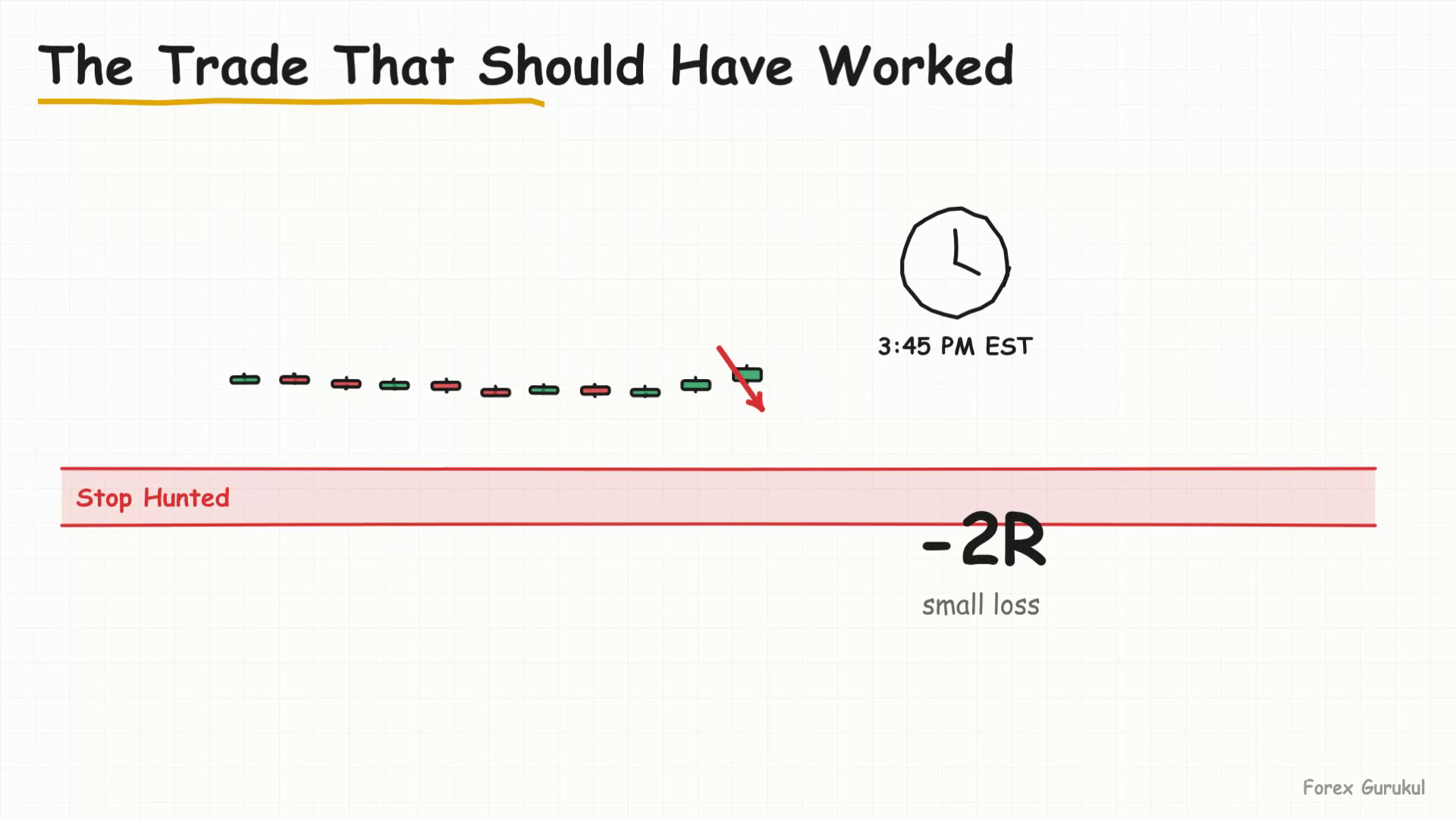
Call it a small loss, two times her risk, nothing dramatic. But it's a paper cut, and paper cuts add up when you don't know why they're happening. She didn't lose because the pattern was wrong. She lost because 8 a.m. to 4 p.m. Eastern is not one session — it's two — and most of the damage happens in the half traders don't understand.
The New York Session Opens
The New York session opens at 8 a.m. Eastern, and it's the point where the U.S. dollar takes the wheel for the rest of the trading day. Reference rates confirm just how sensitive the dollar side of any major pair is to this window — the ECB's own EUR/USD reference sat at 1.1485 on July 31, 2026, a shift of just 0.1% from the prior session, showing how tightly the dollar leg is watched once New York desks come online.
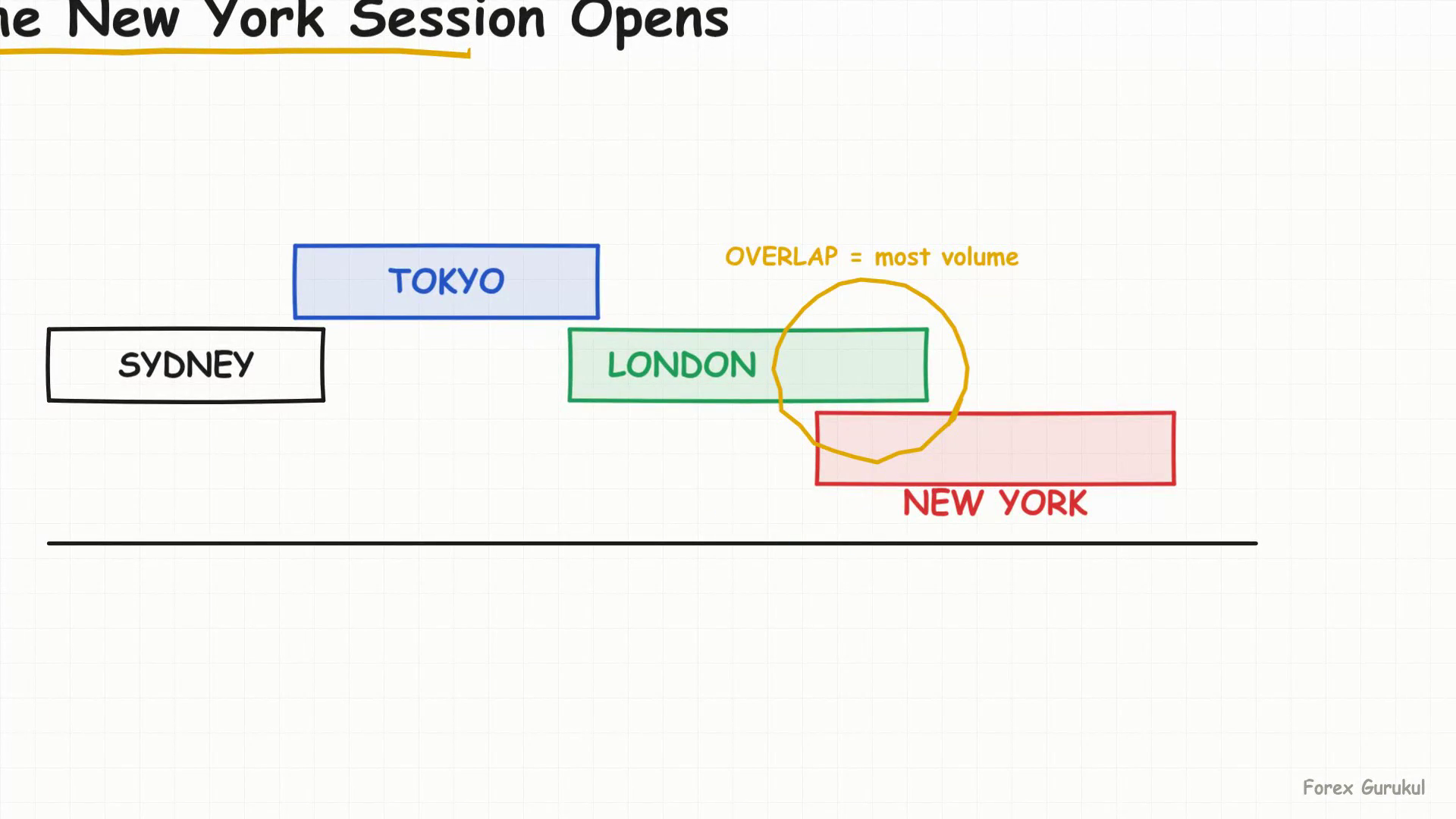
That volume figure — close to one in five dollars traded worldwide — tells you the session matters. It does not tell you when, inside that window, the real money actually moves. And that's the part almost nobody teaches.
Two Sessions, One Clock
New York isn't one flat block; it's two phases stitched together onto a single clock. Understanding the split is the difference between trading with the market and trading against fatigue.
| Phase | Approx. Time (ET) | What's Happening |
|---|---|---|
| Morning phase | 8:00 a.m. – 12:00 p.m. | London still active, heaviest liquidity of the day |
| Afternoon phase | 12:00 p.m. – 5:00 p.m. | London closed, volume thinning steadily |
| Late fade | 4:00 p.m. – 5:00 p.m. | Institutional books closing, session functionally asleep |
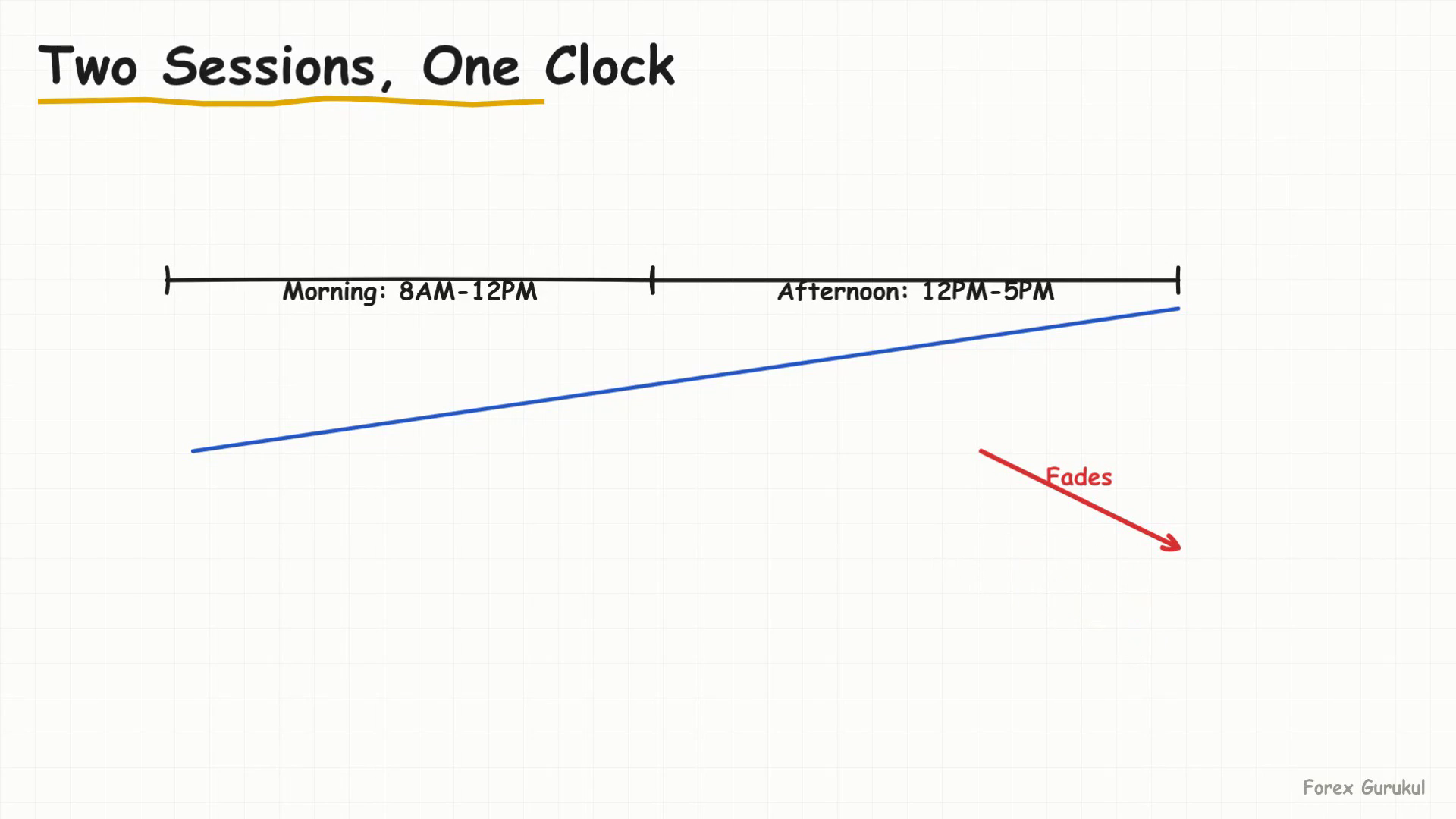
Rae's mistake happened at 3:45 p.m., deep in that afternoon fade. Her chart still printed candles, but the participants who create real trend continuation had largely left the desk for the day.
Average Pip Range By Hour
If pip movement isn't constant across those hours, how different is different? Pause for a second and guess: across an average New York session, which hour moves EUR/USD the most pips? Most new traders guess the open, 8 a.m. Reasonable guess — wrong answer most days.
| Hour (ET) | Relative Pip Activity | Session Context |
|---|---|---|
| 8:00 – 9:00 a.m. | High | New York open, London still active |
| 9:00 – 11:00 a.m. | Highest | Peak overlap liquidity |
| 11:00 a.m. – 12:00 p.m. | Moderate, falling | London winding down |
| 12:00 – 3:00 p.m. | Low | New York-only, thinning volume |
| 3:00 – 5:00 p.m. | Lowest | Books closing, session fading |
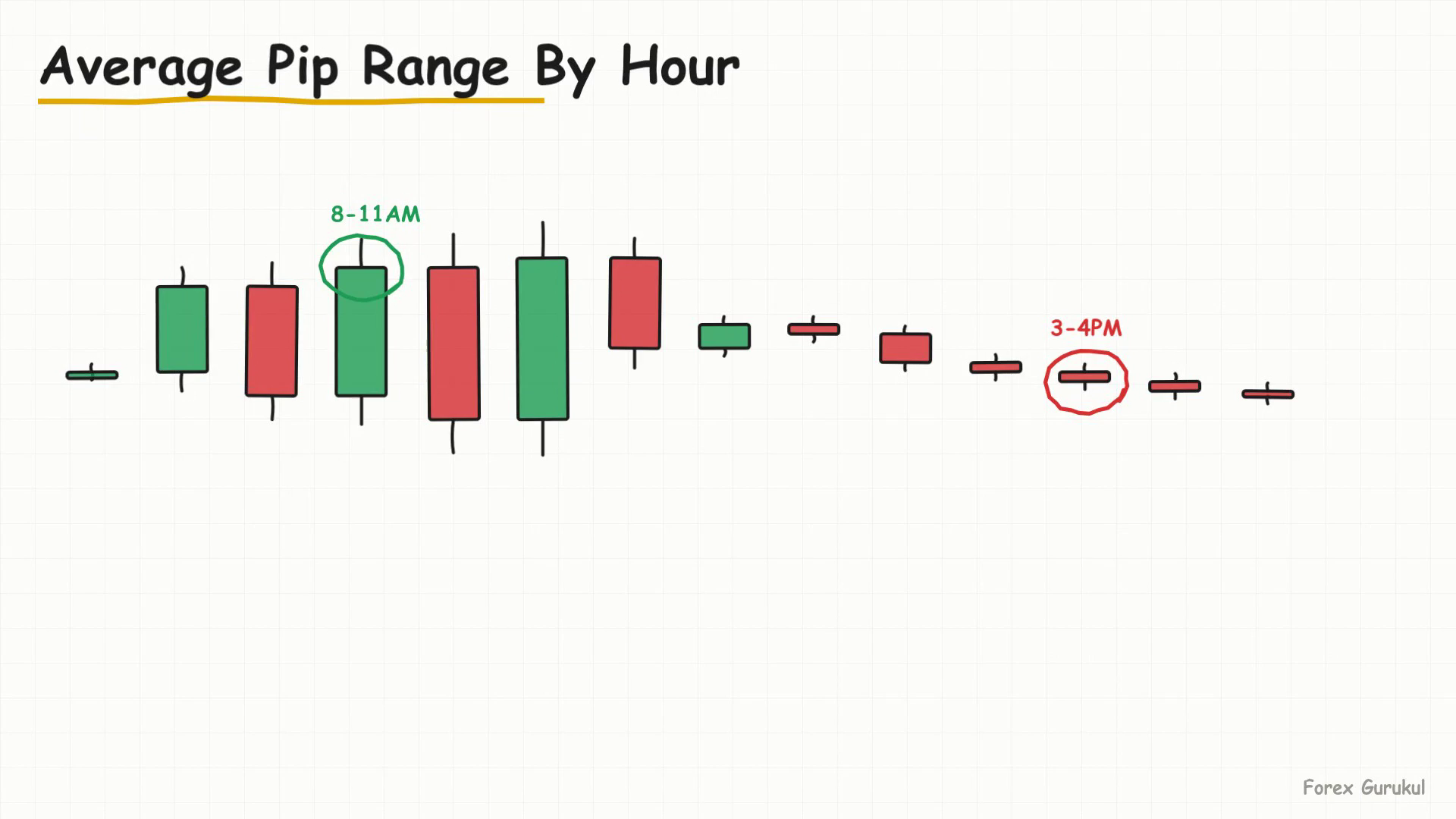
The biggest average ranges hit between 8 and 11 a.m. Eastern, then taper hard through the early afternoon. By 4 p.m., the average hourly range on majors can be less than half of that morning number. EUR/USD's own daily spread of roughly 93 pips — from 1.1454 to 1.1547 — is a snapshot of exactly this pattern: most of that range is usually carved out early, not late.
Where The Overlap Lives
Same pair, same day — a completely different personality depending on the hour. So why does that specific window, 8 to 11 a.m., win? It's not really about New York at all.
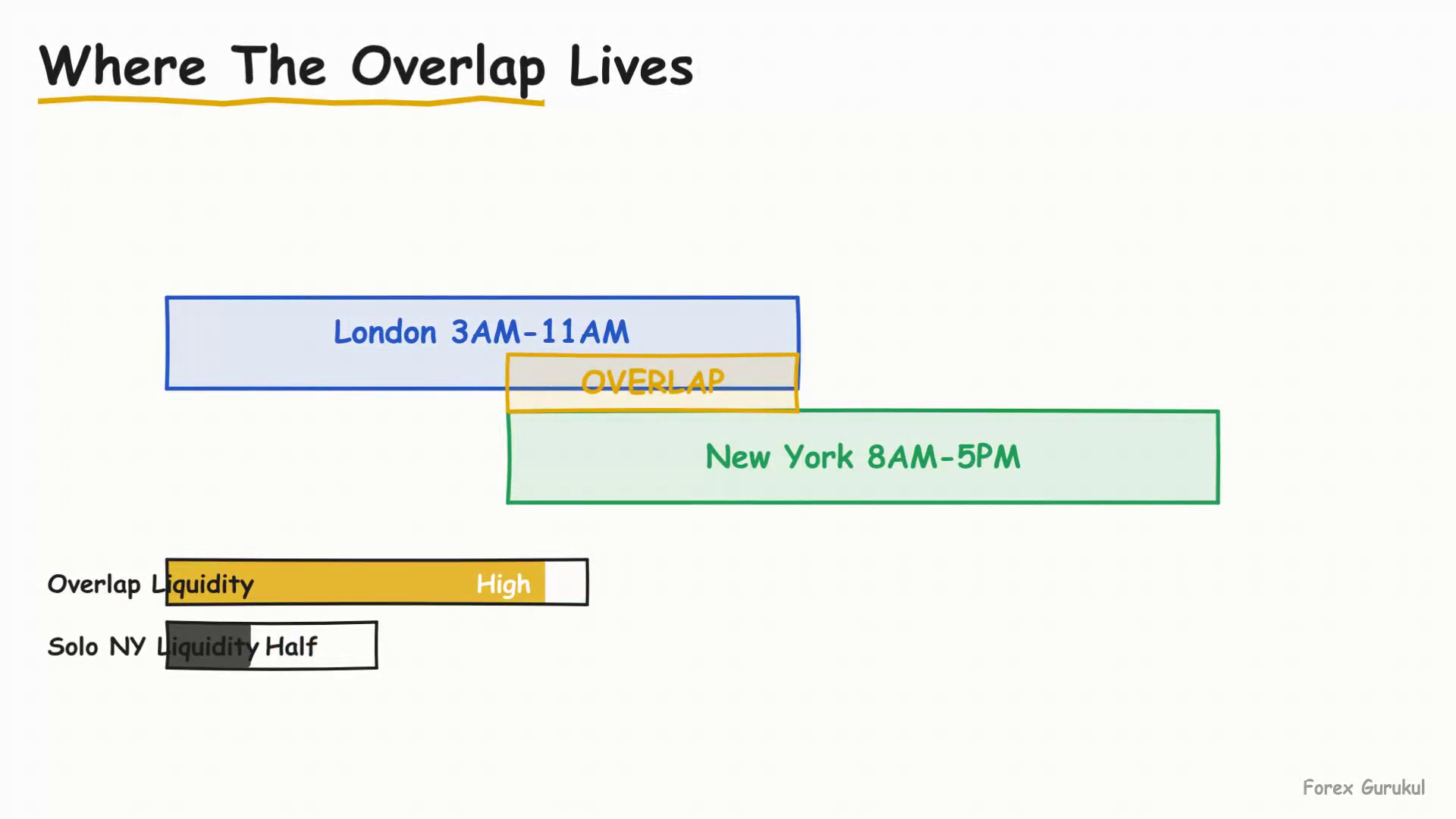
Between roughly 8 and 11 a.m. Eastern, New York is open, but so is London, since London runs through about 11 a.m. Eastern before its afternoon closes down. Two of the world's largest liquidity centers are active simultaneously, and that overlap — not the New York open by itself — is what generates the sharpest, most tradable ranges of the day. Independent data on EUR/USD trading levels around 1.1519 to 1.1537 through late July into early August 2026 reflects a market that keeps most of its meaningful movement concentrated in that overlap window rather than spread evenly across the day.
Remember
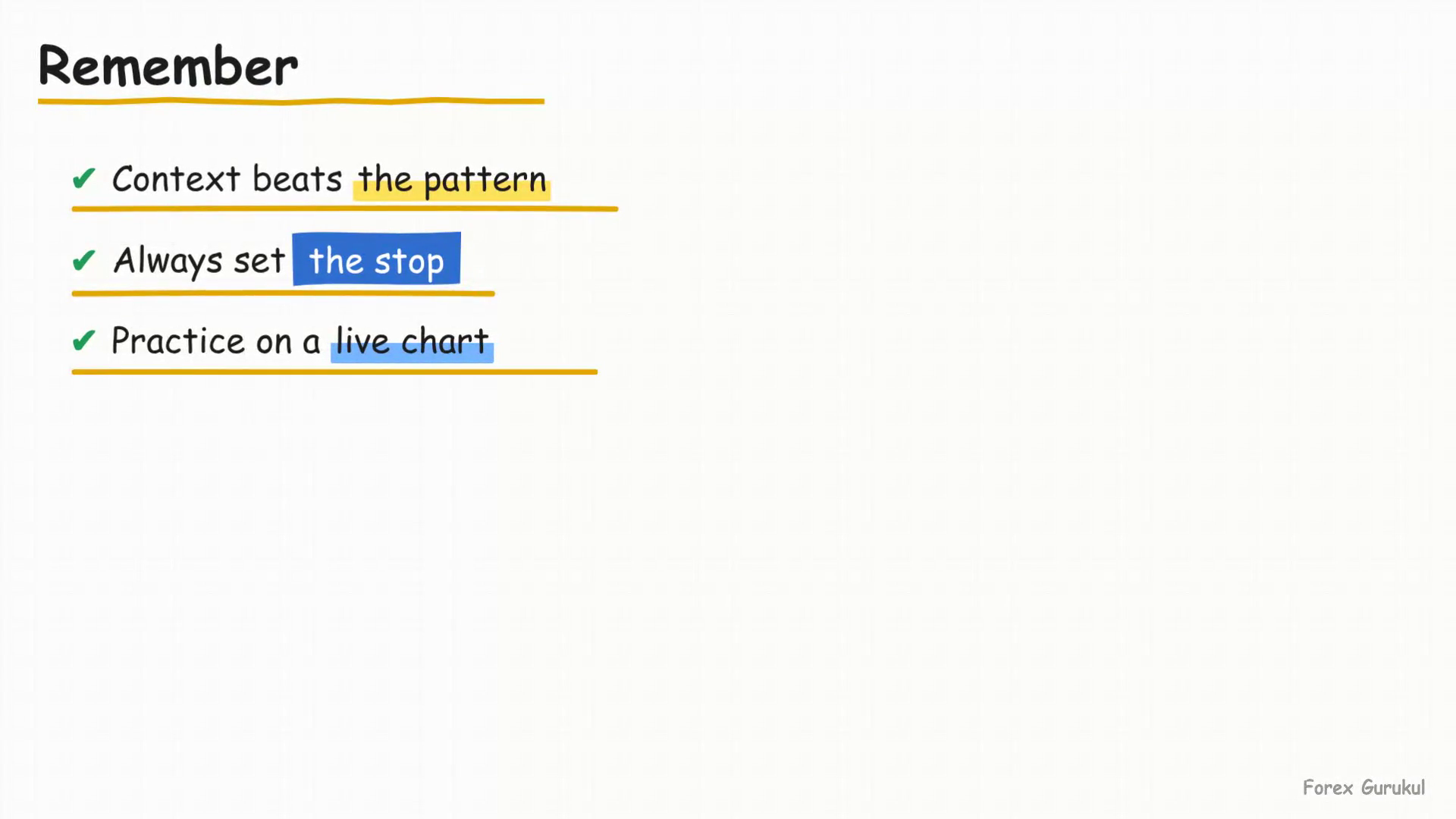
- Context beats the pattern — the same setup performs differently depending on the hour it triggers.
- The stop is what saves you — Rae's discipline turned a bad-timing trade into a small, manageable loss instead of a disaster.
- Nothing replaces practice on a live chart — session behavior is learned by watching it unfold in real time, not just reading about it.
The New York session will keep opening at 8 a.m. Eastern every day. What changes is whether you're trading the overlap hours where liquidity actually lives, or the afternoon drift where price just marks time. Know the difference, and paper cuts like Rae's stop stop happening as often.
Key takeaways
- The New York session runs roughly 8 a.m. to 5 p.m. Eastern but behaves as two distinct phases, not one continuous block.
- The 8–11 a.m. Eastern window overlaps with London and consistently produces the largest average pip ranges on majors like EUR/USD.
- By 4 p.m. Eastern, average hourly ranges can fall to less than half of the morning peak as institutional desks close books.
- EUR/USD's recent daily range of about 1.1454–1.1547 illustrates how most meaningful movement clusters early in the session.
- A clean chart pattern can still fail if it's traded in a low-liquidity hour — timing context matters as much as the setup itself.
Frequently asked questions
What time does the New York forex session open and close?
The New York session generally runs from 8 a.m. to 5 p.m. Eastern Time, though liquidity is heavily front-loaded into the morning hours.
What is the best hour to trade during the New York session?
Roughly 8 to 11 a.m. Eastern, when New York overlaps with the tail end of the London session, tends to produce the largest and most reliable pip ranges.
Why does volume drop off in the New York afternoon?
London closes around 11 a.m. Eastern, and by mid-to-late afternoon institutional desks in New York begin closing their books for the day, thinning out volume well before the official 5 p.m. close.
Is trading after 4 p.m. Eastern a bad idea?
It's not automatically bad, but average pip ranges shrink significantly, so trades initiated late in the session are more prone to stalling or reversing on thin volume, as seen in the EUR/USD example above.
Does this overlap effect apply to pairs other than EUR/USD?
Yes — the London/New York overlap tends to boost volatility across most major pairs, since it's the period when the two largest forex trading centers are simultaneously active.