
Lessons
Tokyo Trading Session Hours: Why New Traders Lose Here
Maria's 20-Minute Lesson: What the Tokyo Session Really Costs New Traders
Maria placed what looked like a clean breakout on AUD/USD. Tight stop, solid setup, textbook entry. Twenty minutes later she was stopped out. Then price ripped in the exact direction she'd called, without her. She didn't lose because her analysis was wrong. She lost because she never checked what session she was trading blind into.
That session runs the early hours of nearly every trading day for anyone outside Asia, and it's the one most new traders never actually study: the Tokyo session. On paper it looks like the calm, low-drama warm-up before London and New York take over. In reality, its thin, choppy liquidity is exactly what chews through stop losses and shakes out otherwise correct trade ideas.
This guide breaks down the exact hours, who's really trading during them, how much the market actually moves, and why that combination is a trap for anyone who hasn't built a routine around it.
Tokyo Session Hours: The Exact Trading Window (GMT and Your Time Zone)
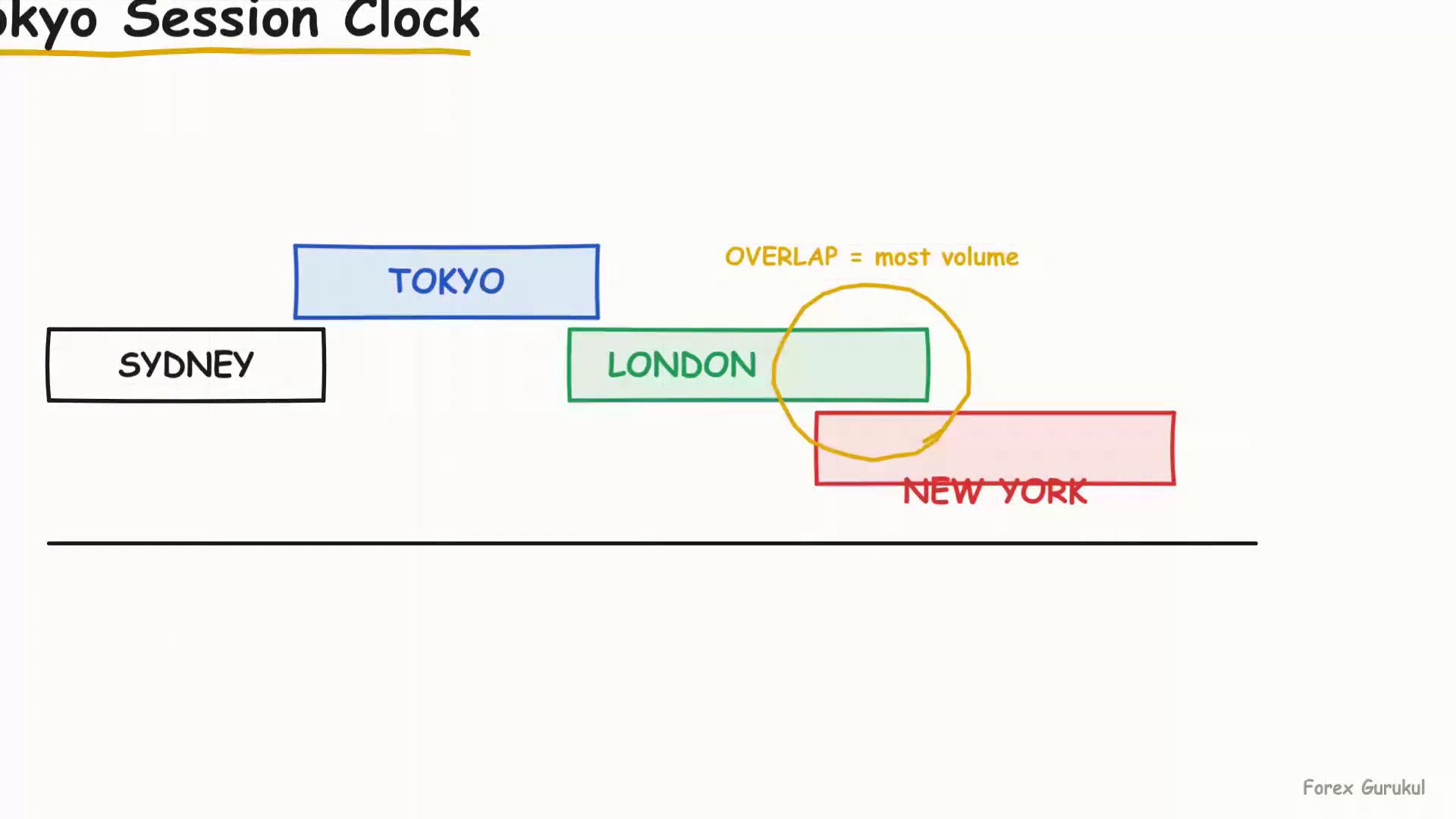
The Tokyo session opens at 00:00 GMT and runs until 09:00 GMT, sitting inside the broader 24-hour forex clock alongside Sydney, London, and New York. It's the first major session to open once Sydney has already been running for a couple of hours, which is why the two are often grouped together under one umbrella.
Maria is based in New York. Midnight GMT lands squarely in the middle of her night, and she never checked that before placing her trade. This is exactly what a forex market hours converter solves: enter your city once, and it maps all four sessions onto your own local clock instead of forcing you to do GMT math half-asleep.
| Session | Opens (GMT) | Closes (GMT) | Overlaps With |
|---|---|---|---|
| Sydney | 22:00 | 07:00 | Tokyo |
| Tokyo | 00:00 | 09:00 | Sydney (early), London (late) |
| London | 08:00 | 17:00 | Tokyo (early), New York (late) |
| New York | 13:00 | 22:00 | London |
Why 'Tokyo Session' Is Really Code for 'Asia Pacific Session'
Traders almost never actually call it the Tokyo session in conversation. You'll see it labeled the Asian session far more often, because Tokyo simply anchors a much wider Asia-Pacific trading block that includes Singapore, Hong Kong, Sydney, and Wellington all firing in overlapping hours.
That naming difference matters more than it sounds. If you think you're trading "Tokyo," you might assume Japanese institutions are the dominant force behind every price move you see. In reality, the flow during these hours is a blend of several financial centers waking up at once, each with its own bank desks, corporate hedging flows, and central bank watchers layered on top of each other.
Understanding that the session is a regional cocktail, not a single-country event, is the first step to reading it correctly instead of assuming Tokyo-specific logic explains every candle.
Who's Actually Trading: Volume, Yen Share, and the Real Power Players
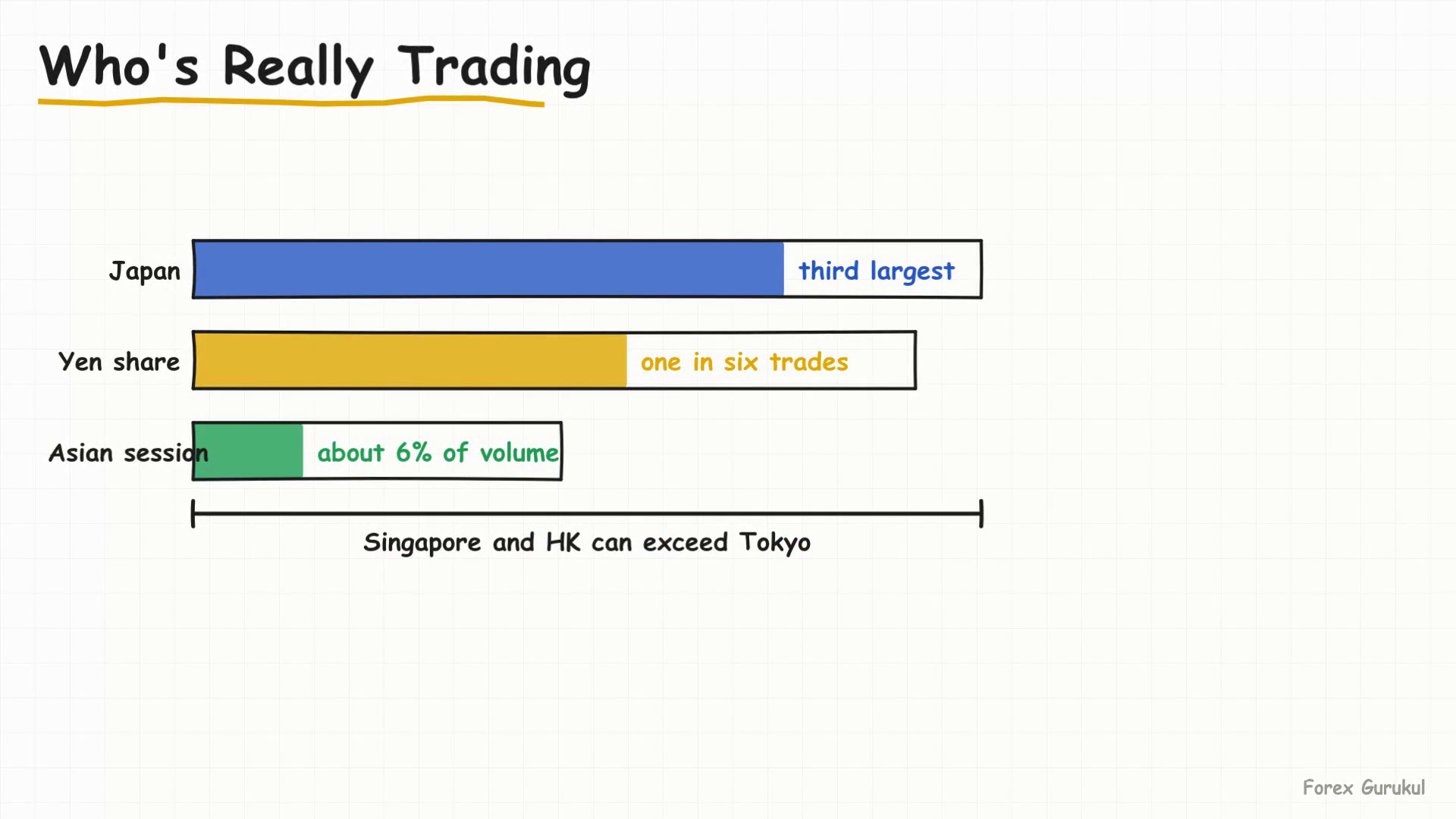
Start with Japan itself. In the most recent BIS Triennial Survey, the Japanese yen was involved in roughly 16.8% of all global FX trades, making it the second most-traded currency on the planet behind the US dollar, and just ahead of the euro's slipping share. That's a huge footprint for one currency.
But volume by currency isn't the same as volume by session, or volume by trading hub. By location, the United Kingdom remains the world's dominant FX center, holding roughly 38% of global turnover on its own, with the top four hubs combined, the UK, the US, Singapore, and Hong Kong, accounting for about 75% of all FX trading worldwide. Japan isn't even in that top four anymore.
In the 2025 survey, the so-called "Asian trio", Singapore, Hong Kong, and Japan, ranked next in that same order, unchanged from the previous survey cycle. In plain terms: Singapore and Hong Kong now push through more forex volume during Asia-Pacific hours than Tokyo does on its own.
| Rank | Hub / Currency | Key Stat |
|---|---|---|
| 1 | United Kingdom (London) | ~38% of global FX turnover |
| 2 | United States (New York) | Part of top-4 hubs = 75% combined |
| 3 | Singapore | Leads the Asia-Pacific trio |
| 4 | Hong Kong | Just behind Singapore |
| 5 | Japan (Tokyo) | Yen used in ~16.8% of all global trades |
The takeaway: "Asian session" doesn't mean Tokyo dominates it. It means Tokyo anchors a block of centers firing together, and that combined but still comparatively thin volume, roughly 6% of global daily forex turnover during the actual Tokyo hours, is exactly what changes how price behaves inside it.
The Range Trap: Why Guessing Volatility Gets New Traders Stopped Out
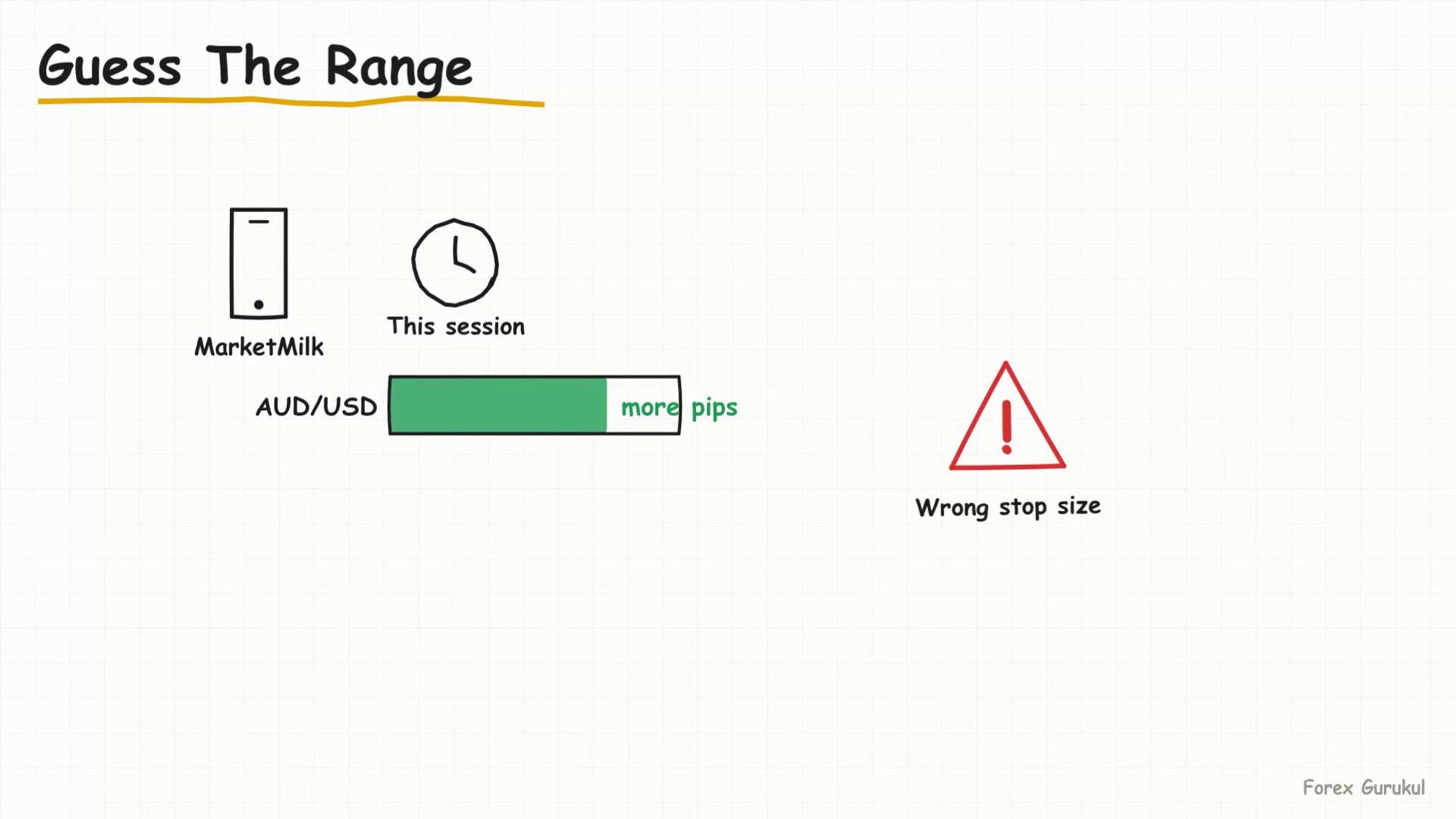
Before Maria enters anything, there's one number she should check first: the average hourly pip range for her exact pair during her exact session. Volatility isn't constant across the day, it swells and shrinks depending on which financial centers are open and hedging, speculating, or squaring positions.
So here's the quick test: during the Asian session, which pair typically moves more on an average hour, AUD/USD or USD/CHF? Take a guess before reading on.
AUD/USD tends to win that comparison, and the logic is straightforward once you see it: it's an Asia-Pacific pair trading its own regional business hours, with Australian data releases and regional flow directly feeding it. USD/CHF, by contrast, is a European-hours pair that's largely dormant until London opens.
Why Most New Traders Actually Lose Money Here
None of this is theoretical. The specific reasons new traders bleed out during Tokyo/Asian hours are consistent and repeatable:
- Trading London-style ranges on Tokyo-style liquidity — stops sized for an 8am London breakout get clipped by a 2am chop that never had the volume to sustain a real move.
- Ignoring the thin-liquidity spread widening that shows up around major pairs outside the JPY crosses, making normal stop distances feel too tight.
- Trading blind to the clock — like Maria, entering during hours that are technically their overnight session without realizing volatility has already dropped off a cliff.
- Overweighting a 'clean pattern' while ignoring session context entirely, treating every breakout the same regardless of whether real volume is behind it.
- Chasing yen-cross moves around Bank of Japan headlines without appreciating how sharply liquidity can gap in a market that's otherwise moving in small, contained ranges.
Every one of these mistakes shares the same root cause: treating a low-volume, regionally-driven session with the same playbook built for London or New York, where volume, participation, and average ranges are structurally different.
How to Actually Trade the Tokyo Session Without Getting Chopped Out
None of this means the Tokyo session is unplayable, it simply demands a different framework than the London or New York open:
- Focus on JPY crosses and AUD/NZD pairs first, since these carry the actual regional flow driving the session.
- Check the average hourly pip range for your specific pair before setting a stop, don't reuse a London-session stop distance overnight.
- Treat Tokyo-session ranges as range-trading territory more often than trend-continuation territory, since the volume backing a breakout is thinner than later sessions.
- Watch for the Tokyo–London overlap (roughly 08:00–09:00 GMT) as volume and volatility both start climbing, this transition window behaves differently than the dead middle of the session.
- Always convert the session into your own local time zone before deciding whether you're trading it alert, or trading it exhausted at 3am without realizing it.
Remember: Context Beats the Pattern
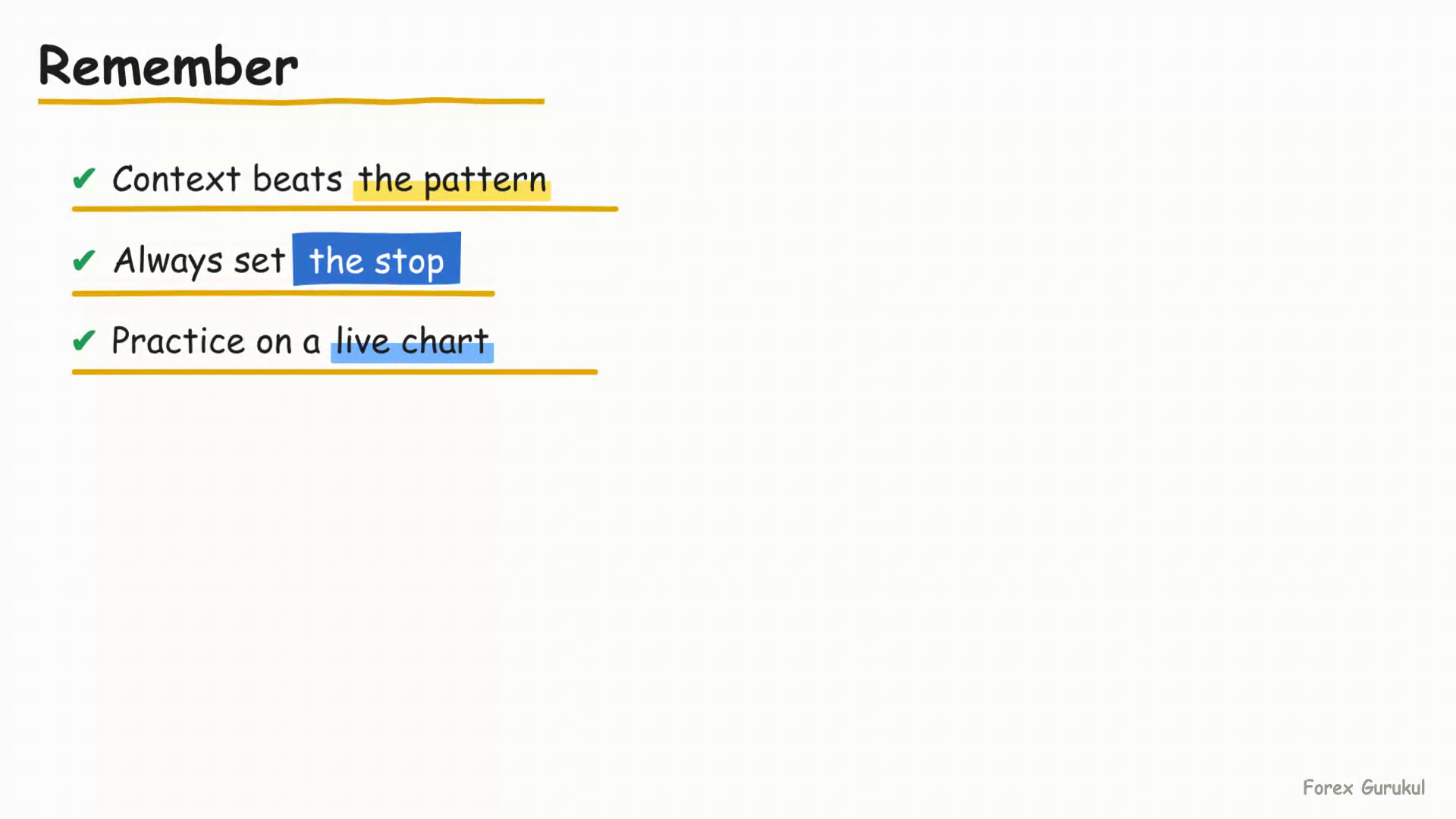
Maria's breakout wasn't wrong. Her direction wasn't wrong. What was missing was the context: which session she was in, how much real volume was behind that move, and whether her stop was sized for the liquidity actually available at that hour.
The Tokyo session isn't a trap because it's dangerous, it's a trap because it looks exactly like every other session on a chart while behaving completely differently underneath. Context beats the pattern every time. The stop is what saves you when that context turns out wrong. And nothing replaces practice on a live chart, watching how your specific pairs actually behave, hour by hour, across every session before you risk real size on any of them.
Key takeaways
- The Tokyo session runs 00:00–09:00 GMT and anchors the broader Asian/Asia-Pacific trading block alongside Singapore and Hong Kong.
- Japan's currency, the yen, is involved in roughly 16.8% of all global forex trades, but Japan itself now ranks behind Singapore and Hong Kong among trading hubs.
- The Tokyo session accounts for only around 6% of daily global forex volume, making liquidity thinner and ranges tighter than London or New York.
- AUD/USD typically shows a higher average hourly range than USD/CHF during Asian hours because it's a regional pair trading its own active window.
- Most new-trader losses in this session come from applying London/New York-style stop distances and breakout logic to a structurally lower-volume market.
Frequently asked questions
What time does the Tokyo forex session open and close in GMT?
The Tokyo session opens at 00:00 GMT and closes at 09:00 GMT, overlapping with the tail end of Sydney and the start of London.
Is the Tokyo session the same as the Asian session?
Not exactly. Tokyo is the anchor market, but the Asian session also includes Singapore and Hong Kong, which combined now often push more volume than Tokyo alone.
Why is liquidity lower during the Tokyo session?
The Tokyo session represents only about 6% of global daily forex volume, since major hubs like London and New York are closed, leaving fewer active participants and thinner order books.
Which currency pairs move the most during the Tokyo session?
JPY crosses and Asia-Pacific pairs like AUD/USD and NZD/USD tend to show the highest average hourly ranges, since regional flow and data releases directly drive them during these hours.
Why do new traders lose money trading Tokyo hours?
The most common mistake is applying stop distances and breakout strategies built for higher-volume sessions like London to a market with structurally thinner liquidity, leading to premature stop-outs before the real move happens.