
News
Top 15 Crypto News Today — August 07, 2026
Market Pulse: Bitcoin Holds $65K While Fear Grips Traders
Sentiment across the crypto market has turned cautious. The Fear and Greed Index is reading around 40, firmly in fear territory and a sharp comedown from the extreme greed levels seen earlier this year. Yet Bitcoin is holding its ground near $65,000, refusing to break down despite the nervous mood on trading desks.
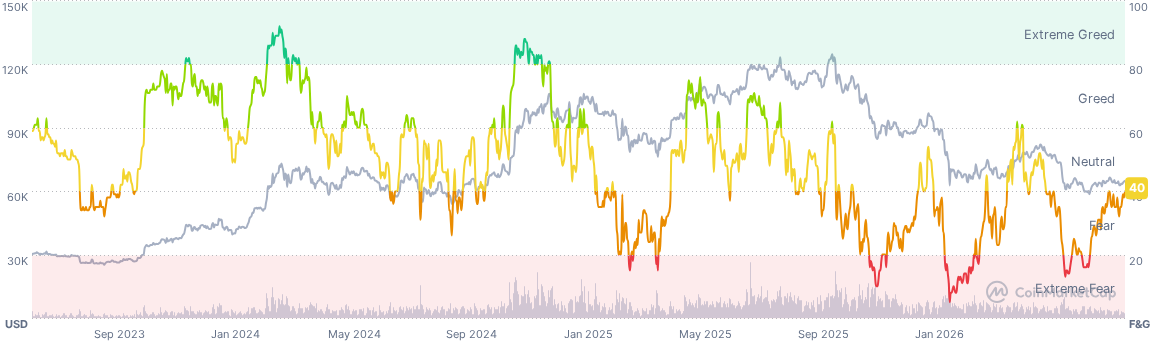
What stands out is the divergence beneath the surface. Ethereum and much of the altcoin complex are lagging, with ETH struggling to hold above $2,000, which is quietly pushing Bitcoin dominance higher. That's a classic signal of capital rotating toward safety within crypto itself rather than exiting the asset class altogether.
| Metric | Level | Read |
|---|---|---|
| Fear & Greed Index | ~40 | Fear |
| Bitcoin (BTC) | ~$65,000 | Holding support |
| Ethereum (ETH) | < $2,000 | Underperforming |
| BTC Dominance | Rising | Flight to Bitcoin |
The takeaway for traders: this isn't a moment to chase green candles on hope, nor to panic-sell into red ones. A sustained bounce off fear-zone readings has historically offered a better risk-reward entry than trying to catch a falling knife during euphoria.
Regulation Roundup: Russia, Iran and the Clarity Act Standoff
Regulatory headlines dominate today's crypto news cycle, and they span three continents.
Russia targets exchanges it links to Ukraine
Russian authorities have escalated a crackdown on unlicensed crypto exchanges, alleging several platforms have ties to Ukraine. The move adds another layer to the geopolitical use of crypto rails as sanctions-era leverage, and it's a reminder that exchange licensing is becoming a national-security issue, not just a compliance checkbox.
Washington widens the net on Iran
The U.S. Treasury has sanctioned two additional crypto exchanges as part of its widening crackdown on Iran-linked crypto activity. This continues a pattern seen throughout 2026 of Washington using exchange-level sanctions to choke off sanctioned regimes' access to digital-dollar liquidity.
Saylor: "Bitcoin doesn't need clarity"
Michael Saylor made waves with a blunt take on the much-discussed Clarity Act, arguing that Bitcoin — the world's largest crypto asset by market cap — doesn't need regulatory clarity to function or to keep accruing value. It's a familiar Saylor framing: Bitcoin as digital property that predates and outlasts any single legislative framework, in contrast to altcoins and tokenized securities that arguably need the Act far more.
Senate still eyeing a Clarity Act vote
Senate Majority Leader John Thune is reportedly still planning to move for cloture on the Clarity Act before the recess, which would queue up a September Senate vote. Yield-sharing disputes and unrelated ethics fights are dragging out the process, but a weekend procedural surprise could still shift the market's read on how fast a U.S. market-structure bill actually arrives.

Bitcoin's BIP-110 Countdown: 185 Blocks and Counting
One of the more technical but consequential stories today involves Bitcoin's own consensus layer. The network reportedly has just 185 blocks left before BIP-110 rules begin taking effect.

At block height 961,632, nodes that have chosen to enforce BIP-110 will start rejecting non-signaling blocks. Crucially, this is not a network-wide automatic upgrade — Bitcoin does not adopt the proposal by default. Only nodes and miners that opt in will enforce the new rule, meaning the coming days could reveal how much of the hash rate and node network actually supports this change versus continuing to build on the legacy rule set.
| Detail | Value |
|---|---|
| Activation height | 961,632 |
| Blocks remaining | 185 (as of today) |
| Adoption | Opt-in for enforcing nodes only |
| Risk | Potential temporary fork/signaling split |
Exchanges, Bankruptcies and a $100M Wallet Move
The exchange and institutional side of crypto delivered three headline-grabbing stories today.
BitMEX sale falls apart
The long-rumored sale of derivatives exchange BitMEX has reportedly collapsed. Prospective buyers balked at two sticking points: continued founder ownership stakes and a shrinking core business, as trading volumes have migrated to larger, more compliant venues over the past couple of years.

Voyager ruling raises the stakes for crypto liquidators
A court has stripped certain legal protections in the ongoing Voyager bankruptcy case. The ruling could reshape how liability protections apply in future crypto insolvency proceedings, putting liquidation professionals and advisors on notice that the shield they've relied on in prior cases (Celsius, FTX, and now Voyager) may be narrower going forward.
Trump-linked Ethereum wallet sends $100M to Binance
A wallet reportedly linked to Trump-affiliated crypto interests moved roughly $100 million in Ethereum to Binance. Large wallet-to-exchange transfers like this typically precede either a sale, a market-making operation, or a strategic rebalancing — and given the political sensitivity of the wallet's origin, expect continued on-chain scrutiny and regulatory questions in the days ahead.
| Story | Amount / Detail | Why it matters |
|---|---|---|
| BitMEX sale | Deal collapsed | Signals declining derivatives exchange valuations |
| Voyager ruling | Legal protections stripped | Raises liability risk for crypto liquidators |
| Trump-linked wallet | ~$100M ETH to Binance | Possible sell pressure, regulatory attention |
Beyond Crypto: The Macro and Market Stories Traders Are Watching
Crypto doesn't trade in a vacuum, and several adjacent stories are shaping the broader risk appetite that Bitcoin and altcoins ride on.
Oil climbs on a possible Iran-Oman deal
Oil prices rose on reports of a potential Iran-Oman agreement touching the Strait of Hormuz. Roughly a fifth of global oil flows through that chokepoint, so any diplomatic movement there ripples through energy markets — and by extension, through risk assets like crypto that are sensitive to inflation and rate expectations.

The chip stock riding three booms at once
One U.S.-listed semiconductor stock is reportedly benefiting from overlapping demand: smartphones, MRI machines, and AI servers are all competing for the same class of memory chips. It's a reminder that the AI infrastructure boom is squeezing supply chains far beyond data centers, and investors are rotating into diversified chip plays rather than pure-play AI names.

Sila Nanotechnologies raises $300M amid DOD loan questions
Battery tech firm Sila Nanotechnologies closed a $300 million funding round, even as claims about a Department of Defense loan remain unverified. If confirmed, the funding could accelerate U.S. battery leadership with implications for energy security and defense supply chains.

WuXi AppTec ruling and other headlines
A judge has blocked the U.S. decision to add biotech firm WuXi AppTec to the Pentagon's list of companies with alleged Chinese military ties — a ruling that underscores how legal challenges are increasingly reshaping geopolitical blacklists and could affect global biotech partnerships.

Rounding out the wider news cycle: a leaked presentation showed surveillance firm Flock pitching a plan to turn 350,000 Uber and delivery drivers into a nationwide license-plate-scanning fleet, raising fresh privacy concerns, while in sports, RB Leipzig's transfer of forward Fisnik Asllani fell through over medical concerns.

Today's Full Crypto Wrap and What to Watch Next
Pulling it all together, today's crypto news cycle is a mix of macro-sensitive fear, regulatory chess moves across the U.S., Russia, and Iran, and structural shifts inside exchanges and Bitcoin's own protocol layer.

- Russia cracks down on unlicensed exchanges linked to Ukraine
- Michael Saylor says Bitcoin doesn't need the Clarity Act
- U.S. sanctions two more Iran-linked crypto exchanges
- Flock's leaked plan to scan 350,000 rideshare drivers' plates
- Daily crypto market wrap-up
- BitMEX's sale collapses over ownership and business concerns
- Bitcoin nears BIP-110 activation at block 961,632
- Thune keeps Clarity Act cloture plans alive for a September vote
- A U.S. chip stock benefits from overlapping smartphone, medical, and AI demand
- Sila Nanotechnologies raises $300M despite unverified DOD loan claims
- Oil prices rise on a possible Iran-Oman Strait of Hormuz deal
- RB Leipzig's Asllani transfer collapses on medical grounds
- Court strips legal protections in the Voyager bankruptcy case
- A Trump-linked Ethereum wallet moves $100M to Binance
- Judge blocks WuXi AppTec's addition to the Pentagon's China military list
For traders positioning into next week, the two threads worth tracking closely are the BIP-110 activation at block 961,632 and any weekend movement on Clarity Act cloture — both carry the potential to shift sentiment quickly once resolved, one way or the other.
Key takeaways
- Bitcoin is holding near $65,000 even as the Fear and Greed Index sits around 40, in fear territory — historically a zone for accumulation rather than panic.
- Bitcoin dominance is rising as Ethereum and altcoins lag under $2,000, signaling capital rotation toward safety within crypto.
- Regulatory pressure is intensifying globally: Russia is targeting Ukraine-linked exchanges, the U.S. is sanctioning Iran-linked platforms, and the Clarity Act cloture vote could land as soon as September.
- Bitcoin's network faces a technical inflection point with BIP-110 enforcement approaching at block 961,632 — an opt-in change, not a mandatory network upgrade.
- Institutional and legal shocks — the collapsed BitMEX sale, the Voyager ruling, and a $100M Trump-linked ETH transfer to Binance — are reshaping risk around exchanges and bankruptcy liquidations.
Frequently asked questions
Why is the Fear and Greed Index showing fear even though Bitcoin is stable near $65,000?
Sentiment indexes react to volatility, momentum, and social signals, not just spot price. Altcoin weakness, regulatory uncertainty around the Clarity Act, and macro jitters from oil and geopolitical news are pulling the index down even though BTC itself is holding support.
What is BIP-110 and will it force a Bitcoin fork?
BIP-110 is a proposed consensus rule change. At block height 961,632, nodes that choose to enforce it will start rejecting non-signaling blocks. It's opt-in, not automatic, so a fork only occurs if enforcing and non-enforcing nodes end up on materially different chains — something the community is watching closely as the activation height approaches.
Does Michael Saylor's comment mean he opposes the Clarity Act?
Not necessarily. Saylor's point is that Bitcoin's value proposition as a scarce, decentralized asset doesn't depend on U.S. legislation to function, unlike many altcoins and tokenized securities that arguably need clearer market-structure rules to gain institutional adoption.
What does the Voyager bankruptcy ruling mean for other crypto companies in liquidation?
By stripping certain legal protections, the ruling could narrow the liability shield that crypto liquidators and advisors have relied on in past cases, potentially raising legal exposure in ongoing and future crypto insolvency proceedings.
Should I buy the dip with the Fear and Greed Index at 40?
A reading near 40 has historically preceded rebounds, but it's not a guarantee. Traders should combine sentiment readings with on-chain data, volume, and news catalysts like the Clarity Act vote before making position decisions, and avoid over-leveraging into uncertain regulatory headlines.