
Analysis
XLM at $0.1626: Does the CLARITY Act Deadline Move It?
XLM Meets Its Deadline
XLM is trading at $0.1626 right now, down 1.45% on the day. That puts it just above $0.1604 — the low of its entire 60-day range. Forty-eight hours from now, the Senate hits its August 7 recess deadline on the CLARITY Act, and the crowd is calling this the moment that decides everything for XLM and XRP alike.
We're not here to add to the noise. We checked the actual numbers — the bill's status, the price structure, the funding data — before deciding whether this deadline deserves the hype it's getting. Here's what the CLARITY Act deadline actually means for XLM, not what the thumbnails say.
48 Hours, One Level, One Vote
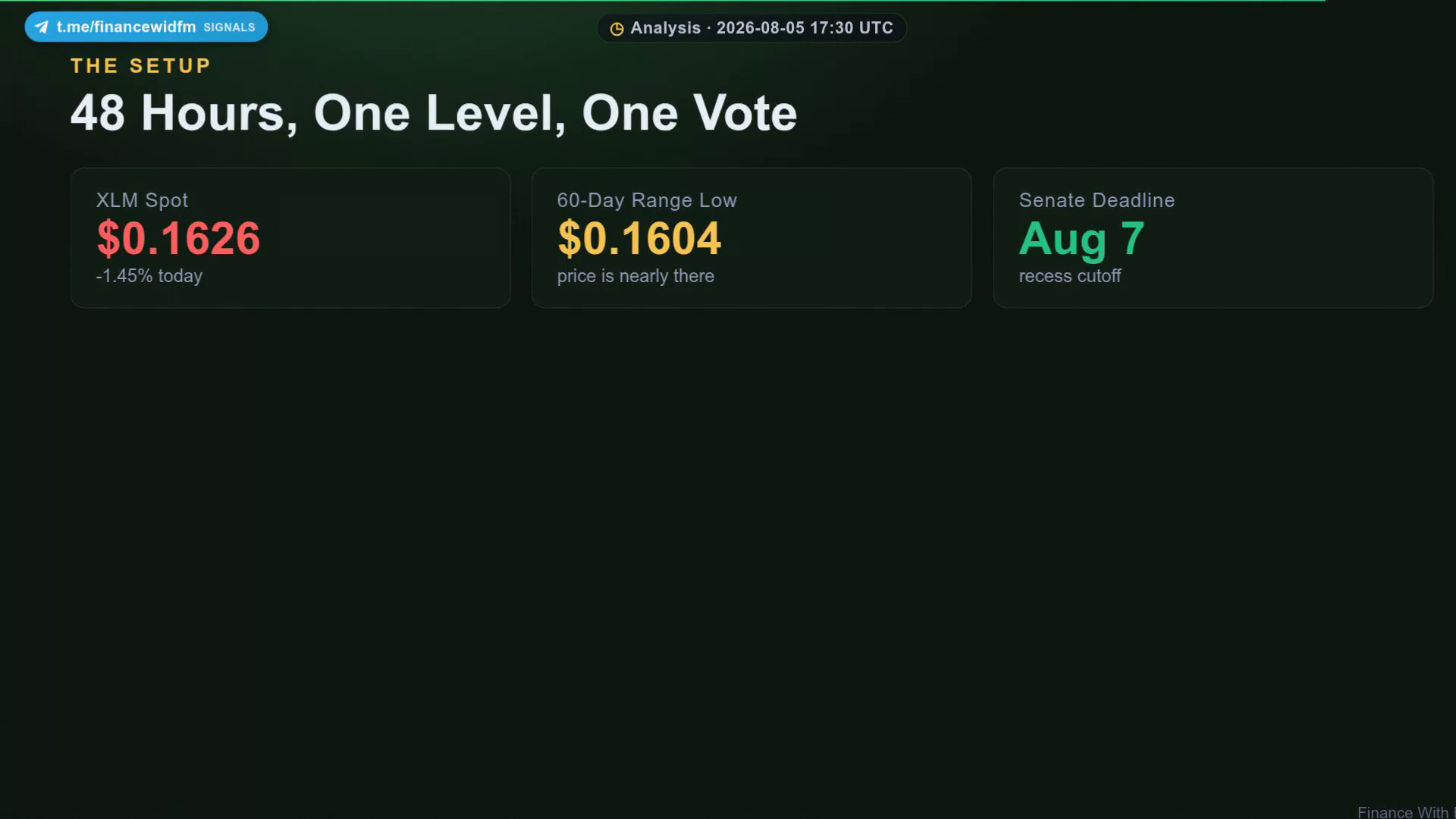
Strip away the drama and the setup is simple. There's exactly one hard date (August 7), one level that matters most on the chart ($0.1604), and one vote outcome the entire market is trying to front-run. Everything else — the threads, the countdown clocks, the '48 hours to save XRP' videos — is noise layered on top of that skeleton.
| Variable | Value |
|---|---|
| Current XLM price | $0.1626 |
| 24h change | -1.45% |
| 60-day range low | $0.1604 |
| Senate deadline | August 7, 2026 (recess) |
| Days remaining | ~2 |
Separating Fact From Noise
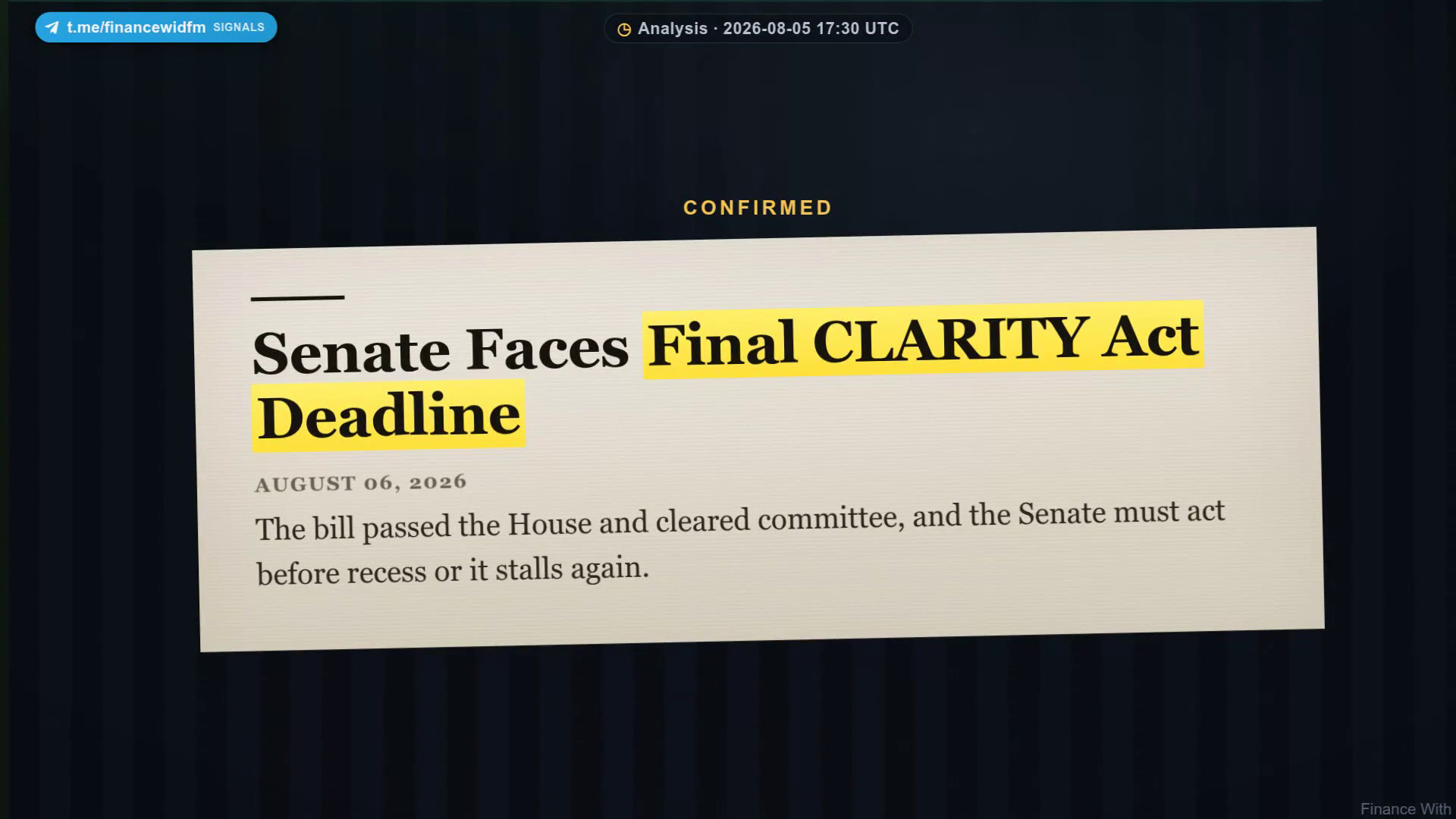
Here's what's actually confirmed. The CLARITY Act — formally the Digital Asset Market Structure bill — passed the House. It cleared committee in the Senate. And there's a real, on-the-record deadline: August 7, before the chamber leaves for recess. That part isn't speculation. It's tracked on Congress.gov.
What happens after that deadline is where the confirmed story ends — and where every creator's confident prediction becomes a guess dressed up as certainty.
- Confirmed: House passage, Senate committee clearance, and the August 7 recess deadline
- Not confirmed: whether the Senate actually holds a procedural vote before recess
- Not confirmed: any timeline for full passage or presidential signature even if a vote happens
What Nobody Can Actually Confirm
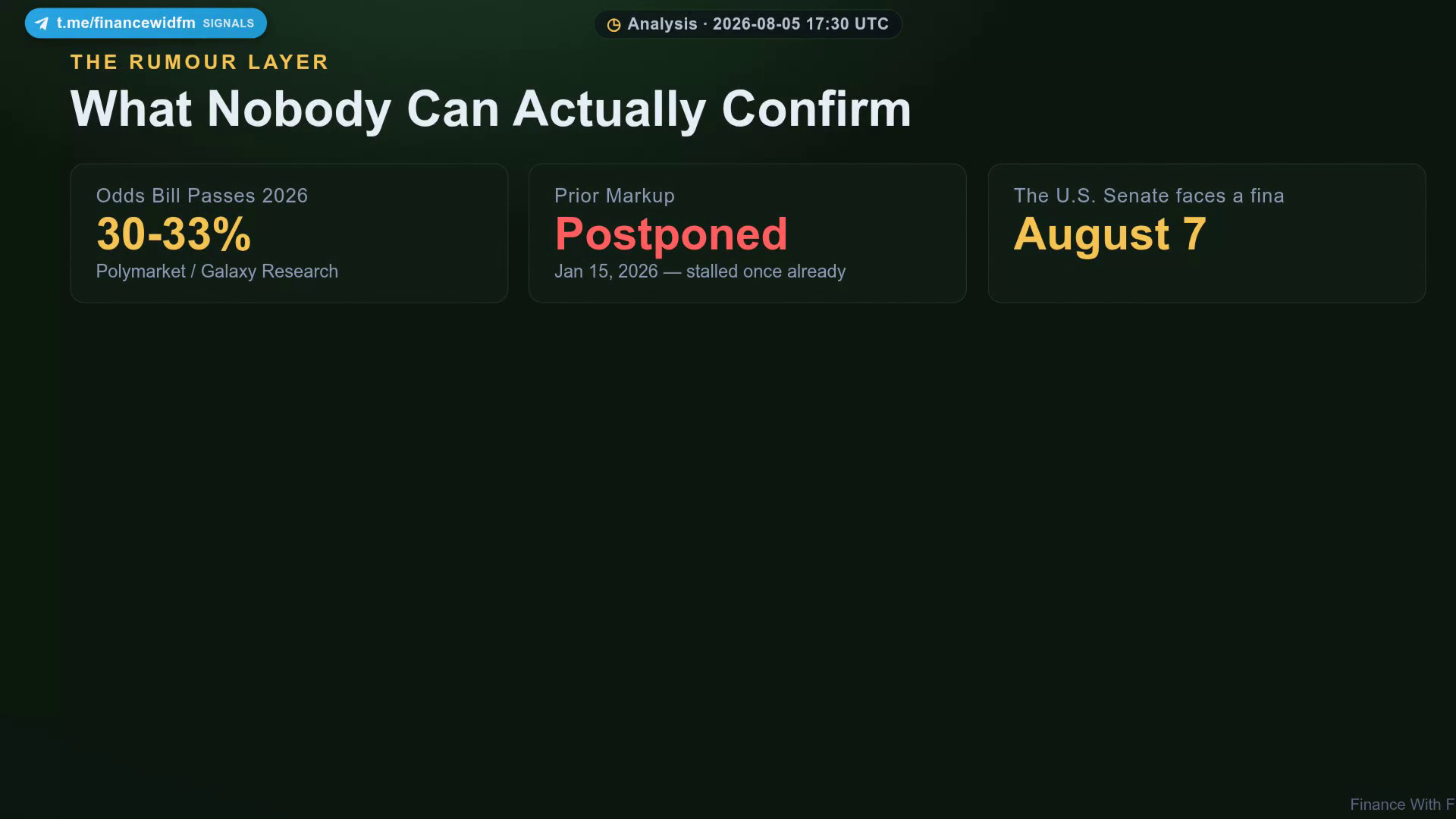
This is where it gets loud. Five different creators this week called this a 48-hour make-or-break moment for XRP, and by extension XLM. That's opinion, not fact — nobody has confirmed the Senate will even hold the procedural vote before recess.
One video making the rounds claims XRP faces a collateral lock-up tied to this countdown. That's an unverified rumour, not a report — there's no filing, no statement, no source behind it.
Is This Already In The Price?
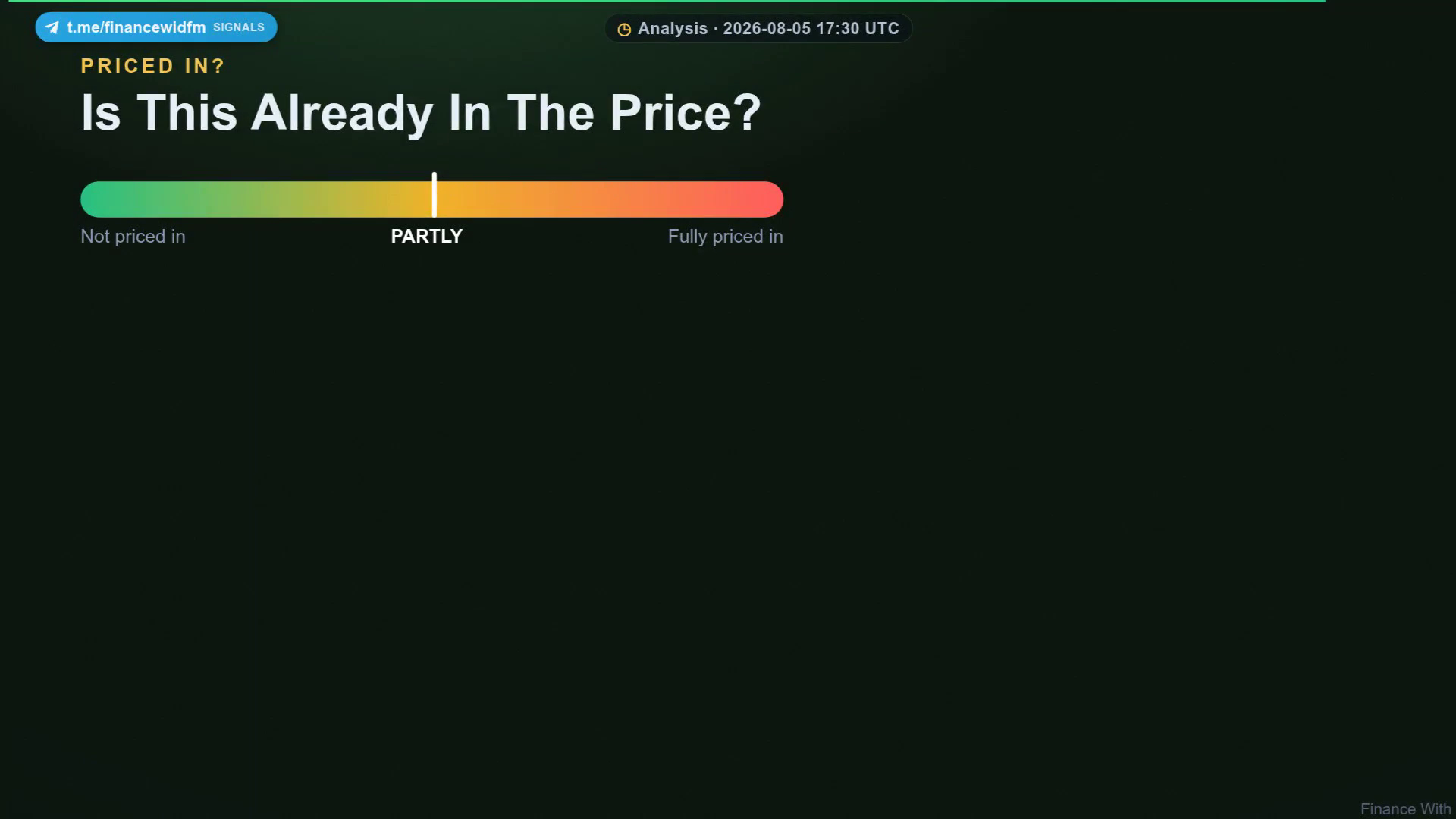
Partly, yes. XLM is sitting at the low end of its 60-day range, below both its 20-day average of $0.177 and its 200-day average of $0.1758. That's a market that was already leaning bearish heading into this deadline — the pessimism isn't a surprise reaction, it's baked in.
But there's a wrinkle: funding is deeply negative at -0.0226% every 8 hours, which annualizes to close to -25%. Shorts are crowded, and they're paying real money to stay short. The bearish *case* is priced in. A squeeze is not.
| Metric | Value | Read |
|---|---|---|
| Price vs. 20-day avg | $0.1626 vs. $0.177 | Below — bearish |
| Price vs. 200-day avg | $0.1626 vs. $0.1758 | Below — bearish |
| Funding rate (8h) | -0.0226% | Deeply negative — shorts paying to stay short |
| Funding annualized | ~-25% | Crowded short positioning |
Where This Move Runs Into Something
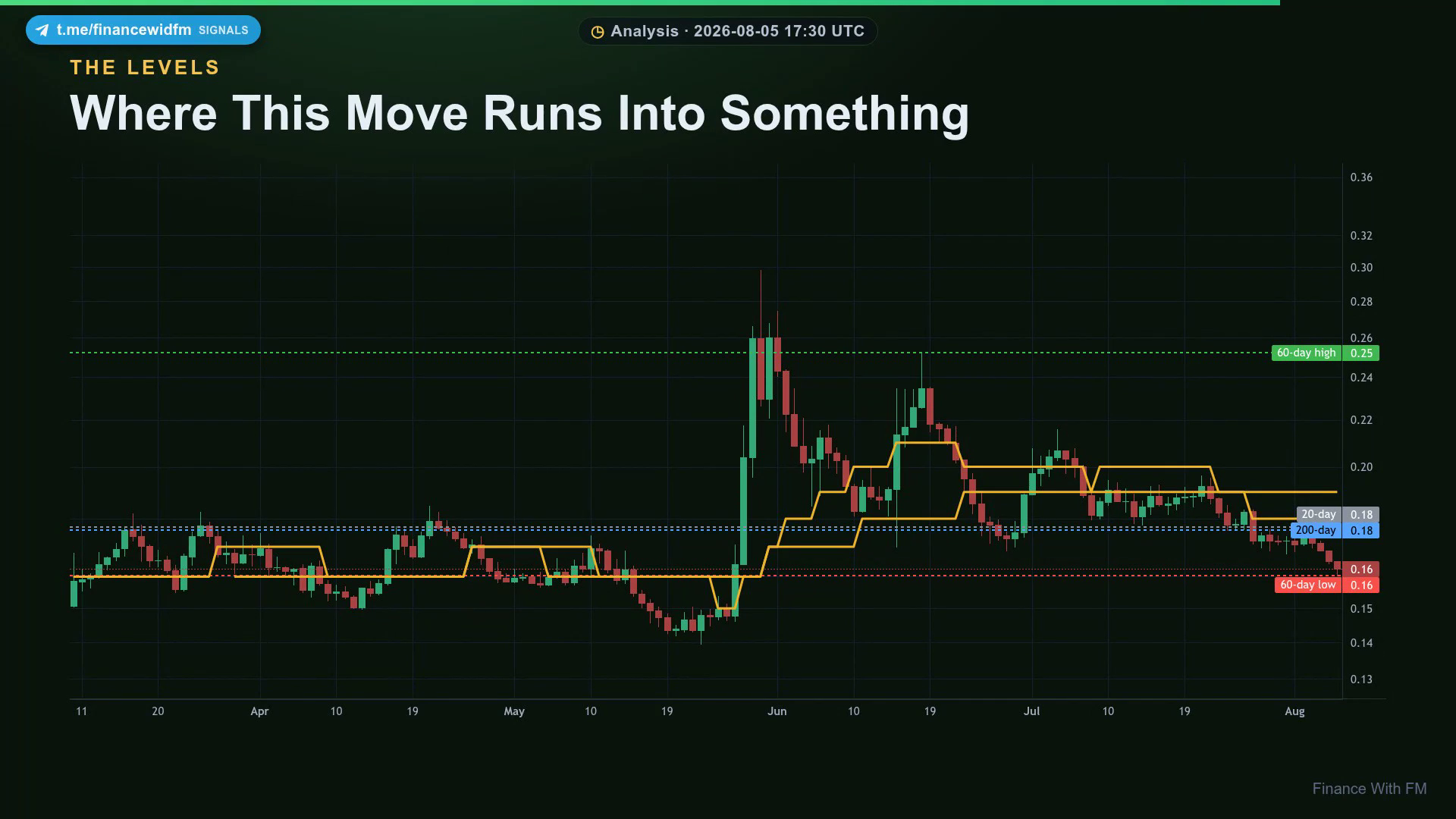
Zoom into the structure and four levels do all the talking. Below price, there's really only one that matters. Above it, there's a clean staircase from squeeze target to full trend reclaim to genuine breakout.
| Level | Price | What It Means |
|---|---|---|
| 60-day floor | $0.1604 | Downside invalidation — the only level of weight below current price |
| Current price | $0.1626 | Sitting just above the floor |
| 20-day average | $0.177 | First squeeze target if crowded shorts get flushed |
| 200-day average | $0.1758 | Confirms any real trend reclaim |
| 60-day high | $0.252 | Only relevant on a genuine breakout, not a bounce |
Squeeze Setup vs. Correct Positioning
The case for a squeeze
Shorts are crowded and paying nearly 25% annualized to stay short, and the liquidation map shows the heavier stop pool sitting above price, not below. That's squeeze fuel. Any headline — even just 'vote delayed, not dead' — could send XLM hunting toward $0.177, roughly 8–15% higher, mechanically, almost regardless of what the bill actually says.
The case against it
This bill has already stalled once, the odds of passage sit at just 30–33%, and crowded shorts might simply be correctly positioned for a lapse. If funding stays this negative for another week and price still can't reclaim $0.177, the squeeze thesis is wrong — full stop.
What To Watch Next
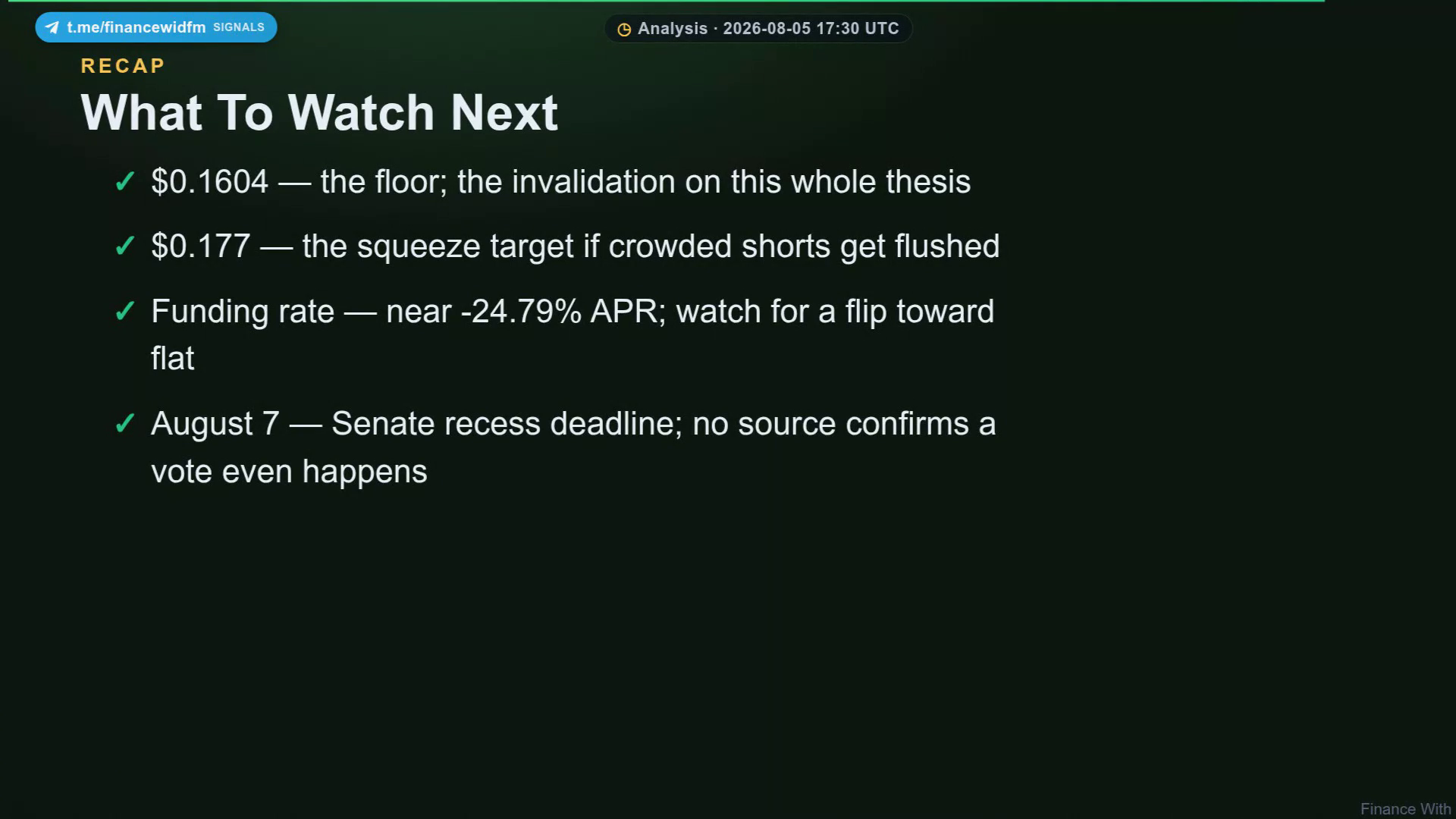
XLM sits at $0.1626, right on top of its range low at $0.1604 — that's the invalidation, plain and simple. The confirmed fact is that the Senate faces an August 7 deadline on the CLARITY Act. The unconfirmed part is whether that vote even happens — and whatever anyone tells you about 'lock-ups' or hidden agendas, that's rumour, not reporting.
- Watch $0.177 — the 20-day average and the first real squeeze target
- Watch $0.1604 — the floor; a clean break invalidates the squeeze thesis
- Watch funding — not the news ticker — for the real signal on positioning stress
Key takeaways
- The only confirmed fact is the Senate's August 7 recess deadline on the CLARITY Act — whether a vote actually happens before then is unconfirmed.
- XLM at $0.1626 sits just above its 60-day floor of $0.1604, below both its 20-day ($0.177) and 200-day ($0.1758) averages.
- Funding is deeply negative (~-25% annualized), meaning shorts are crowded and paying to stay short — a setup that favors a squeeze on any bullish headline.
- Prediction markets put 2026 passage odds at just 30–33%, and the bill has stalled once before, so the bearish case isn't baseless either.
- Trade the level, not the headline: $0.1604 is the floor, $0.177 is the squeeze target, funding is the real tell.
Frequently asked questions
What is the CLARITY Act and why does it matter for XLM?
The CLARITY Act is the Digital Asset Market Structure bill that would set clearer regulatory rules for crypto assets. It's passed the House and cleared Senate committee, and traders are watching whether the Senate votes on it before its August 7 recess deadline, since clearer regulation is seen as bullish for altcoins like XLM.
Is the Senate guaranteed to vote on the CLARITY Act by August 7?
No. The August 7 recess deadline is confirmed and on the record via Congress.gov, but whether the Senate actually holds the procedural vote before then is not confirmed — it's speculation being treated as certainty by some creators.
What is XLM's key support and resistance level right now?
Support sits at $0.1604, the 60-day low. Resistance/target on the upside is the 20-day average near $0.177, with the 200-day average at $0.1758 confirming a deeper trend reclaim, and $0.252 marking the 60-day high for a genuine breakout.
Why does negative funding matter for XLM's price action?
Funding of roughly -0.0226% every 8 hours (near -25% annualized) means short sellers are paying to hold their positions. That signals crowded short positioning, which can fuel a sharp squeeze higher if any bullish catalyst — even a minor one — hits.
What are the odds the CLARITY Act actually becomes law in 2026?
According to prediction markets like Polymarket and Galaxy Research, the odds sit at just 30–33% as of early August 2026, partly because the bill already stalled once before in January.